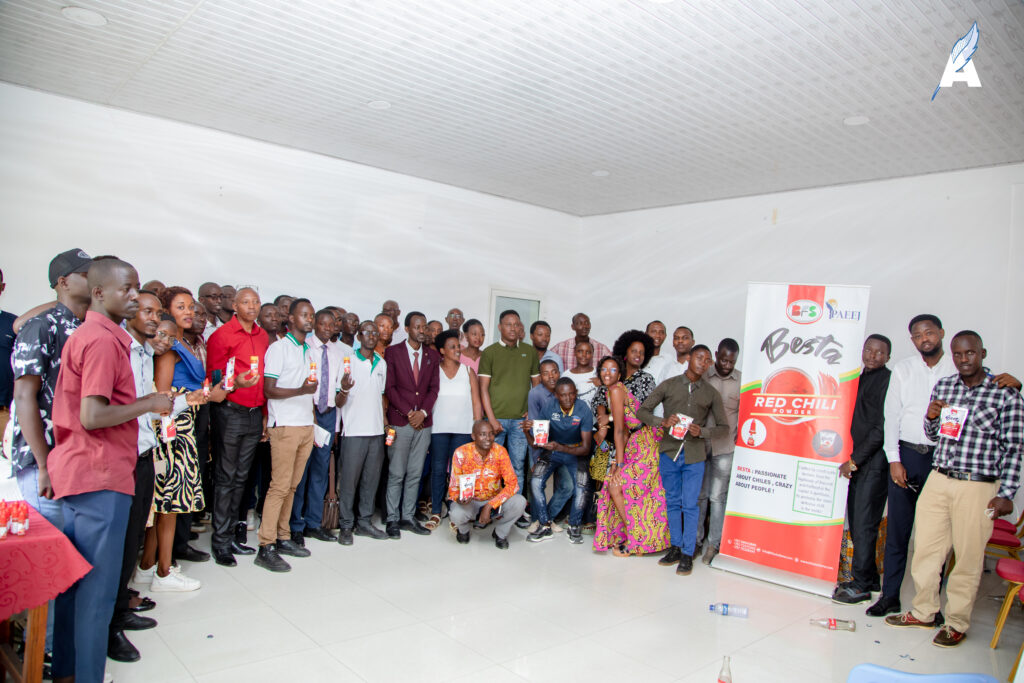
Best Food Solution Plus is stepping up efforts to boost chili farming in Burundi, launching an initiative aimed at promoting and processing the crop while building a network of smallholder farmers across the country. The company gathered its longtime partners and new collaborators on Saturday August 2, 2025 at the CEPRODULIC center in Bujumbura to share progress, challenges, and strategies for expanding chili cultivation and value addition.
The event, which brought together agricultural experts, academics, and experienced farmers, was led by Éloge Niyomwungere, Managing Director of Best Food Solution Plus. He was joined by agricultural specialist Janvier Niyomwungere, University of Burundi lecturer Kakana Pascal, and other stakeholders eager to scale up chili production and processing.
“Our vision is to transform chili peppers into a reliable source of income for smallholder farmers through sustainable farming and value-added products like chili oil, powder, and dried spices,” said Éloge Niyomwungere. “We started with one farmer and one plot. Today, we’re working with over 500 trained producers and several cooperatives.”
The gathering also served as a platform for partners to reflect on lessons learned, exchange technical advice, and plan the upcoming planting season set to begin in September. While many members could not attend due to travel constraints, regional representatives were present to speak on their behalf.
One of the key sessions featured University of Burundi lecturer Kakana Pascal, who emphasized the value of organic fertilizers made from biodegradable waste and black soldier fly larvae. “Compost from organic waste and insects not only boosts yields but also improves soil health,” he said. “It offers a solution for farmers and benefits even those not in agriculture, as it leads to cleaner, safer crops.”
Kakana added that such fertilizers can also be used in animal feed, enhancing livestock health. He encouraged farmers to take advantage of natural composting as a cheaper and healthier alternative to industrial fertilizers, noting that organic methods reduce disease outbreaks in crops and increase soil fertility.
Janvier Niyomwungere, a specialist in chili farming, offered practical advice for beginners. “It all starts with selecting the right seeds and preparing a nursery,” he explained. “In hot areas, the seedlings are ready in seven weeks; in cooler areas, it takes up to ten weeks. With proper care, a chili plant can yield for up to two years, with weekly harvesting.”
For farmer Ezechiel Nimbona from Gitega Province, chili cultivation has already proven successful. “I’ve been growing chili for over five years,” he said. “Before partnering with Best Food Solution, I struggled to find a good market. Sometimes, I had a strong harvest but couldn’t sell at a fair price. That changed when they came to see what I do.”
Ezechiel, who recently harvested two 30kg sacks of dried chili, encouraged unemployed youth to explore the crop. “It produces every week, and if you care for it, it gives you a stable income. I’m willing to train others so they can also benefit,” he said.
In his closing remarks, Éloge Niyomwungere called on all Burundian farmers, to and citizens both at home and abroad, to embrace locally made products, particularly Besta Pilipili, which recently won a prestigious African-level award through the GoGettaz competition.
“We need to stop glorifying imported goods when we already produce high-quality, organic, environmentally friendly products here in Burundi,” he said. “Supporting local production helps small-scale farmers access markets more easily and uplifts the entire nation. If we truly want chili to become our ‘Red Gold,’ something that transforms lives and makes us proud, we must value what we produce.”Niyomwungere also linked this local action to national development goals. “If we are serious about becoming a self-reliant country by 2040 and a developed nation by 2060, we have to start working together, just as our leaders urge us to do. That means buying and producing what we know. It’s how we reduce losses, strengthen our economy, and move toward lasting progress.”