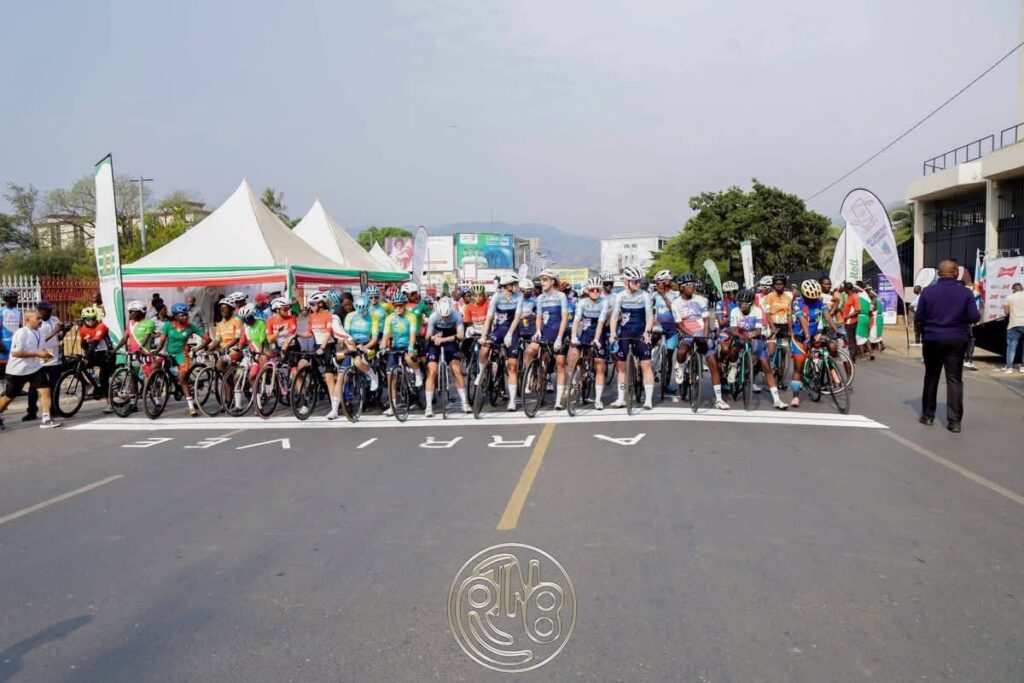
Burundi’s women’s cycling has reached a new milestone as the sixth edition of the Tour des Reines et des Tambours has been added to the international calendar of the “Union Cycliste Internationale” (UCI) as a Class 2.2 race, bringing together about 60 female cyclists from 10 African countries and Kazakhstan. The development marks a significant step for women’s cycling in Burundi, giving local riders an opportunity to compete alongside cyclists from across Africa and beyond.
The race officially began on August 16, 2026, in Bujumbura with a 60-kilometer opening stage from near the Independence Monument toward Kagwema in Gihanga Zone, Mpanda Commune, in Bujumbura Province. Kazakhstan’s Yelizaveta Sklyarova claimed the opening stage, followed by an Ethiopian cyclist and a Rwandan rider, both representing Club Amani of Kenya. Anastasie Gahuzenge was the leading Burundian cyclist and was also recognized for her performance.
Representing the minister responsible for sports, Phocas Mpezindagano, Assistant to the Minister, welcomed the race’s international recognition, describing it as an achievement for Burundi, the country’s cycling community, the National Olympic Committee and the event’s partners. He also thanked the UCI and African cycling authorities for supporting the development of the competition.
Mpezindagano said Burundi considers sport a tool for education, promoting healthy lifestyles, strengthening social cohesion, empowering young people and women, and contributing to economic development. He also highlighted the cultural significance of the race’s name, explaining that “Reines,” meaning queens, symbolizes the courage, skills and leadership of women, while “Ingoma,” or drums, represents one of Burundi’s strongest cultural symbols.
The competition is also being used to promote Burundi’s culture and tourism. International cyclists and visitors have the opportunity to discover the country’s heritage and cultural attractions, including the Gishora Drum Sanctuary. Organizers say the race offers a platform to present Burundi as a country that is open to international visitors, values sport and possesses a rich cultural heritage.
The government has called on Burundian women to view the competition as an opportunity to inspire younger generations and pursue careers in cycling. Mpezindagano said authorities want to create conditions that allow Burundian female cyclists to train, develop and compete against athletes from across Africa and around the world. He stressed that hosting an international race should not only be about attracting foreign competitors, but also about developing a new generation of Burundian cyclists.
The second stage, held on August 17, covered 69 kilometers from Nyagasasa in Mugamba Zone, Matana Commune, to Gitega, Burundi’s political capital. Sklyarova again took the victory, securing her second consecutive stage win. She was followed by a Rwandan cyclist and an Ethiopian rider, both members of Club Amani of Kenya. The Kazakh cyclist said she was pleased to win again despite the challenging climbs along the route.
For Burundian riders, however, the competition has also exposed the gap in equipment. Nsengiyumva Odette, currently the leading Burundian cyclist in the race, said local riders struggle to compete on equal terms because they do not have modern racing bicycles comparable to those used by some of their international competitors. She called for greater government support and better equipment to help Burundian women make progress in the sport.
The third stage took cyclists over 95 kilometers from Ruyigi toward Cankuzo, passing through the Ruvubu natural forest and a demanding landscape of steep climbs and descents. Taneal Otto of South Africa’s Tshenolo team won the stage, followed by Ethiopian rider Meresiyete Gebrehinet of Club Amani and Rwandan cyclist Inarukundo Claudette, also of Club Amani. Nsengiyumva finished 18th overall and remained the highest-ranked Burundian cyclist.
The 2026 edition features riders from Burundi, Kazakhstan, Burkina Faso, Kenya, the Democratic Republic of Congo, Egypt, South Africa, Ethiopia, Benin and Côte d’Ivoire. Cameroon and Mauritius did not participate. The race continues through Burundi, with the next stage scheduled around Ngozi and Kayanza as the country seeks to establish the Tour des Reines et des Tambours as a permanent fixture in international women’s cycling.
For Burundi, the significance of the competition extends beyond the results. The international status of the Tour des Reines et des Tambours offers an opportunity to strengthen women’s cycling, develop local talent, promote cultural heritage and tourism, and position Burundi more prominently on the international sporting map. The long-term test, however, will be whether the growing international profile of the race translates into better training opportunities, equipment and professional pathways for Burundian female cyclists.