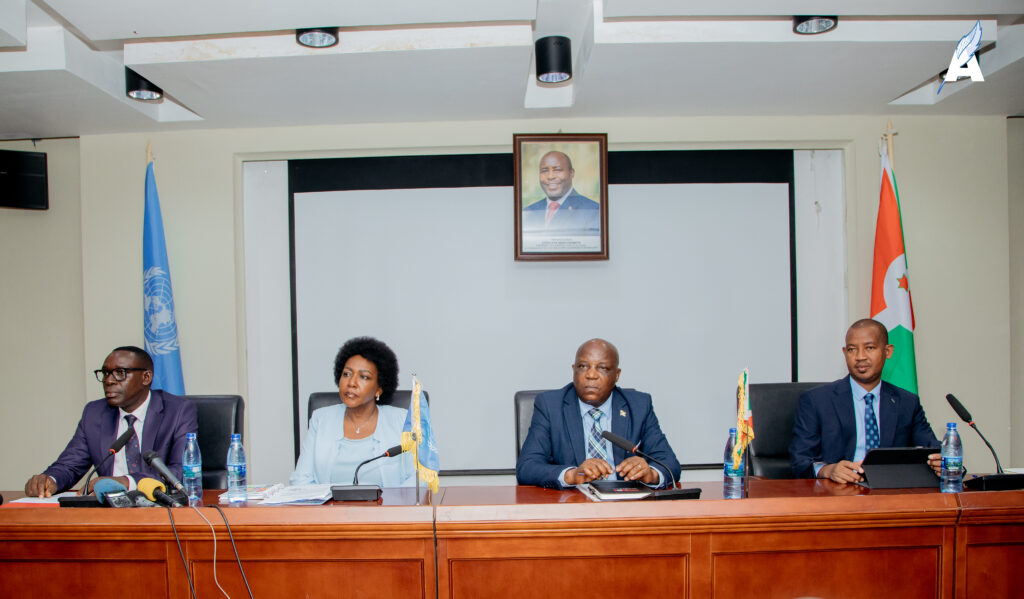
The Burundian government and the United Nations Country Team (UNCT) met on October 8 to assess the country’s humanitarian situation and strengthen preparedness for potential health emergencies, climate-related disasters and the needs of refugees and returning Burundian nationals.
The joint meeting, held at the Ministry of Foreign Affairs, Regional Integration and Development Cooperation, brought together government officials, UN representatives and national and international partners to review ongoing responses, identify gaps and discuss mobilizing additional resources.
The discussions focused on four priorities: preparedness for Ebola, potential impacts of the El Niño climate phenomenon, the situation of refugees in Burundi and the reintegration needs of Burundian returnees.
Pierre Nkurikiye, spokesperson for the Ministry of Interior, Community Development and Public Security, said participants examined the challenges in each area and discussed ways to strengthen existing responses.
Ebola preparedness and climate-related risks
Although no Ebola outbreak was reported in Burundi in the information presented at the meeting, authorities emphasized the importance of preparedness amid outbreaks and reported cases in neighboring countries, including the Democratic Republic of the Congo and Uganda, as well as a recent report involving Kenya.
The discussions focused on strengthening readiness in the event the disease reaches Burundi.
Participants also examined potential risks associated with El Niño. According to the information presented, forecasts from Burundi’s Institute of Geographical and Hydro-Meteorological Studies (IGEBU) indicated the possibility of heavy and successive rainfall beginning in October, raising concerns about flooding, particularly in western parts of the country and other vulnerable areas.
Officials and partners reviewed the country’s preparedness measures and the resources needed to respond to possible disasters.
Refugees and returning Burundians
The meeting also addressed the needs of refugees living in Burundi. Nkurikiye said the country was hosting more than 150,000 refugees, with more than 90% originating from the Democratic Republic of the Congo.
Participants reviewed conditions at the Busuma refugee camp, where more than half of the refugees had reportedly returned to their country of origin, while others remained in Burundi and continued to require humanitarian assistance.
The situation of Burundian returnees was another key issue. According to Nkurikiye, more than 419,000 Burundians have returned to the country since the repatriation process began in 2017, while approximately 200,000 others remain abroad.
Authorities acknowledged that many returnees continue to face significant needs as they rebuild their lives and reintegrate into their communities.
Government calls for continued support
Interior Minister Léonidas Ndaruzaniye thanked humanitarian and development partners for their assistance to refugees, returnees and other vulnerable populations.
He stressed the importance of continued cooperation in helping Burundi prepare for potential disasters and address humanitarian needs.
Nitunga Sophonie, permanent secretary at the Ministry of Foreign Affairs, Regional Integration and Development Cooperation, also highlighted the meeting as an opportunity to strengthen collaboration between the government and the United Nations.
At the conclusion of the discussions, participants reviewed the identified challenges and resource gaps and reaffirmed the importance of continued partner support across the four priority areas.
The meeting underscored the need for coordinated preparedness, sustained humanitarian assistance and adequate resources as Burundi confronts public health risks, potential climate-related emergencies and the needs of displaced and returning populations.