Burundi has signed a 25-year, $1.4 billion public-private partnership with U.S. energy company Anzana Electric Group to expand electricity access, modernize its distribution network and bring first-time or improved power services to an estimated 8 million people by 2030.
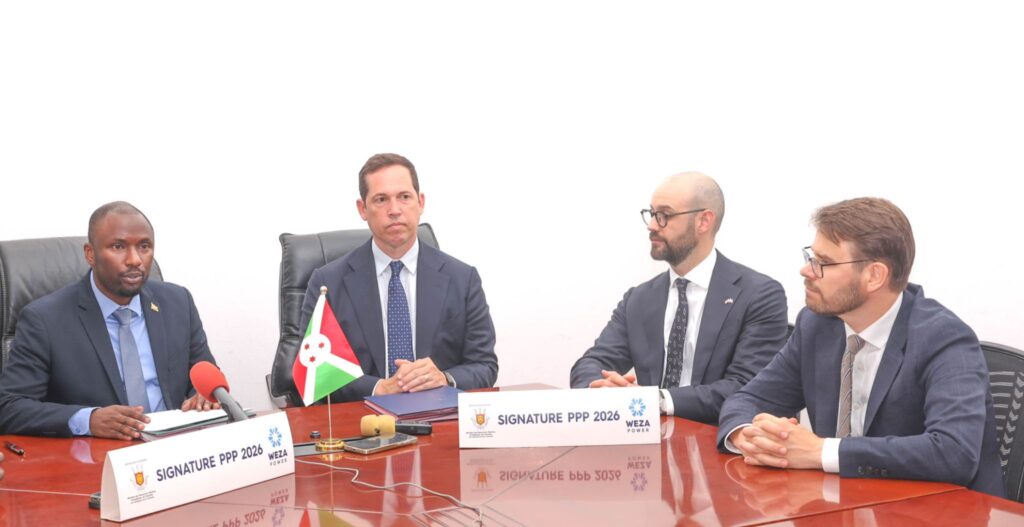
The agreement, signed on October 15 between the Burundian government and Weza Power, an Anzana Electric Group company, aims to raise on-grid electrification from approximately 15% to more than 50%, according to the company.
The U.S. State Department’s Bureau of African Affairs has described the deal as the largest investment in Burundi’s history, saying it could increase the country’s electrification rate from 12% to 70%. The differing projections reflect separate estimates of the project’s potential impact, while both point to a major expansion of electricity access.
The agreement also establishes what Anzana describes as Africa’s first new national-scale electricity distribution concession operated by a private company in decades.
A $1.4 billion plan to expand the national grid
Under the partnership, Weza Power will invest in, expand and operate the electricity distribution network across roughly half of Burundi. State-owned utility REGIDESO will continue supplying electricity through the national transmission network and distributing power in the other half of the country.
The project plans to build or upgrade 52,000 kilometers of distribution lines and connect more than 1.2 million new households and businesses.
It is also expected to generate more than 2,000 direct jobs in installation and operations, as well as over 30,000 indirect jobs for Burundians.
Burundi’s Minister of Mineral Resources, Energy, Industry, Trade and Tourism, Hassan Kibeya, said expanding distribution infrastructure is critical to making better use of the country’s existing and future electricity generation.
“With Burundi’s installed generation capacity at approximately 183 MW, our focus must now be on ensuring that existing and future generation can be delivered to more homes, businesses and productive sectors across the country,” Kibeya said.
He added that reliable electricity could support industrial development, local processing of critical minerals and sustainable economic growth.
Government targets economic transformation
President Évariste Ndayishimiye said the partnership supports Burundi’s Vision 2040-2060 development ambitions, which seek to transform the country’s economy over the coming decades.
“Electricity is the foundation of Burundi’s economic transformation and a key pillar of our Vision 2040-2060 ambitions,” Ndayishimiye said.
He said the project would expand opportunities, strengthen industries and create conditions for investment, employment and long-term prosperity.
Electricity access remains a significant development challenge in Burundi, particularly in rural communities. Limited and unreliable power can constrain agricultural production, healthcare services, small businesses and industrial activity.
The government and Anzana say the partnership will address these challenges by extending connections to underserved communities while improving the reliability and continuity of existing services.
The agreement also provides for measures to reduce power outages, stabilize voltage, modernize electricity metering and billing systems, and reduce technical and commercial losses.
How the project will be financed
The $1.4 billion represents funding the partnership aims to mobilize over time, rather than a single payment from Anzana or a direct government expenditure of that amount.
According to the company, the project will use a blended-finance structure combining private commercial investment with concessional funding and development-partner support. Anzana says the model is designed to mobilize investment without increasing public debt.
The financing framework involves partners including the World Bank, the International Finance Corporation (IFC), the Multilateral Investment Guarantee Agency (MIGA), the African Development Bank and the U.S. International Development Finance Corporation (DFC).
Other named partners include Gridworks, part of British International Investment, the U.S. Trade and Development Agency and Norway’s Norwegian Agency for Development Cooperation (NORAD), alongside other bilateral and development-finance partners.
The project forms part of Burundi’s National Energy Compact under Mission 300, a World Bank Group and African Development Bank initiative aiming to connect 300 million people across Africa to electricity by 2030.
Babacar Sedikh Faye, the World Bank Group’s country manager for Burundi, said the partnership demonstrates how governments, development institutions and private investors can work together to expand electricity access and create jobs.
“Mobilizing private capital is essential to creating jobs and expanding opportunities for Burundian families and communities to improve their livelihoods,” Faye said.
The agreement also establishes tariff and performance obligations intended to help keep electricity affordable while providing investors with greater certainty about the commercial framework.
Anzana’s existing presence in Burundi
Anzana says its involvement in Burundi dates to 2018 through Songa Energy, its hydropower business, which has one operational hydropower plant and a second under construction.
The company says that experience working with government institutions, communities and local partners has helped prepare it to undertake the larger Weza Power project.
The deal is also being presented as a step toward closer U.S.-Burundi economic ties, with improved electricity infrastructure expected to support additional investment in mining, agro-processing and other industries.
For American investors, a more reliable power network could make it easier to develop projects and process resources locally. For Burundi, the potential benefits include more jobs, expanded business activity and greater access to essential services.
However, the scale of the ambitions presents a significant implementation challenge. The financing must be mobilized, tens of thousands of kilometers of distribution infrastructure must be built or upgraded, and millions of people must gain access to reliable service within the project’s timeline.
Whether the partnership delivers on its targets will depend on execution, affordability and the ability to extend electricity to communities that have historically remained beyond the grid.
If successful, the agreement could become a major milestone in Burundi’s efforts to expand electricity access and lay the infrastructure foundations for long-term economic growth.