Burundi could face a future food crisis as climate change, shortages of agricultural inputs and weaknesses in the fertilizer subsidy system threaten food production, civil society organization PARCEM warned on the sidelines of October 16, the International World Food Day.
With the start of the 2026A agricultural season already announced, PARCEM raised concerns about the country’s preparedness, pointing to delayed rains, prolonged sunshine, drought conditions and torrential rainfall that has damaged parts of the country.
The organization also highlighted shortages of chemical fertilizers and serious problems with the availability of improved seeds, warning that these challenges could undermine agricultural output in a country heavily dependent on farming.
PARCEM said Burundi’s agricultural sector faces deeper structural problems, including highly acidic soils and erosion that can strip more than 100 tonnes of fertile soil from sloping land, according to figures cited by the organization.
In a densely populated country with limited arable land, PARCEM argued that intensive, high-yield agriculture is essential to improving food production.
The organization welcomed the wider availability of organic fertilizers but stressed the need for stronger scientific institutions to verify the quality of fertilizers and seeds sold on the market.
It called on the government to strengthen the Institute of Agronomic Sciences of Burundi (ISABU), including through the recruitment of additional experts, investment in modern equipment and expanded agricultural research.
PARCEM also urged authorities to commission a scientific assessment of the country’s agricultural needs, including annual fertilizer requirements, domestic production capacity, available chemical and organic fertilizers, import needs and the foreign currency required to meet demand.
The organization called for greater transparency in the fertilizer subsidy system, questioning whether shortages stem from insufficient production, alleged misappropriation or irregularities in distribution.
It also demanded an audit of the system, including the management of the 500 billion Burundian francs reportedly allocated for fertilizer subsidies, and called for stronger oversight of public spending.
PARCEM further warned that the government’s announced fertilizer refunds to farmers who paid but did not receive their supplies must be implemented transparently. It cautioned that weaknesses in local administration could expose farmers to additional demands or result in ineligible beneficiaries being included on refund lists.
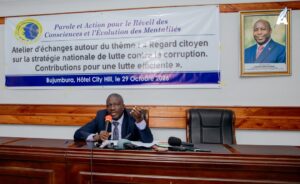
The organization said these challenges point to broader institutional weaknesses within the government, arguing that effective anti-corruption efforts require stronger accountability and oversight mechanisms.
With climate pressures mounting and the new agricultural season underway, PARCEM urged authorities to take urgent, evidence-based action to protect farmers, strengthen agricultural production and reduce the risk of food insecurity.