With support from Conservation and Community for Change (3C) in collaboration with OBPE, as part of the participatory management project for Kibira and Rusizi National Parks—financially supported by the UNDP— communities living on the edges of protected forests are combining environmental conservation with income-generating activities as part of efforts to preserve the country’s natural ecosystems.
On October 9, 2026, the environmental organization 3C visited communities in Matongo Commune, Butanyerera Province, to assess conservation activities carried out in collaboration with local residents.
According to Leonidas Nzigiyimpa, legal representative of 3C, the organization has been working with communities to improve the management and protection of the Kibira National Park and Rusizi National Park.
The work has included establishing firebreaks along the boundaries of the two protected areas and planting trees in those areas using agroforestry seedlings produced by community members organized in local associations. Communities have also been involved in restoring land where forests had previously been cleared.
Local residents have additionally taken part in monitoring and protecting the protected areas, including preventing illegal tree cutting, bush burning, hunting and other activities that threaten the environment. They have also been involved in protecting waterways in accordance with environmental regulations.
3C has provided equipment to community members involved in conservation activities. Residents participating in those activities have also received payments for their work.
When compensating community groups for the environmental services they provided, the 3C adopted a 60/40 economic model. Under the community groups’ approach, 60% of the earnings are used for household needs, while 40% is saved or invested in income-generating projects intended to strengthen the associations.
Conservation income invested in livestock and agriculture
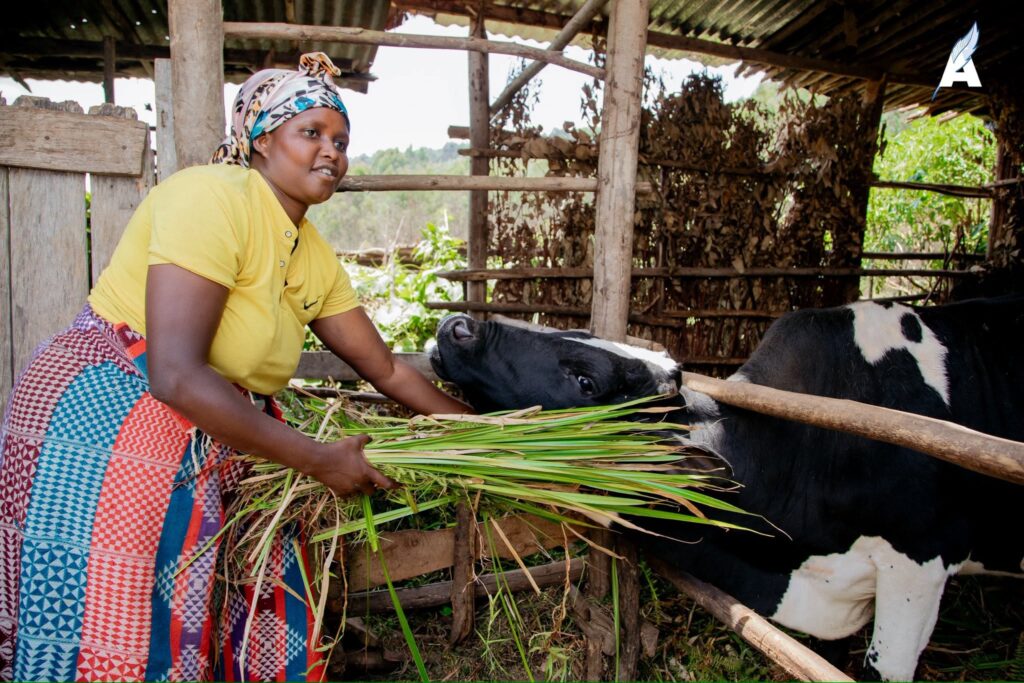
Eliane Nibaruta, who leads Tugarukire Ibidukikije, an environmental association of 38 members, 19 men and 19 women, said the group used part of its conservation earnings to invest in livestock.
From the 40% allocated for investment, the association bought two cows, one for 2.25 million Burundian francs and another for 3.2 million francs. Members also purchased pigs valued at 150,000 francs each.
Nibaruta said the association hopes that as the cattle reproduce, each member will eventually be able to own a cow.
She thanked 3C for bringing residents together into organized associations and supporting them with opportunities to improve their livelihoods.
Marie Crescence Ntakobatagize, a member of Tubungabunge Ikibira Cacu, said her association has 44 members,19 men and 25 women.
The group participated in creating firebreaks and producing tree seedlings. Members used 40% of their earnings to invest in livestock, including two cows and goats or sheep for individual members.
The association also benefited from tree seedlings and school notebooks for children, she said, adding that the support had helped strengthen cooperation among community members.
Beekeeping and farming diversify community incomes
Desire Ndereyimana, member of Duteze Imbere Ibidukikije, said the association has 35 members, including 20 women and 15 men.
Its collaboration with 3C focused mainly on creating firebreaks along the forest boundary and planting trees.
The group invested its 40% share of conservation earnings in a cow worth 2 million francs, three pigs and an onion-growing project that cost more than 2.5 million francs.
Before working with 3C, the association had already started beekeeping. It initially had 60 beehives and has since expanded to around 100 hives.
Ndereyimana said the association is asking 3C for protective clothing for beekeepers, as well as honey-extraction equipment and machines used to remove bees from honeycombs.
He also praised 3C for bringing residents from different hills together and helping them establish a common association.
Authorities call for stronger protection of Kibira
Venuste Manirakiza, head of Rwantsinda Hill near the Kibira natural forest in Busangana Zone, Matongo Commune, said residents have been working with organized community groups to prevent activities that could damage the forest.
Among those targeted are people involved in illegal hunting. Manirakiza said individuals caught hunting wildlife have been fined.
He called on OBPE to increase the number of conservation workers so that Kibira can continue providing benefits to surrounding communities.
He also urged local associations to dedicate more resources to environmental protection.
The experience around Kibira and Rusizi highlights an approach increasingly used in conservation efforts : involving communities not only as guardians of protected ecosystems, but also as beneficiaries of activities designed to improve household incomes.
For residents living alongside protected forests, the challenge is therefore twofold: protecting natural resources while ensuring that conservation also contributes to sustainable livelihoods.