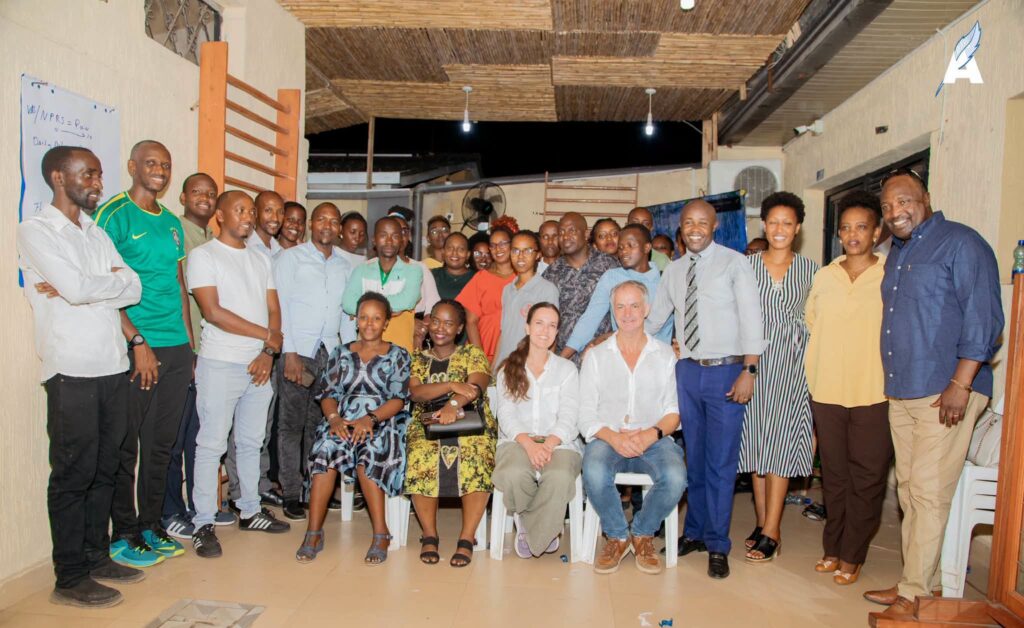
The “Centre Professionnel de Kinésithérapie” (C.P.KINE) has brought together health professionals, parents and teachers in Bujumbura for training aimed at improving understanding of child and adolescent neurodevelopment, with a focus on early identification of developmental difficulties and appropriate care.
The training, held on Friday, October 16, 2026, under the theme “Understanding Neurodevelopment in Children and Adolescents,” sought to equip participants with practical knowledge to recognize potential developmental delays and guide families toward specialized support.
Déo Ndayishimiye, head of C.P.KINE and the Nindorera VITA NOVA Foundation, said developmental difficulties remain an important challenge for both healthcare providers and the education sector.
For nine years, he said, the center has supported children with various developmental difficulties, particularly those affecting speech and language. Some children struggle to develop language and may still be unable to speak at four, five or even six years old. Others experience attention difficulties, hyperactivity or behavioral challenges that affect their learning and integration at school.
To strengthen local expertise, C.P.KINE invited two specialists from abroad: Dr. Maria Picilli from Italy and Gerard Guerts from the Netherlands. The training addressed how professionals can identify developmental difficulties and determine appropriate interventions, including physiotherapy and speech-language therapy.
Neurodevelopment refers to the development of the brain and nervous system, which underpins a child’s movement, communication, attention, learning and social skills from birth into adulthood.
Participants also discussed how to respond when someone experiences a seizure, including steps to protect the person’s safety and the importance of understanding possible causes.
Ndayishimiye said the center also sees opportunities for remote collaboration with specialists in Italy, allowing professionals to seek expert opinions on clinical cases while respecting patient confidentiality.
He emphasized that parents, particularly those who spend the most time with a child, play a critical role in identifying early signs of developmental difficulties.
“The child’s first doctor is their parent, particularly their mother, because she is often the person who spends the most time with the child,” Ndayishimiye said.
Parents may notice delays in speech, walking or social interaction, while teachers can identify difficulties with concentration, learning and behavior in the classroom.
The session brought together health professionals, including speech-language therapists, neurologists, physiotherapists and psychologists, alongside parents of young children, teachers and school administrators.
Ndayishimiye warned that children whose developmental needs go unrecognized may be misunderstood, marginalized or mistreated at home or school. Developmental difficulties can have different causes, including complications during pregnancy or birth, and may affect motor skills, communication, learning and other cognitive functions.
He urged parents to seek professional advice when they notice concerning signs rather than automatically interpreting them as disciplinary problems.
However, symptoms such as hyperactivity, poor concentration or delayed speech do not, on their own, establish a diagnosis. Qualified professionals must assess each child to determine their needs and the appropriate support.
Ndayishimiye called on healthcare providers, families, educators and administrative authorities to strengthen cooperation through regular exchanges and joint initiatives.
He said improving child development outcomes requires shared responsibility, greater access to specialized knowledge and care tailored to each child’s needs.