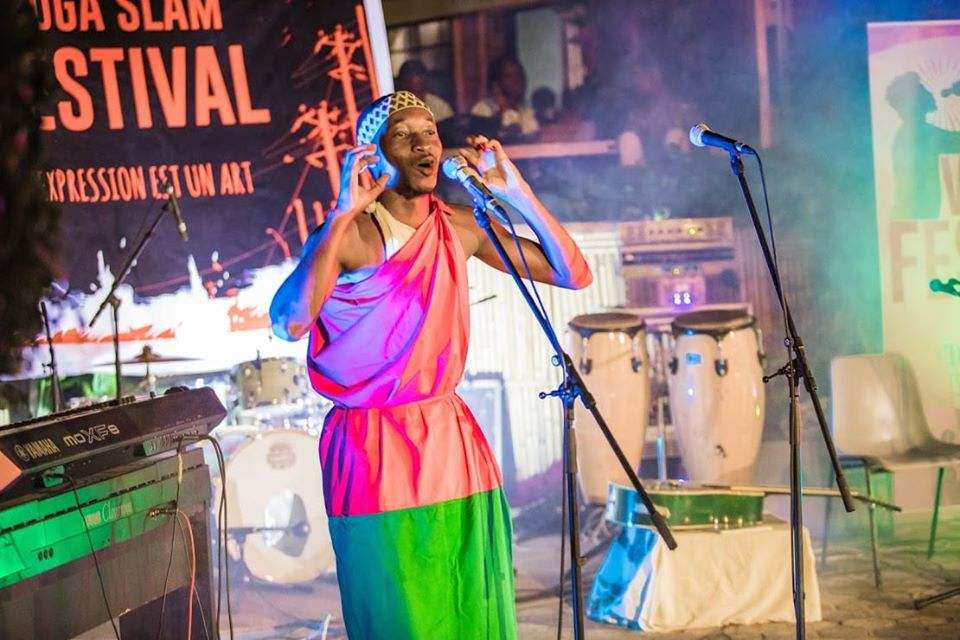
Before there was the pen, there was the brush. At first, writing was not really a task that would take him a long time; rather, drawing would. From primary school to the 10th grade, he was addicted to drawing.He loved art so much that his elder brothers and sisters used to tell him that he would end up dropping out of school or failing out.
Unfortunately, in fall 2010, he was forced to stop drawing. “Even though it was my passion and I had planned to pursue my studies in a school of art in order to become a good painter“, he regrets. He didn’t fall in love with writing until 2011.
And then a poet was born
He was in the 3rd form of art (in other words, 11th grade in secondary school). However, he remembers that he had been inspired to write poetry someday after he was taught a French poem in 7th grade. The poem was called “Le Souffle des Ancêtres” (“The Breath of the Ancestors”) by Birago Diop, a Senegalese writer and poet.
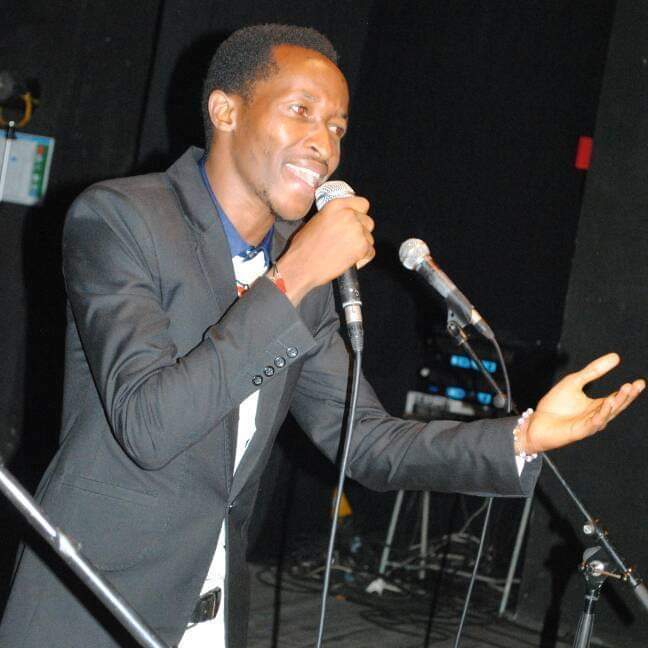
He took his plum and started writing his very first verses that year. After he fell in love with writing, his priorities shifted. “I started devoting my time to researching new vocabulary and reading borrowed books from my school’s library“, he confides.
He discovered that music was a highly effective muse (as ha was already a dancer). Instead of being a theater actor, he had performed during the intermissions of shows and plays.
Then in 2014, he took part in a national competition for composing pieces of theater in English. It was organized by the Ministry of Education, High Teaching and Scientific Research (as it was called at the time).
He wrote a play that depicted the violence against women in his culture and his parent-focused marriage traditions (which formerly didn’t allow children to choose their life-partners). “I therefore included some of my poems I had written”, he recounts.
He was selected among the five best laureates who were awarded on July 3rd, 2014 at “Palais des Arts et de la Culture de Bujumbura”.He concluded that passion pays, so he kept on writing.
Growing up in a place where reading and writing opportunities were slim, remaining motivated wasn’t really easy, but he kept the fire burning.
His dream: to publish his own book one day
At the end of his secondary studies in 2014, he was waiting to start his studies at the university. He used his extra downtime to continue writing and decided to concentrate more on poetry.
By the time he started his studies at the University of Burundi in the Institute for the Applied Pedagogy, he had written a good number of poems.
“I endeavored to write more and more in the hope of becoming a worldwide African poet like Birago Diop and Bernard Binlin Dadié (my favorite poets). These poets remain my role models to this day“, he puts.
In 2017, he got the idea to make his first collection of French poems. He wanted to publish it internationally. It was not an easy task; however, he didn’t miss an opportunity to hope.
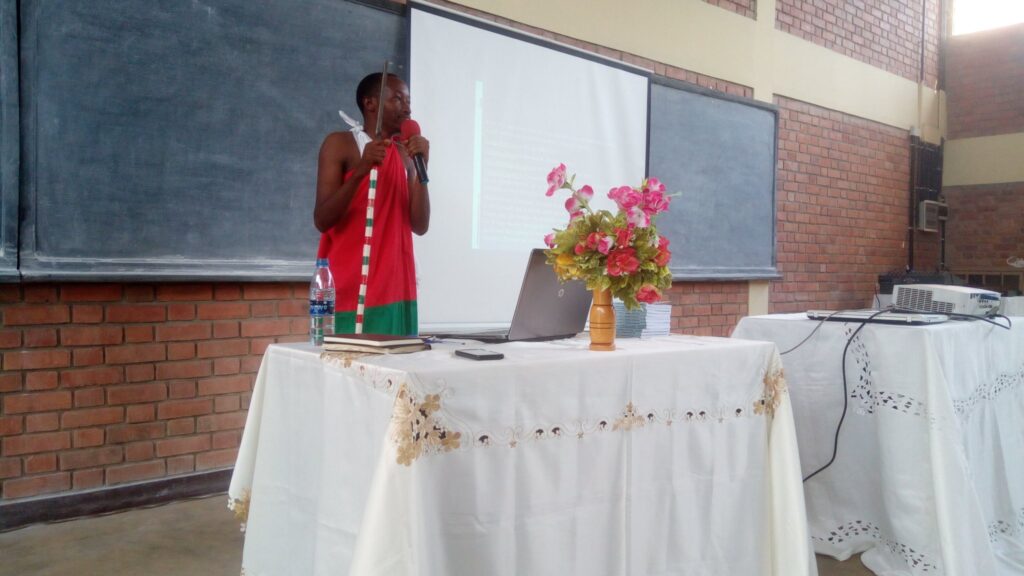
One day, after class, he asked his American Literature Professor, Dr Thérèse TOYI about the procedures of writing a book and getting published (my teacher had published her works in the USA).
“How do you write your poems?” she asked him. He replied that he used his blue pen and wrote on A4 papers. She advised him, therefore, to copy all his poems in one copybook to keep them safe.
“If it happens that you accidently pass away before your book is published,” she added, “your poems, if they are safely kept, can be published by your children or your friends or even other persons who may be interested in your poetry”, she advises him.
He took her recommendation into account. “Her advice was like that of a mother talking to her own son”, he says.
Devoted to the page
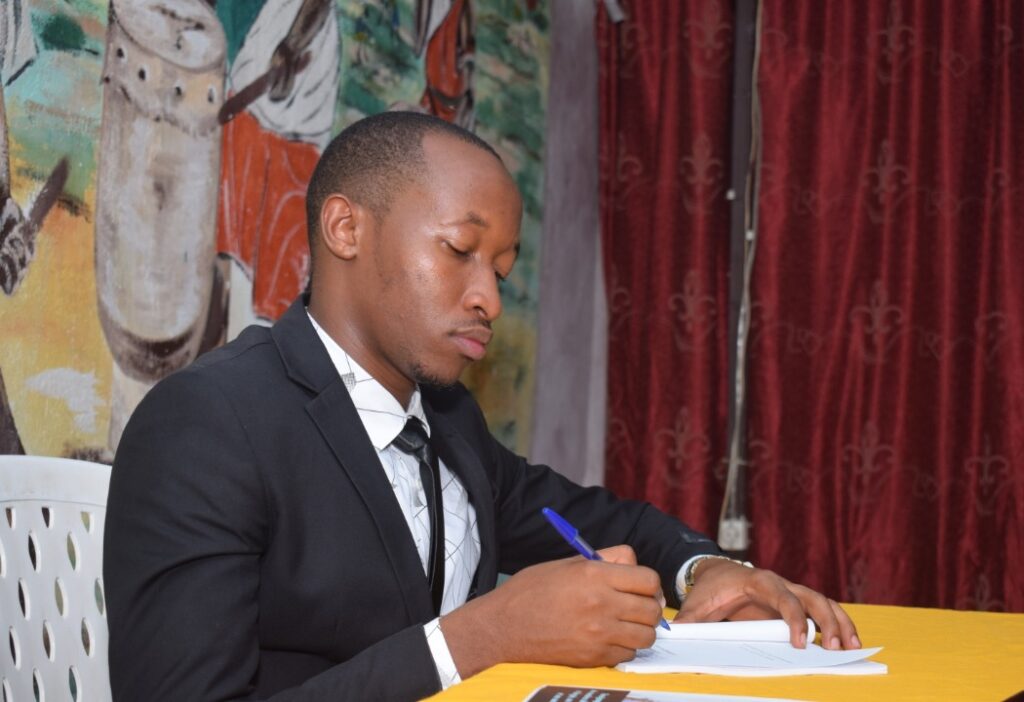
Considering the advice from his professors, every day after class when there were no assignments or work to revise, he locked himself in his bedroom and started copying all his poems and other works (pieces of theater and essays) that he wrote (in French and English). At the end, he had filled two copybooks of around 100 papers.
When it was time to type his French poems on a computer (to arrange and correct them), before sending them to a publishing house, it was not easy to get a computer (I didn’t have my own). He started typing his poems every evening after his classes and during the weekends at home locked in his room to avoid disturbance. In two weeks, he had finished typing all his 65 French poems composed between 2011 and 2017.
Bound for success
Though writing is tiresome, it was not as difficult as getting proofreaders. He followed the guidelines from his professor at the university and all required procedures to write a book. After addressing his correspondence to another professor from the University of Burundi, asking her to help me with correcting his poems, she accepted.

“I accept to correct you because it is in my everyday task, but I don’t want my name to appear in your book’s pages”, she underlines.
He was very happy to hear such kind words from that professor after asking so many people who declined because they did not have the time. “When we met and discussed the correction process, she urged me to print my poems and give them to her”, he mentions.
She corrected his work twice and provided him with some hints to create a better collection of poems. He worked on the poems for around three months before sending the file to the publishing house.
Fortune finally struck
Looking for a publishing house was a headache!
First of all, in Burundi, there is no a single publishing house officially and internationally known that can provide the International Book Number (ISBN).He had to do research on the internet. “I started doing so and some would send the invoice through email with around 1500 USD and 2000 USD to pay as publishing and edition fees. It was really hard on me. I only had a monthly stipend of 30,000 BIF (almost 10 USD) which I used for displacement and buying school materials, and other expenses”, he recalls.
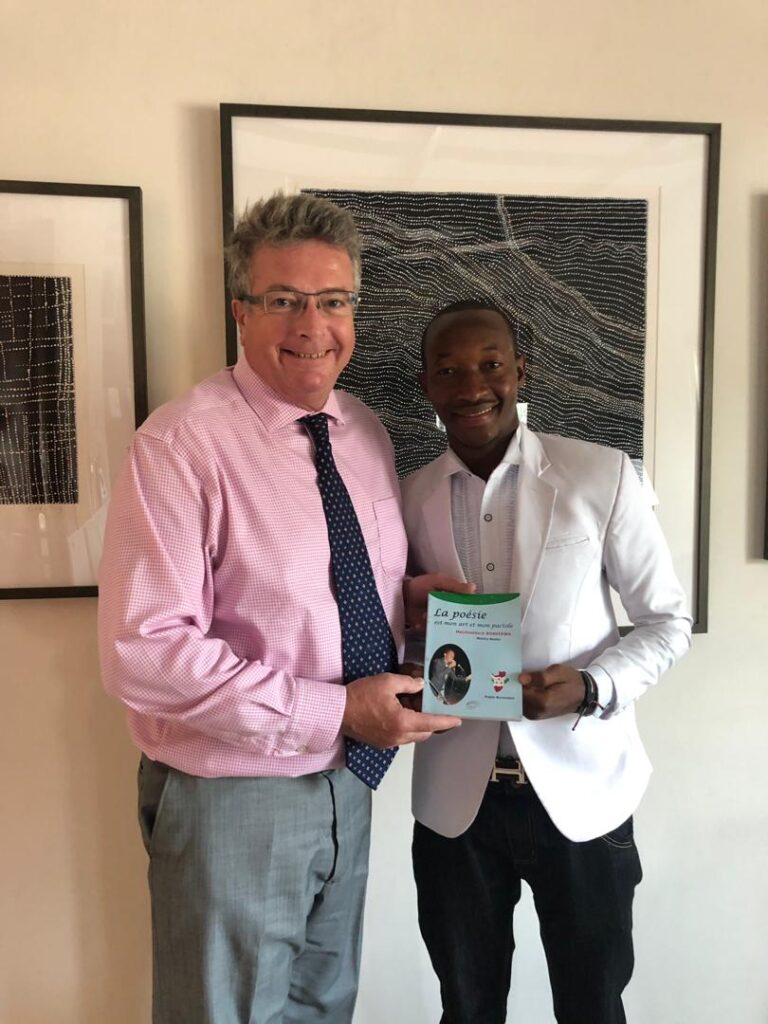
As he had the habit of posting his poems on my Facebook account and page daily or at least weekly, hebasked to join the group of poets called “I.P. I des poètes comme nous” (I.P.I Poets like us). Suddenly, after his request was approved, he posted his first poem in the group. After, they liked and commented on his posts, he saw a sudden message on Messenger from an Italian editor.
“I have been scrolling your Facebook profile and I have seen many poems. How can I help you? I can publish you here in Italy and all over the world”, he tells. His message was like his redemption. “After reading it, I bounced on my bed!“,he proudly says
They chatted until 2:00 AM bargaining on the amount he would pay him. He started from 450€ and reduced down to 150€ as he explained to him that he was still a student. Though he hadn’t that sum in his pocket, I accepted.
Since that day onward, he started look for supporters. Some people didn’t understand why he was looking for support to publish his book. After a time without getting any support, he reached out to the University of Burundi. The university welcomed him as a parent would welcome his lovely child.
Thanks to the univeristy’s great financial support, that of CRDS (Centre de Recherche en Didactique des disciplines et des Sciences), and the support from his former classmates, his friends, and acquaintances, he paid the publication fees for his book.
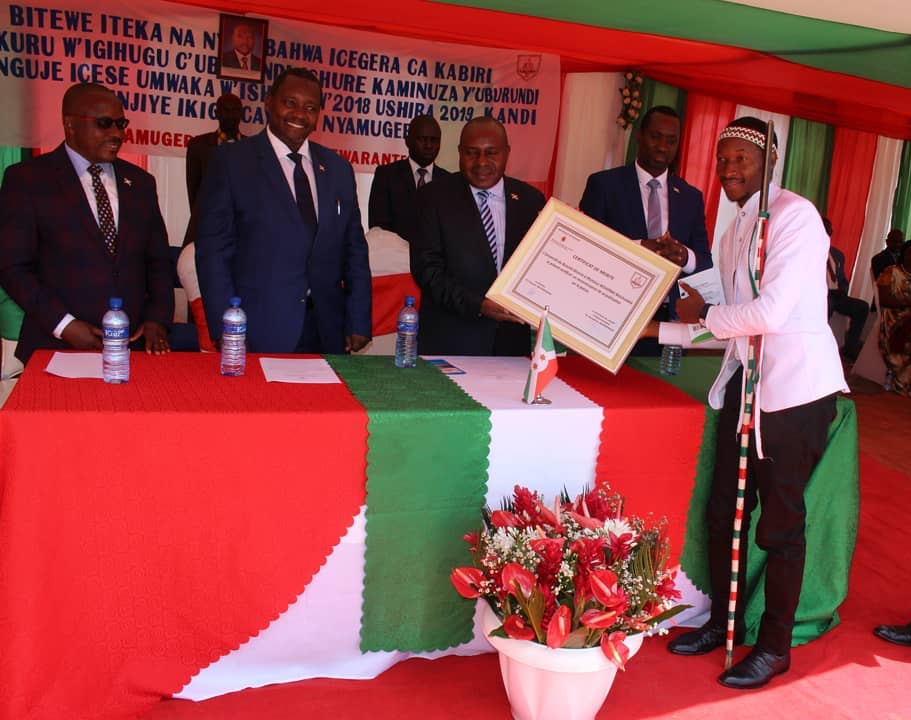
On March 29, 2019 the University of Burundi awarded him “A Certificate of Merit” in recognition of his publication. “I am still grateful for that unforgettable award and the support”, he mentions.
And still he dreams on?
Given that writing has been his daily task, he can assume that even his first job as a journalist was the consequence of his publication and his ability and passion about writing. “Despite all the challenges I faced, I managed to overcome“, he proudly says.
Today, Bōshírwa is the founder and CEO of the multiservice society Andika Solutions. So, he leaves you with this: “Don’t listen to naysayers, even when they seem to be the soothsayers. Follow your dreams and never forget that passion pays”.