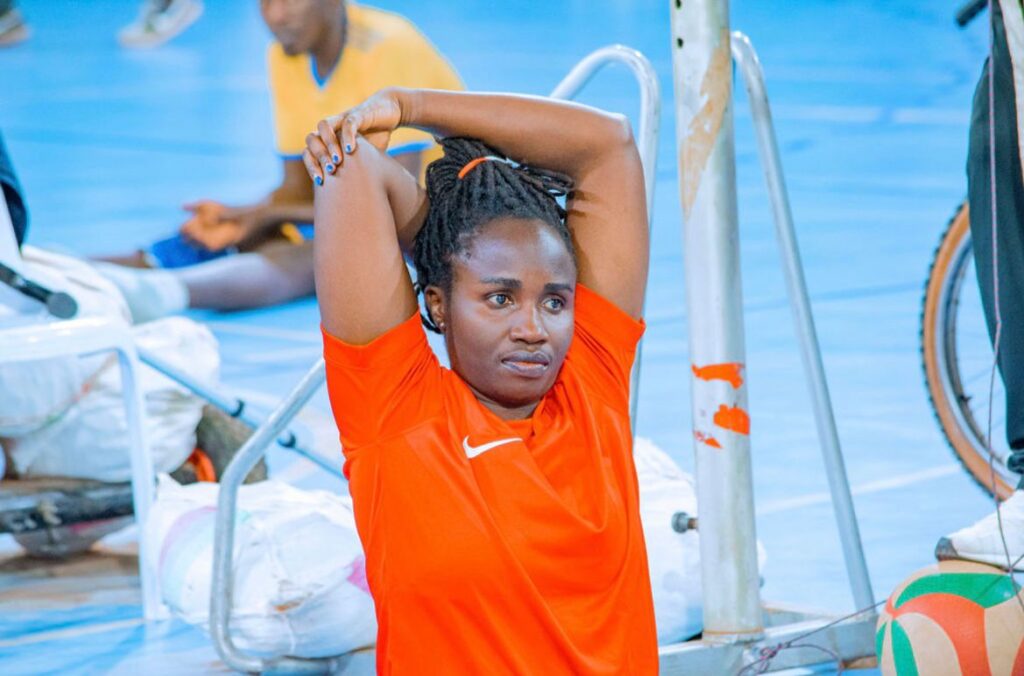
Before Bernadette Niyoyitungira became an international athlete, a disability rights advocate and one of Burundi’s leading voices for disability inclusion, she was a little girl trying to understand why her world had changed forever.
The civil war that engulfed Burundi in the mid-1990s claimed the lives of members of her family and left her an amputee before she was old enough to understand the meaning of loss. Doctors feared she might not survive the operation that saved her life. But she did. As she grew older, the physical scars were accompanied by questions that no child should ever have to ask.
“Why do I only have one leg? Why is my life different? Did I do something wrong?”
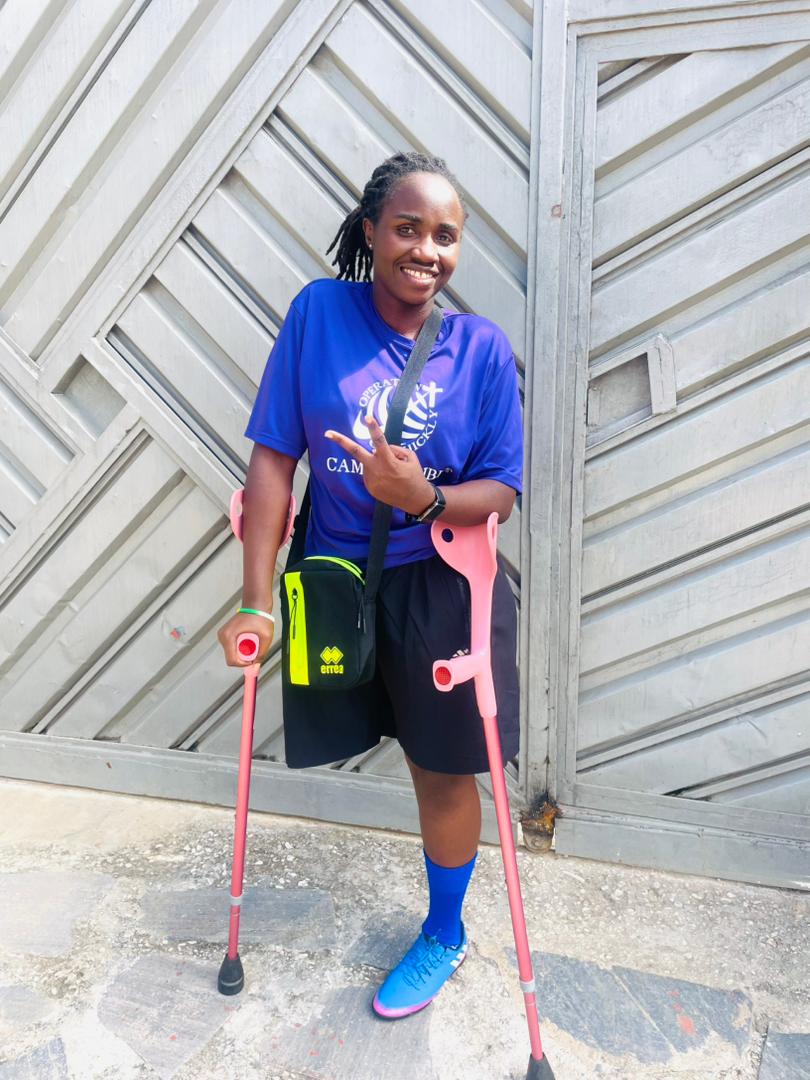
Those questions echoed through a childhood shaped by trauma, poverty and uncertainty. Her father, devastated by the war, struggled to let her out of his sight. Bernadette spent part of her early years in an orphanage before later living with relatives, where survival often came before childhood. At one point, she was even sent onto the streets to beg. It was a beginning that could easily have defined the rest of her life.
Instead, it became the foundation of an extraordinary journey.
Years later, her father finally explained why allowing her to go to school had been one of the hardest decisions he had ever made.
“The war had taken everything I had,” he told her. “I didn’t want to stay a minute without seeing you because you reminded me of my family.”
Eventually, after long conversations with people who believed in her future, he agreed to let her leave for school. That single decision transformed the course of Bernadette’s life.
Education became far more than an opportunity to earn qualifications. It became her path to dignity, independence and hope.
Living in a boarding center for children with disabilities while attending an inclusive school, Bernadette quickly discovered that her greatest obstacle was not the loss of her leg. It was the barriers society had built around people with disabilities. She encountered inaccessible environments, discrimination and low expectations that constantly questioned her potential before she had the chance to prove herself.
Yet every obstacle strengthened her determination.
Her academic journey eventually took her to Rwanda, where she earned a diploma in Hospitality Management before returning to Burundi to complete a university degree in Tourism and Hospitality. She later trained in lower-limb prosthetics, working with people living with disabilities at Burundi’s National Center for Orthopedic and Rehabilitation Services in Gitega.
It was there that Bernadette realized the struggles she had overcome were shared by thousands of others.
She met children with disabilities hidden inside their homes instead of attending school. She watched talented young people lose hope because society had already decided what they could never become. Everywhere she looked, she saw reflections of her own childhood.
“I realized surviving wasn’t enough,” Bernadette says. “I wanted to change the lives of others facing the same challenges.”
That realization became her life’s mission.
Today, Bernadette serves as Disability Inclusion Advocate with Community Rise, a Burundian organization promoting inclusion, while also working as African Program Coordinator for Operation Go Quickly, a United States-based ministry supporting people with disabilities worldwide. She travels across communities advocating for disability rights, mentoring women and girls, challenging harmful stereotypes and promoting equal opportunities in education, employment and sports.
Her voice also reaches thousands through social media, where she shares her personal journey on Facebook and TikTok. The responses continue to remind her why telling her story matters.
Many women write to her about lives marked by rejection, violence and isolation. Others simply thank her for showing them that disability does not have to define their future.
Those conversations reinforced something Bernadette now believes deeply. Her story no longer belongs only to her. It belongs to every child with a disability who has been told they cannot succeed. It belongs to every young woman searching for someone who proves that leadership has no physical definition.
And it belongs to every society still learning that inclusion is not charity—it is justice.