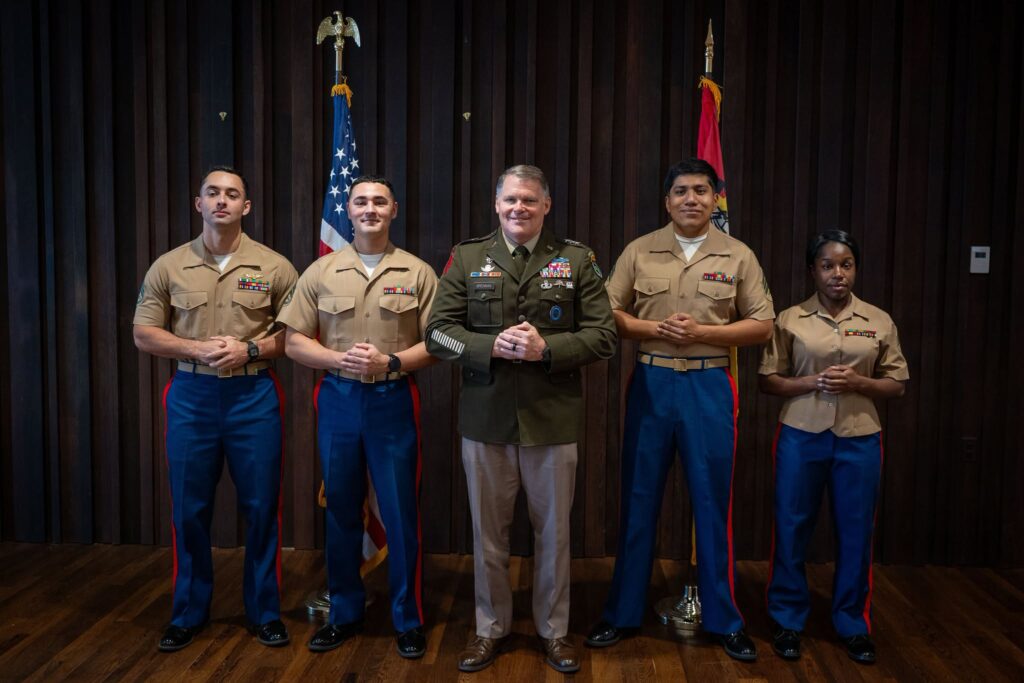
Lieutenant General John Brennan says Washington wants more joint military exercises, maritime security cooperation and intelligence sharing to counter ISIS-Mozambique and protect strategic investments in the Western Indian Ocean.
The United States is seeking to expand its military and security cooperation with Mozambique and Madagascar, with a particular focus on maritime security, counterterrorism and protecting strategic commercial investments in the Western Indian Ocean, a senior U.S. military official has said.
Lieutenant General John Brennan, deputy commander of U.S. Africa Command (AFRICOM), made the remarks following a visit to both countries, where he held discussions with government and military officials on strengthening regional security partnerships.
Speaking, on November 10, 2026, during a press briefing hosted by the U.S. Department of State’s Africa Regional Media Hub, Brennan said Washington was interested in increasing its engagement with the two countries amid growing security concerns around the Mozambique Channel, a strategic maritime corridor for international shipping and global trade.
“With the volume of traffic that goes through the Mozambique Channel, that key terrain is very important to global shipping as well as global commerce,” Brennan said, emphasizing the need to protect the route from threats, including ISIS-Mozambique.
Washington seeks deeper military cooperation with Mozambique
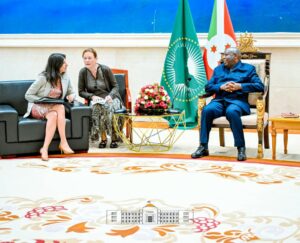
Brennan said his discussions with Mozambican President Daniel Chapo and the country’s defense minister focused on expanding bilateral security cooperation and improving the capabilities of Mozambican security forces.
He said the United States wants to increase joint training activities, military exercises and cooperation with Mozambican forces, particularly in addressing maritime security challenges in Cabo Delgado, where ISIS-linked insurgents have operated.
“We want to make sure the Mozambican security forces are as highly trained as possible,” he said.
Brennan also called for the removal of administrative obstacles that have previously prevented planned joint combined exchange training (JSET) activities from taking place, citing visa procedures and restrictions on bringing military equipment into the country.
He said a JSET programme was planned for later this year and expressed hope that it would proceed.
The U.S. official also encouraged Mozambique to host more regional military exercises, including the maritime security exercise Cutlass Express, which typically brings together around 30 participating countries.
He said AFRICOM was particularly concerned about the growing maritime capabilities of ISIS-Mozambique, including reported piracy activities along the country’s coastline.
Protecting strategic investments
Beyond security cooperation, Brennan linked Washington’s military engagement in Mozambique to the protection of major international investments, particularly in the country’s liquefied natural gas sector.
He highlighted the multibillion-dollar projects involving energy companies TotalEnergies and ExxonMobil, arguing that improved security would help reduce risks for investors.
According to Brennan, the projects could potentially double Mozambique’s gross domestic product once fully operational.
He also pointed to the employment opportunities created by the investments, saying more than 3,000 local people had been hired and trained in connection with construction activities at the LNG site.
Brennan said the United States intends to work with Mozambique and other international partners, including France, Italy, Japan and South Korea, to strengthen security around strategic infrastructure and investment areas.
He added that community engagement and access to employment opportunities would be important in countering misinformation surrounding foreign investment and security cooperation.
U.S. raises concerns over Russia’s growing influence
Brennan also addressed Madagascar’s expanding defense relationships, particularly its renewed military engagement with Russia.
He described the relationship as a rekindling of historical ties and expressed concern that Moscow could extend to Madagascar and Mozambique the security approach it has pursued in parts of the Sahel.
“We caution the partners to understand what Russia’s real motives are,” he said, alleging that Russia seeks to control natural resources, exploit local populations and undermine national sovereignty.
Brennan also criticized Russian security operations in the Sahel, describing their counterterrorism model as largely ineffective and warning that its expansion could further destabilize other parts of Africa.
He said the United States recognizes that African countries are free to choose their international partners but wants them to understand the potential consequences of those relationships.
Regional maritime security cooperation
The AFRICOM deputy commander also called for stronger regional intelligence-sharing mechanisms to improve maritime surveillance across the Western Indian Ocean.
He highlighted the Regional Maritime Information Hub, a cooperation platform involving seven countries, including island nations in the Western Indian Ocean, Kenya and France.
Brennan said Mozambique’s participation in the regional maritime information-sharing framework could strengthen its ability to monitor activities within its Exclusive Economic Zone (EEZ) and surrounding waters.
He also cited technological tools such as SeaVision, a maritime monitoring platform, and uncrewed systems as potential resources for improving regional surveillance.
These capabilities, he said, could be integrated into upcoming exercises, including Cutlass Express 2027, scheduled for March and April.
AFRICOM clarifies U.S. military relocation in Somalia
Asked about reports of U.S. forces leaving Somalia’s Baledogle airfield, Brennan said the relocation was driven entirely by financial and infrastructure considerations rather than a change in Washington’s security partnership with Mogadishu.
He explained that the airfield’s deteriorating surface had made aircraft landings increasingly dangerous, while resurfacing it would have required tens of millions of dollars in funding that was unavailable.
The decision, he said, was made approximately a year earlier, with U.S. personnel and assets relocated mainly to Mogadishu.
“It is not a shift of any sort in the relationship with the Somali National Army or the Somali security forces,” Brennan said.
He concluded by reaffirming AFRICOM’s intention to strengthen partnerships with East African countries through joint exercises, training and regional security cooperation, while urging journalists to help address what he described as widespread misinformation about U.S. activities on the continent.
©Photo: U.S. Africa Command (AFRICOM)