. Burundi’s electoral commission has approved seven presidential candidacies for the 2027 election, rejecting three, including Agathon Rwasa’s, over missing documentation.
. Rwasa’s representative has challenged the decision, while CENI says rejected candidates can appeal to the Constitutional Court within two days.
. President Évariste Ndayishimiye welcomed the approved candidacies, saying he was ready to compete in the election.
Burundi’s National Independent Electoral Commission (CENI) has approved seven of the 10 applications submitted for the 2027 presidential election, rejecting three others, including that of independent candidate Agathon Rwasa, over missing documentation.
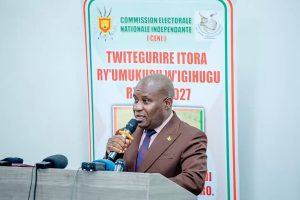
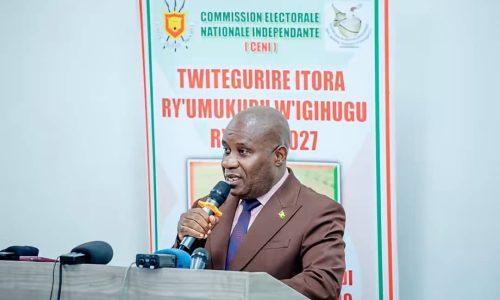
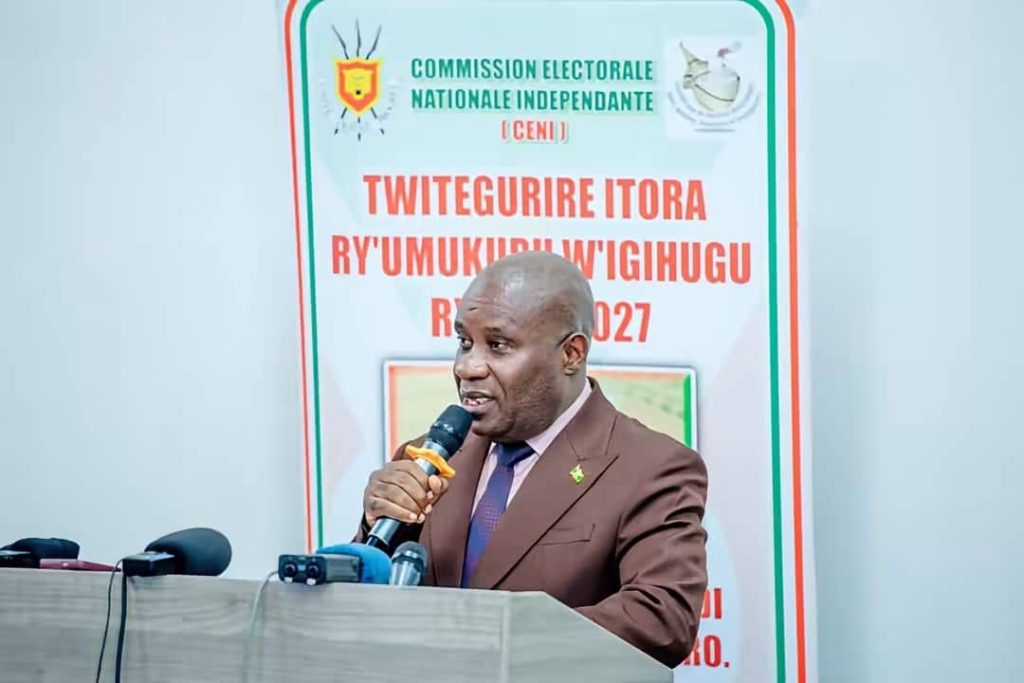
The commission announced its decision on Friday, November 27, 2026, at Donatus Conference Centre. Rwasa’s representative, Pamphile Malayika, challenged the decision, while CENI said rejected candidates have the right to appeal to the Constitutional Court.
The announcement was attended by representatives of diplomatic missions, government ministries, security institutions, civil society organizations, international organizations and political parties, alongside prospective candidates.
CENI said six applications had been submitted by political parties and four by independent candidates. Five party-backed candidacies and two independent applications were approved, while one party application and two independent bids were rejected.
The approved applications include those submitted by representatives of the CNDD-FDD, UPRONA, APDR, FPI and CNL parties, as well as independent candidates Abel Nduwimana and Dieudonné Nahimana.
The rejected applications were those of Rwasa, Valentin Kavakure, representing the FPN Imboneza party, and independent candidate Aloys Kamenyero.
CENI President Prosper Ntahorwamiye said Rwasa’s application did not meet the requirements of Article 101(5) of the electoral code.
Under that provision, independent candidates must submit a document certifying that they have not belonged to a political party during the preceding two years. Ntahorwamiye said Rwasa had instead submitted a document indicating that he was not a member of a political party’s leadership.
CENI determined that the document did not satisfy the legal requirement.
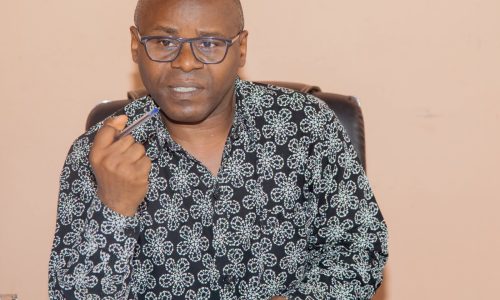
Pamphile Malayika, a former member of parliament representing Rwasa, questioned the commission’s handling of the independent candidate’s application and alleged that efforts had been made to prevent its approval.
“When it comes to Agathon Rwasa’s application, they examine it under a microscope in the hope of finding a reason to reject it. They scrutinized it as though even those in heaven had come down to ensure it was rejected. Every Burundian knows this,” Malayika said.
Ntahorwamiye said candidates who disagree with the commission’s decision have the right to challenge it before the Constitutional Court.
“Anyone who is not satisfied with the results presented here has the right to take the matter to the Constitutional Court,” he said.
Malayika said Rwasa would appeal the decision, although he expressed doubts about the outcome.
Gabriel Rufyiri, president of the anti-corruption organization OLUCOME, said civil society organizations should remain independent of political parties and focus on public accountability.
“We know that civil society organizations advocate for good governance and for citizens to be properly governed. We are not affiliated with any political party. What we want is good governance,” Rufyiri said.
He said the dispute over Rwasa’s application raised questions that should be examined in light of Article 99 of the Constitution, including its provisions concerning forced removal from a political party.
“Even if you have not studied law, you can see that there is a question here. I believe they will find an answer,” he said.
Rufyiri also called on presidential candidates to address the challenges facing Burundi, including poverty, foreign currency shortages, the situation of Burundians living abroad after fleeing the country, and restrictions on individual freedoms.
He said the rights of all citizens should be respected.
President Évariste Ndayishimiye, the CNDD-FDD presidential candidate, welcomed the approval of the seven applications in a statement posted on X.
“I congratulate those whose candidacies have been approved by the Independent National Electoral Commission, CENI. It is good for Burundians to have many candidates from whom to choose their leader,” Ndayishimiye said.
He added: “I am ready to compete with them as fellow Burundians.”
Article 104 of Burundi’s electoral code requires each presidential aspirant to deposit a security payment of 100 million Burundian francs into a government account at the Bank of the Republic of Burundi (BRB).
The provision states that candidates whose applications are rejected because they do not meet the requirements are entitled to a full refund of the deposit.
Article 103 provides that a candidate whose application has been rejected may appeal to the Constitutional Court within two days of the commission’s announcement.
The court then has eight days to communicate its decision to the person who filed the appeal.
The final list of candidates for the 2027 presidential election will depend on the outcome of any appeals filed within the prescribed period.