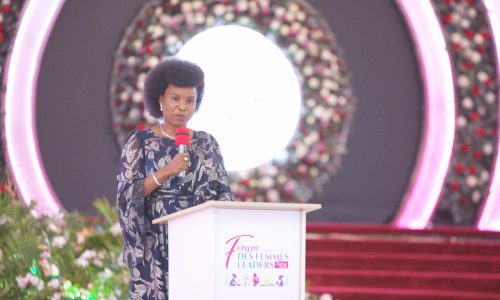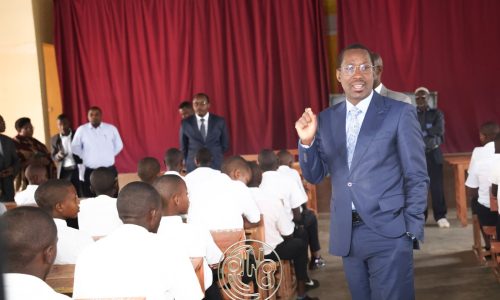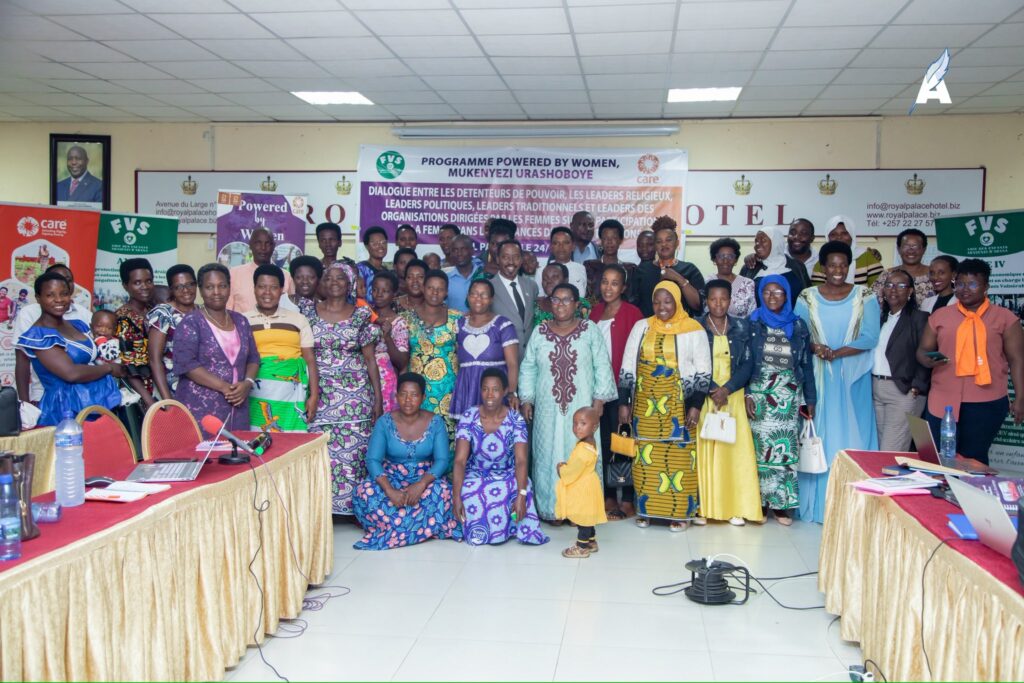
A high-level dialogue panel on “Women’s Participation in Decision-Making” was held on December 24, 2025, at the Royal Palace Hotel in Bujumbura, bringing together political, religious, community and civil society actors. Organized by CARE Burundi in partnership with FVS Amie des Enfants, the event attracted a diverse audience of young people, local leaders and institutional representatives to assess women’s representation in decision-making bodies and propose concrete avenues for stronger inclusion in governance.
The panel featured key voices engaged in advancing women’s leadership, including Nissedor Nkurunziza, Head of the Mukenyezi Urashoboye Project at CARE Burundi; Ephemie Mbonyingingo, representative of the IFB women’s movement within the UPRONA party; Valérie Mpawenayo from the religious organization CINEB; Marie Concessa Barubike, Coordinator of AFRABU; Marie Fidès Nzitonda, representative of women within the Bashingantahe institution; and Chantal Bajinyura, Secretary of the sector of elected women at the communal level.
Presenting recent data, Marie Concessa Barubike revealed that women’s representation in decision-making bodies in Burundi increased from 17 percent in 2016 to 32.52 percent in 2025. While acknowledging this progress, she stressed that the pace remains slow and called for stronger mechanisms to ensure women’s full inclusion in leadership and governance structures.
Panelists also highlighted persistent barriers limiting women’s access to decision-making positions. Nissedor Nkurunziza and other speakers pointed to financial constraints, deeply rooted cultural norms, and appointment systems in certain institutions that do not always favor gender balance. Participants deplored the fact that in many appointed bodies, women remain underrepresented despite their proven competence.
Several practical recommendations emerged from the discussions. Participants proposed including candidates’ photographs on ballots during local elections, particularly for hill chiefs, to help illiterate voters make informed choices and prevent others from voting on their behalf. Religious representatives urged church leaders to actively promote women’s leadership by recalling inspiring female figures cited in biblical texts and emphasizing that women, too, are called to positions of responsibility.
Nissedor Nkurunziza further called on organizations that mobilize women to vote and run for office to begin awareness-raising efforts well in advance, allowing women sufficient time to prepare and build self-confidence. She also underscored the responsibility of women already in leadership, noting that “those who have succeeded must become role models and sources of inspiration for others.”
The dialogue concluded in an open and constructive atmosphere, with a question-and-answer session that allowed both men and women to share reflections, concerns and suggestions on the challenges and solutions related to women’s participation in decision-making processes.