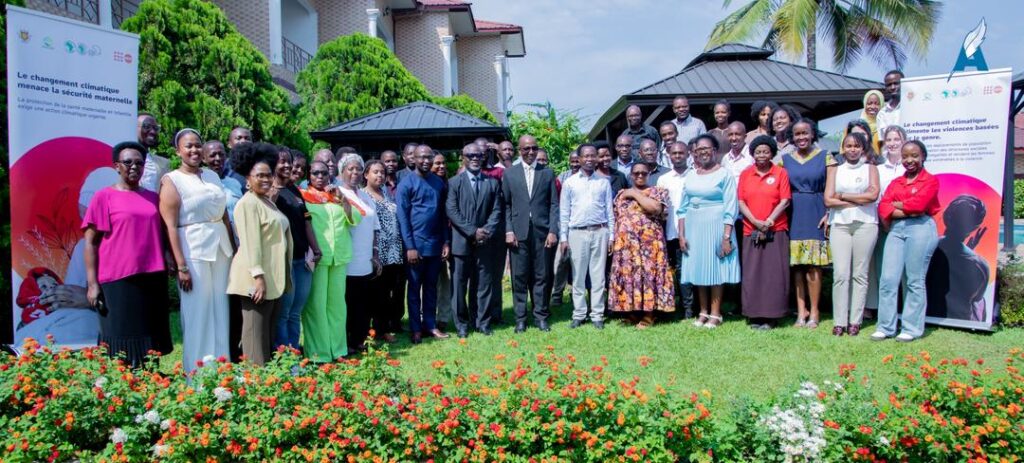
The United Nations Population Fund (UNFPA) and its partners have launched a four-day workshop in Burundi aimed at integrating sexual and reproductive health and gender equality into the country’s climate response efforts, as officials and experts warn that climate change is increasingly deepening social and health vulnerabilities.
The training workshop opened on Tuesday, May 19, at the Royal Palace Hotel in Bujumbura, bringing together representatives from government ministries, international organizations and civil society groups.
Organized by the United Nations Population Fund in partnership with Resilient Futures and the Africa Climate Change Fund (ACCF), and supported by the Government of Burundi, the United Nations Population Fund East and Southern Africa Regional Office, and the African Development Bank Group, the workshop seeks to promote climate interventions that are inclusive, gender-sensitive and grounded in the protection of fundamental rights.
Speaking during the opening ceremony, Kacou Pierre KONAN, Acting Resident Representative of UNFPA in Burundi, alongside Clément Ndikumasabo, Director General of the Environment and Sustainable Land Management Program at Burundi’s Ministry of Environment, Agriculture and Livestock, stressed the growing urgency of addressing the human cost of climate change.
Officials highlighted how extreme weather events and environmental pressures are affecting maternal and child health, while also contributing to rising cases of gender-based violence, particularly among vulnerable communities.
One of the key speakers, Claudine Ahishakiye, underscored the link between climate shocks and human protection concerns.
“Every climate crisis is also a protection crisis,” she said, calling for stronger and more resilient systems capable of safeguarding women, girls and marginalized communities during environmental emergencies.
A panel discussion held during the first day of the workshop focused on the disproportionate impact of climate change on women and girls, especially those dependent on agriculture for survival. Participants explored strategies aimed at strengthening women’s empowerment and improving community resilience in the face of climate-related disruptions.
Dr. Mugisha Jean Claude also presented on the effects of climate change on women’s health, emphasizing the need to reinforce the resilience of Burundi’s healthcare sector as climate-related risks continue to intensify.
Another highlight of the day was a masterclass inspired by the experience of Bangladesh, where experts showcased how strengthening maternal healthcare systems can serve as an effective climate adaptation model — an approach participants said could offer valuable lessons for Burundi.
The opening day laid the foundation for broader strategic discussions that will continue through May 22. Upcoming sessions are expected to focus on comprehensive sexuality education, youth-led innovation, gender-responsive budgeting and advocacy for more inclusive climate policies.
As climate challenges increasingly intersect with public health and social inequality across Africa, organizers say the workshop represents an important step toward ensuring that climate action in Burundi leaves no one behind.