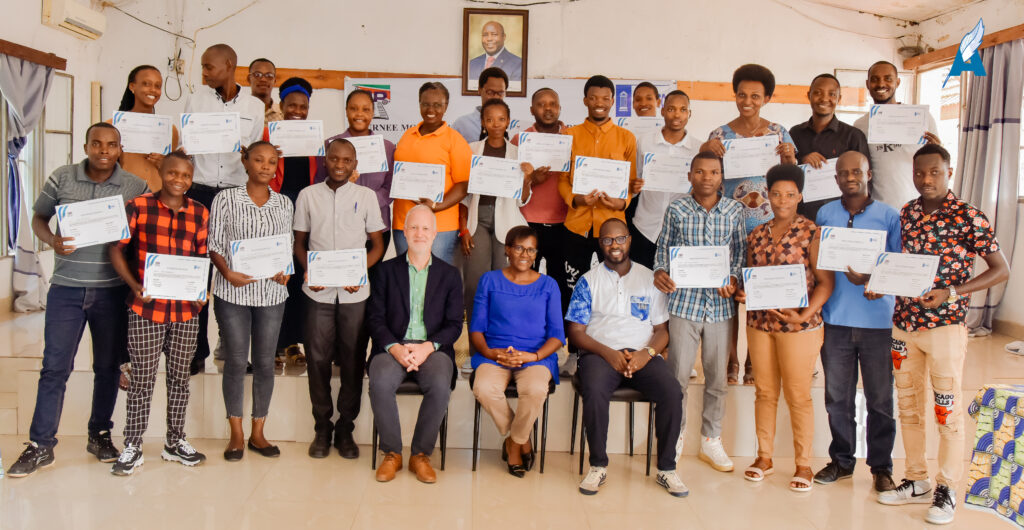
The three-day training workshop on human rights, journalists’ rights, and the professional treatment of human rights-related information concluded on May 22, 2026 in Burundi. The initiative was organized by the Burundi Press House with the support of UNESCO.
During the closing sessions, Bukeyeneza Alain Désiré, Editor-in-Chief at RT Isanganiro, focused on ethical reporting practices in the coverage of human rights issues. He stressed the importance of respecting the presumption of innocence in journalism, urging reporters to avoid terms such as “author,” “accomplice,” or “guilty person” before a court ruling. Instead, journalists were encouraged to use expressions such as “suspected perpetrator” or “alleged accomplice” in order to preserve the principle of innocence until proven guilty.
He also cautioned against publishing insults, defamatory content, or unverified accusations, emphasizing the need for balanced reporting and respect for individuals’ private lives.
The training further examined the different generations of human rights. Participants reviewed first-generation civil and political rights, including the right to life, the prohibition of slavery and torture, equality before the law, access to justice, freedom of movement, the right to property, and the principle of non-retroactivity in criminal law.
Discussions also covered second-generation economic, social, and cultural rights such as the rights to work, education, health, and access to culture. Trainers additionally highlighted third-generation solidarity rights, including the right to peace, development, environmental protection, and respect for the common heritage of humanity.
Participants explored practical examples of human rights-related reporting, including cases involving violations of the right to life, sexual violence survivors, minors appearing before courts, public hearings, the detention of journalists, health rights violations, and arrests conducted by police authorities. Trainers reminded journalists of the State’s obligations in human rights protection, namely the duty to respect, protect, and implement human rights standards.
In his closing remarks, Peter Wallet, Coordinator of UNESCO House in Burundi, said the workshop was specifically designed to strengthen journalists’ understanding of human rights and encourage their integration into daily media work.
According to him, the initiative also aimed to help journalists better understand their own rights while enhancing their ability to handle sensitive information in a professional and responsible manner. He noted that the broader objective is to contribute to building a more democratic, equitable, and peaceful society. The training forms part of activities organized around the 2026 World Press Freedom Day celebrations.
Peter Wallet further emphasized that freedom of expression is a fundamental right for journalists, but one that also carries responsibilities, including accuracy, impartiality, protection of sources, and the fight against disinformation.
He added that UNESCO continues to actively support the protection of journalists in Burundi. In November 2025, around fifty police officers received training on freedom of expression, access to information, and journalists’ safety. UNESCO is also working with Burundi’s Ministry of Interior to integrate these principles into police training initiatives.