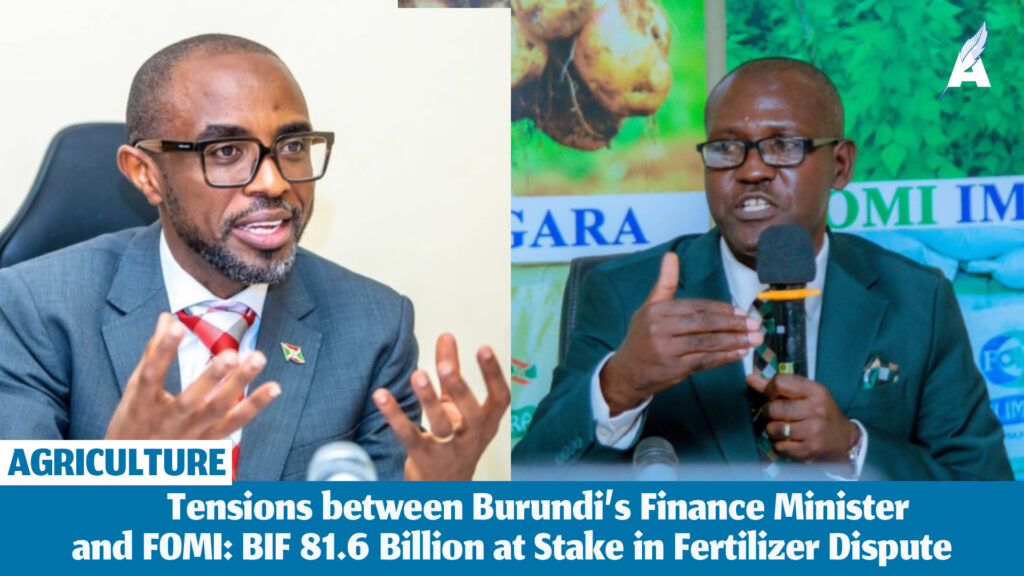
Before the end of 2025, the supply of fertilizers in Burundi became the center of a heated dispute between the Ministry of Finance and FOMI (Fertilisants Organo-Minéraux de l’Industrie), the country’s main fertilizer producer. According to Finance Minister Dr. Alain Ndikumana, the government is being asked to pay over BIF 50 billion in addition to BIF 24 billion contributed by farmers, as well as an amendment covering the C 2024 and A 2025 seasons requesting BIF 6.8 billion—bringing the total amount at stake to BIF 81.6 billion. The situation has raised questions about contractual compliance and financial management between the state and FOMI, highlighting the complexity of distributing agricultural inputs in Burundi.
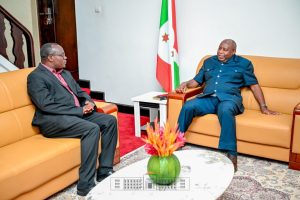
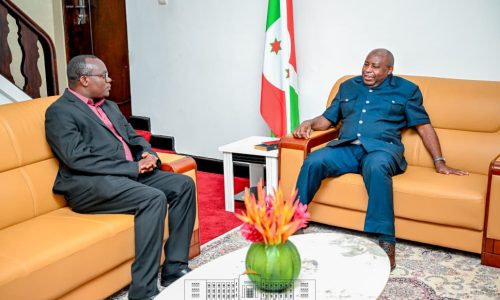
The controversy emerged on December 27, 2025, when Minister Ndikumana presented the mid-year budget revision to the National Assembly in Gitega. During his address, he said he was under pressure to authorize payments exceeding the amounts originally agreed in contracts with fertilizer producers, including FOMI. “Can we supply fertilizers beyond the contract?” he asked parliamentarians, expressing concern over reported quantity and cost overruns.
Minister Ndikumana explained that for the B and C 2025 agricultural seasons, FOMI is requesting an additional BIF 50,783,349,898 beyond amounts already paid, while farmers are expected to contribute another BIF 24 billion in advance and balances. For the amendment covering the C 2024 and A 2025 seasons, FOMI is claiming BIF 6,839,000,000, bringing the total at stake to BIF 81,622,349,898.
For the B and C 2025 seasons, FOMI claims payments for quantities exceeding contractual agreements by 17.5%, while the amendment covering C 2024 and A 2025 adds another 3.9% overrun. Minister Ndikumana said these adjustments place both the government and farmers in a financially delicate situation, raising governance concerns.
FOMI responded on December 30, 2025, issuing a statement on its Facebook page denying any threat or pressure on the Finance Minister. “FOMI does not threaten or intimidate the Minister of Finance. The company works in good cooperation with the State of Burundi,” the statement read.
During a press briefing on December 31, 2025, Herménégilde Manyange, FOMI’s Deputy General Manager, urged the minister to “carefully analyze the cooperation mechanisms” between the state and the company. He noted that, given Minister Ndikumana’s recent appointment, some complex files might not yet be familiar to him. “Everything is documented officially. It is crucial to communicate based on verified facts rather than spreading approximations,” Manyange emphasized.
FOMI clarified that fertilizer distribution is strictly governed by contracts with the Burundian government. Contracted quantities serve as a baseline, with adjustments made according to actual demand from farmers. Distribution tickets, issued by the Ministry of Agriculture, organize delivery and ensure FOMI is paid only for fertilizers actually supplied.
Official data from the Ministry of Agriculture show that fertilizer needs increased by about 20% in 2025 compared to the previous year, reflecting the state’s push to expand national agricultural production. “It happens that farmers request more fertilizers than initially contracted, and this is often the case,” Manyange explained. When over-deliveries occur, the state issues additional tickets corresponding to actual demand.
FOMI also highlighted the financial flow. Payments by farmers—advances and balances—do not pass through FOMI’s accounts but go into a public account managed under the National Program for Fertilizer and Seed Subsidies (PNSEB). FOMI is paid only after ticket verification and confirmation of delivery to farmers.
According to Manyange, framing these practices as “financial pressure” is misleading. “When the minister says he is being threatened and mentions FOMI, for us, it is a form of aggression,” he said, adding that the company had to respond to protect its international reputation. FOMI aims to access regional and global markets and cannot afford for misinformation to harm its credibility.
Despite the firm tone, FOMI remains open to dialogue. The company urges the Finance Minister to prioritize technical and direct exchanges to avoid public confusion. FOMI says it is ready to provide all necessary explanations and fully cooperate with authorities to ensure transparency and proper management of the fertilizer program, a sector vital for Burundi’s economy and food security.
Beyond the immediate dispute, this episode highlights structural challenges in implementing agricultural policies: ensuring financial rigor, supporting farmers, and managing complex contracts. It also underscores the importance of clear communication between public and private actors to prevent misunderstandings and maintain public trust.
The FOMI–Finance Ministry dispute demonstrates that fertilizer issues go beyond commercial transactions—they affect food security, budget management, and institutional credibility. With 81.6 billion FBu at stake, both parties are now called upon to clarify their dealings and establish structured technical dialogue to ensure farmers have fair and sustainable access to these essential agricultural inputs.