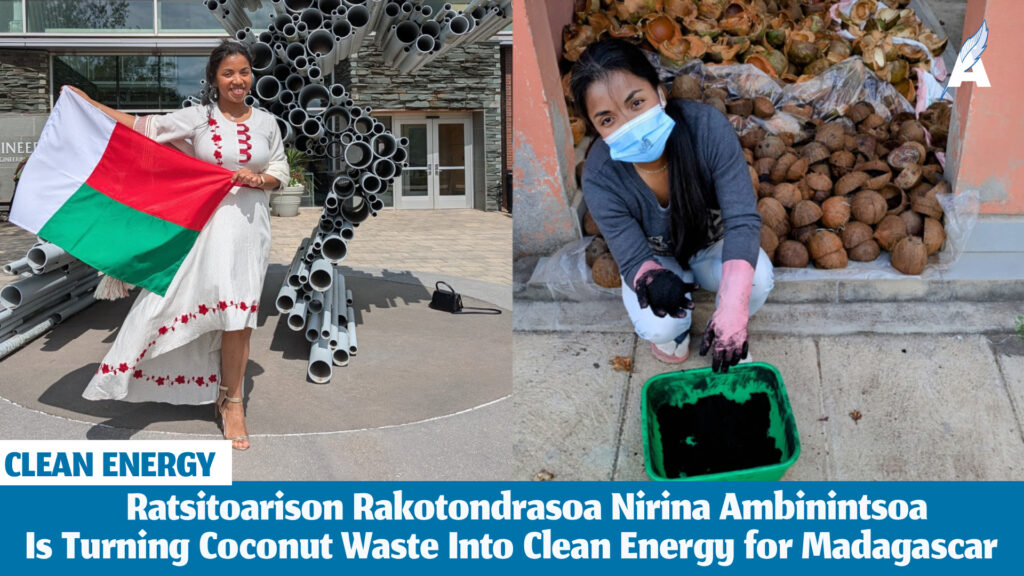
Born and raised in Antananarivo, Madagascar, Ratsitoarison Rakotondrasoa Nirina Ambinintsoa has emerged as one of the country’s most compelling young innovators tackling the dual crises of energy poverty and deforestation. Through EcoCoco, her initiative converting discarded coconut shells into clean cooking briquettes and water-filtration carbon, she aims to offer a credible green alternative in a nation where more than 90% of households still rely on charcoal and firewood for daily survival.
“Madagascar faces a severe deforestation crisis largely driven by household dependence on charcoal and firewood,” she explains. “At the same time, access to clean, reliable, and healthy energy alternatives remains extremely limited.” EcoCoco positions itself at this intersection: replacing wood charcoal with briquettes made from agricultural waste, reducing pressure on forests while introducing a cleaner fuel source for homes and small businesses. In its pilot phase, the company has also begun producing activated carbon for water purification, responding to another structural challenge, limited access to safe drinking water, which affects nearly half of the population.
2025 Mandela Washington Fellow, behind the venture is a career shaped by fieldwork, humanitarian action, impact entrepreneurship, and an intimate encounter with the consequences of energy scarcity. Nirina holds a Master’s Degree in Social Sciences from the Catholic University of Madagascar. Over more than twelve years, she worked across some of the country’s most sensitive ecological and social landscapes. Her early career centered on environmental conservation, coordinating field projects across Madagascar, including UNESCO World Heritage rainforests. She then shifted toward humanitarian and public health interventions, notably malaria prevention in the south of the island.
Her trajectory took an international turn when she joined an African Union youth volunteer program in Burkina Faso, addressing child marriage. Returning home, she founded a training company focused on communication, leadership, and entrepreneurship. Her work later intersected with major development actors. As Entrepreneurship Lead with the World Bank’s Integrated Growth Poles Project, she supported startups and SME creation nationwide. At Miarakap, Madagascar’s first impact investment fund, she served as Advisory Manager, working directly with small businesses positioned for responsible growth.
But EcoCoco did not spring from professional experience alone. Becoming a mother, she says, “pushed me to reflect on the future I wanted to build. I realized I no longer wanted only to support entrepreneurs. I wanted to become one.” Yet the initial spark predated motherhood. Years earlier, after witnessing rural communities destroying forests to make charcoal, the only energy source available for cooking, she made a promise to herself: “EcoCoco was born from that decision and from a promise I made years ago.”
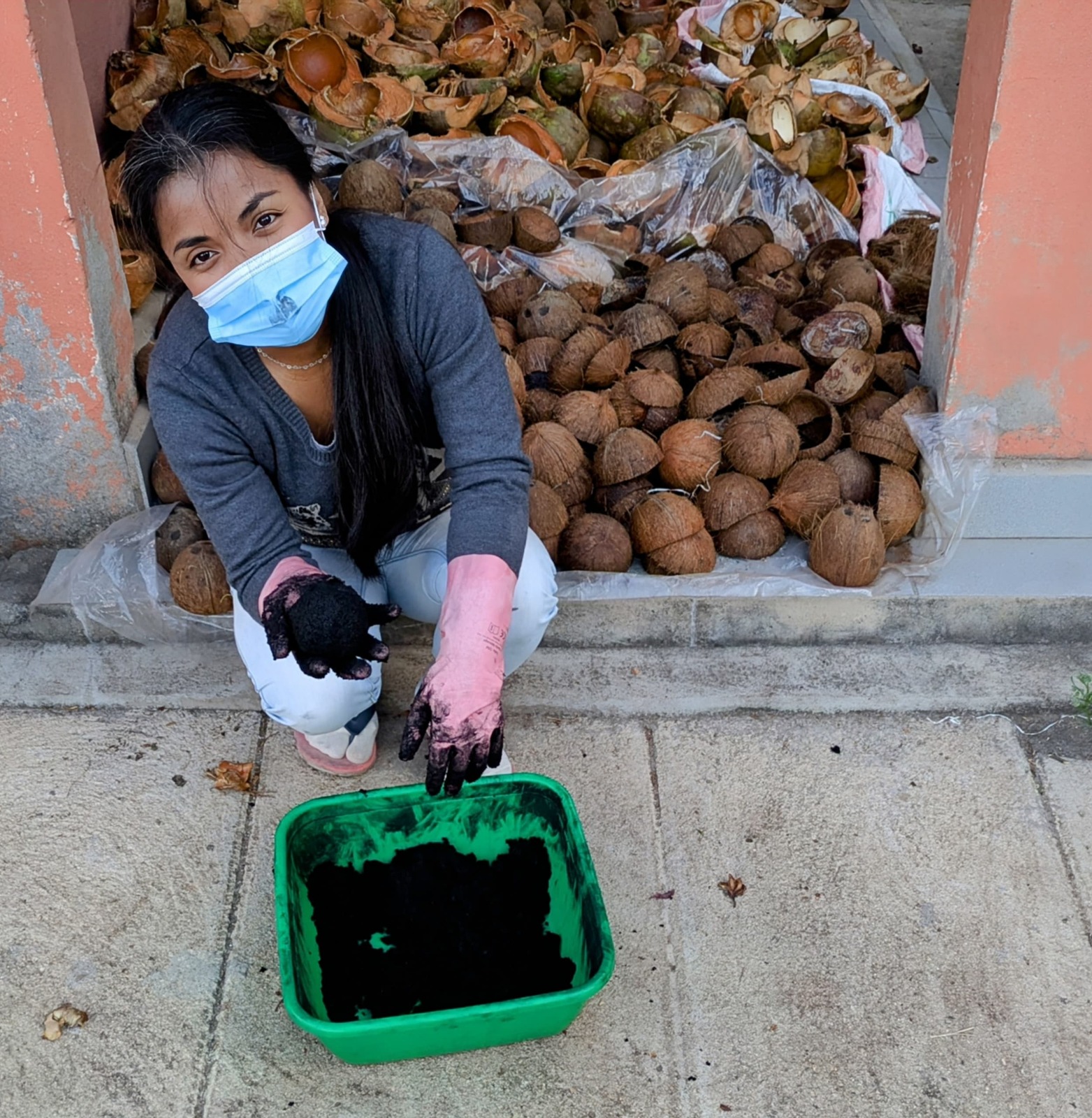
Technically, the process is straightforward and grounded in applied science. EcoCoco purchases coconut shells, usually discarded, from local communities and businesses. “We sort, clean, dry, and carbonize the shells,” she explains. “The resulting char is ground, mixed with a natural binder, molded into briquettes, dried, and packaged.” The briquettes burn approximately one and a half times longer than traditional charcoal, produce almost no dust, release very little ash, and are smoke-free. “This makes them safer for health and more comfortable for daily use,” she notes.
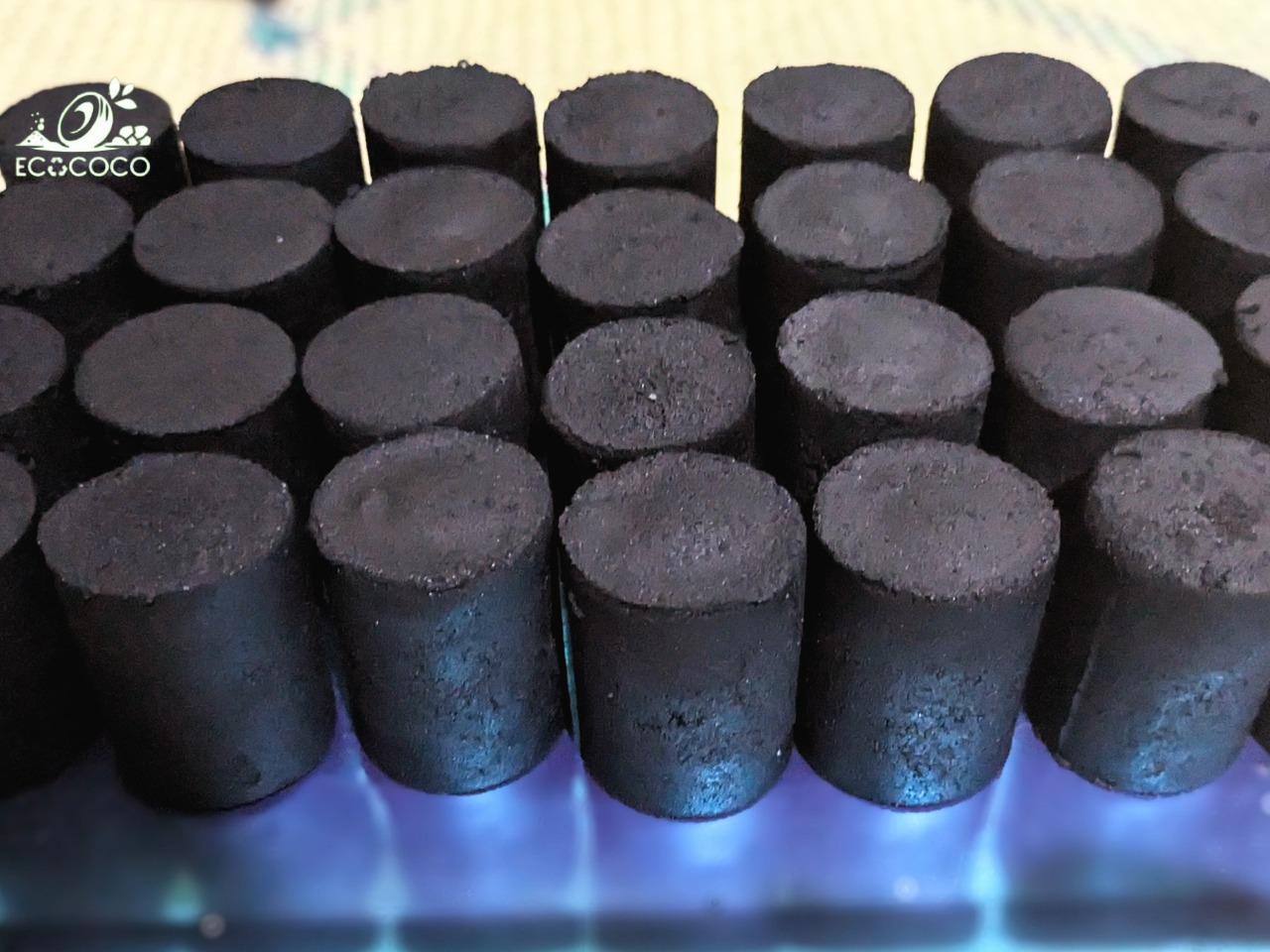
Although still in its pilot and structuring phase, EcoCoco has already begun modeling environmental impact. Based on national charcoal conversion ratios, each ton of EcoCoco briquettes would save an estimated 7.5 tons of wood. Coconut shells that were previously discarded or burned are already being diverted into productive use.
Scaling, however, depends on technical, financial, and regulatory steps. “EcoCoco is currently transitioning from artisanal pilot production to structured commercialization. The main challenge is building a reliable production line while maintaining consistent quality,” she says. A first molding machine has been secured through prize funding, and additional equipment and certifications are underway. EcoCoco has not yet entered the commercial market but positions its product on performance rather than low price.
The value chain also integrates women, youth, and informal waste collectors—key actors in collection, processing, and distribution—turning low-value residues into income streams. Parallel testing on activated carbon aims to offer locally produced water filtration solutions once laboratory validation is complete.
Looking ahead, Nirina Ambinintsoa is ambitious. “In the medium to long term, the vision is to scale nationwide and eventually access international markets through export channels,” she says. For her, green energy is not just a technological shift, it is a pathway toward a more resilient and sustainable Madagascar, and potentially a contribution to Africa’s broader clean-energy transition.