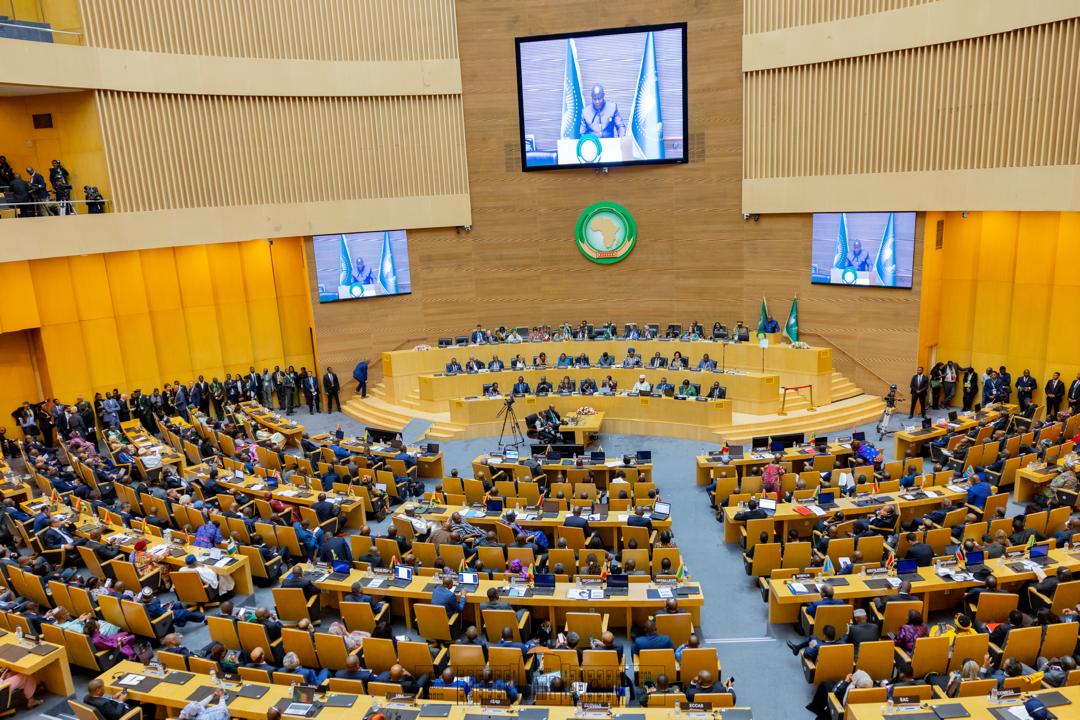
When African leaders convened in Addis Ababa for the 39th African Union Summit on 14 February 2026, the ceremonial handover of the Union’s rotating chairmanship placed Burundi’s president, Evariste Ndayishimiye, at the center of continental diplomacy. His appointment — while symbolically significant — also reveals the gap that often exists between perception and institutional reality in African governance.
For Burundi, frequently described as the “Heart of Africa,” the moment represents a diplomatic milestone and a rare opportunity to shape the tone of continental conversations for a year. Yet beyond the celebratory narratives, the chairmanship is best understood as a role of influence rather than authority — a platform to convene rather than command.
Ndayishimiye assumes the position at a complex juncture for the continent. Armed conflicts persist in multiple regions, economic growth remains uneven amid global uncertainty, and climate shocks are intensifying social pressures. In this context, the effectiveness of the African Union increasingly depends on its ability to forge consensus among 55 sovereign states whose interests do not always align.
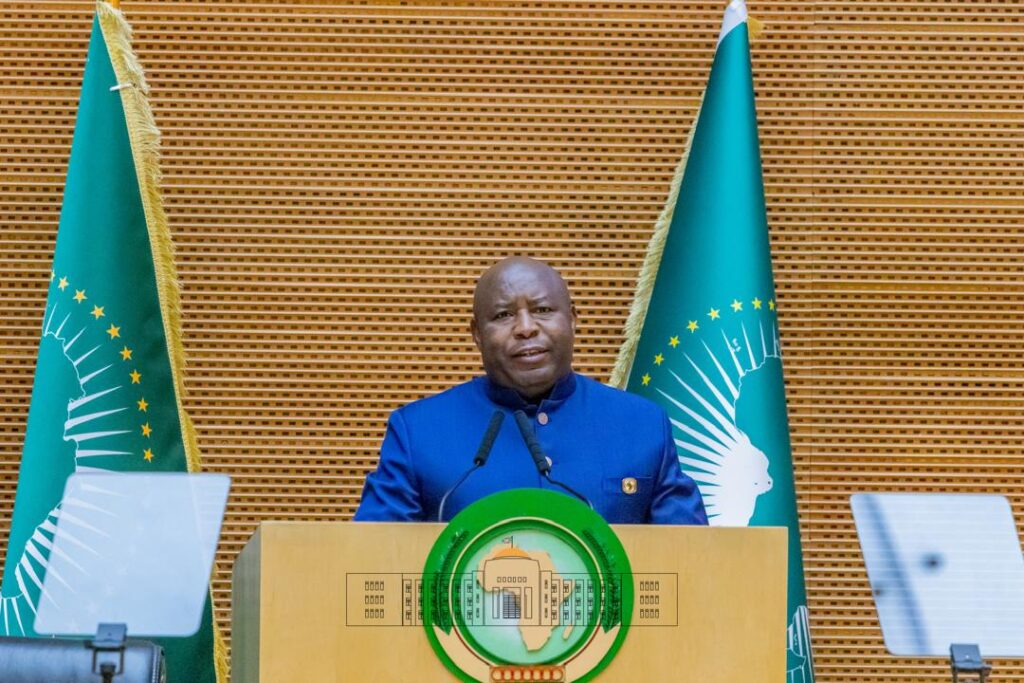
In his first remarks after taking office, the Burundian leader struck a tone of humility and collective responsibility, thanking his peers for their confidence: “We thank the Heads of State of the African Union for the trust they have placed in us.” He emphasized the cooperative nature of his mandate, adding, “The responsibilities entrusted to us are not easy, because Burundi will carry Africa’s flag on the international stage.”
Rotating Leadership, Not President of Africa
Public discourse in Burundi often blurs the distinction between symbolism and authority, with some local and unware commentators portraying the AU chair as a de facto “President of Africa.” A closer examination of the Union’s institutional framework tells a different story.
The chairmanship rotates annually among regions and is held by a sitting head of state. Its responsibilities are primarily diplomatic: presiding over summits, representing the Union internationally and facilitating dialogue among member states. Binding decisions, however, remain the collective domain of the Assembly of Heads of State and Government and are operationalized by the AU Commission.
This structure reflects the African Union’s foundational principle — the sovereignty of its members. Unlike a federal system, the Union lacks a central executive authority capable of imposing policy across the continent. Consequently, the chair’s success depends largely on soft power: negotiation skills, credibility and the ability to build coalitions around shared priorities.
Ndayishimiye himself reinforced this distinction: “We want an African Union made up of countries united, peaceful and secure.” His words underscore that leadership at the continental level is about fostering cohesion rather than commanding obedience.
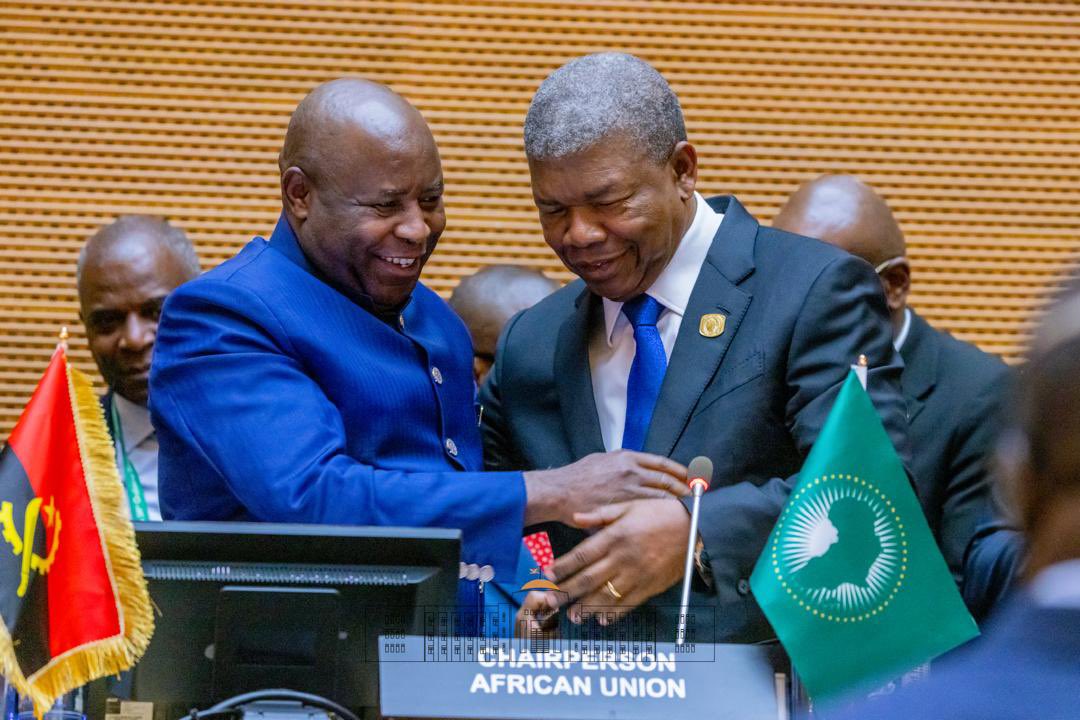
He succeeds João Lourenço of Angola, whose tenure emphasized institutional reforms and conflict mediation. The transition to a Central African chairmanship reinforces the principle of regional rotation, reflecting collective ownership rather than hierarchical authority.
Priorities Under the Microscope
The Burundian presidency of the African Union is framed around three core themes: access to water and sanitation, peace and security, and the empowerment of youth and women. Each reflects pressing continental challenges, but also invites scrutiny regarding implementation and measurable impact.
Water access remains one of Africa’s most urgent development gaps, affecting health systems, food security and urban resilience. By foregrounding the issue, Ndayishimiye aligns his agenda with everyday realities across the continent, though translating high-level commitments into coordinated action will test the Union’s institutional capacity.
On security, the AU continues to navigate a crowded landscape of regional mechanisms, international partners and peacekeeping mandates. Observers will watch closely to see whether the chairmanship can strengthen coordination or merely maintain the status quo.
The focus on youth and innovation, meanwhile, speaks to Africa’s demographic trajectory. With millions entering the labor market each year, the challenge lies not only in policy frameworks but in mobilizing investment and political will across national borders.
Reflecting on these responsibilities, Ndayishimiye emphasized: “The responsibilities entrusted to us are not easy… we must ensure our actions reflect the trust placed in us by the nations of Africa.” His remarks convey both the prestige and the constraints of the position..
Symbolism, Expectations and the Test Ahead

The president’s return to Bujumbura on 16 February, greeted by officials and crowds at Melchior Ndadaye International Airport, highlighted the domestic resonance of the appointment. For many Burundians, the chairmanship signals international recognition and a chance to reposition the country diplomatically.
Yet history suggests that the real measure of an AU chair’s tenure lies not in ceremony but in incremental progress — quiet mediation efforts, sustained policy coordination and the ability to keep member states engaged in collective action. The institutional constraints that limit the role also protect the Union’s balance, ensuring that leadership remains shared.
As the year unfolds, Ndayishimiye’s challenge will be to navigate competing regional priorities while maintaining momentum on his stated agenda. In an era when multilateralism faces growing skepticism, the African Union’s credibility will hinge on its capacity to translate dialogue into outcomes.
The significance of Ndayishimiye’s chairmanship lies less in the authority it confers than in the expectations it raises. As he reminded his peers, “We want an African Union made up of countries united, peaceful and secure.” In Africa’s rotating leadership, influence is earned in the quiet work of consensus — where the real test is not who leads, but whether unity moves from rhetoric to reality.