Kenya’s crackdown on foreign nationals engaged in hawking, small-scale trading and related businesses has opened a wider legal and regional debate, with the East Africa Law Society (EALS) warning that enforcement must protect Kenya’s legitimate economic interests without undermining the rights guaranteed under the East African Community’s Common Market.
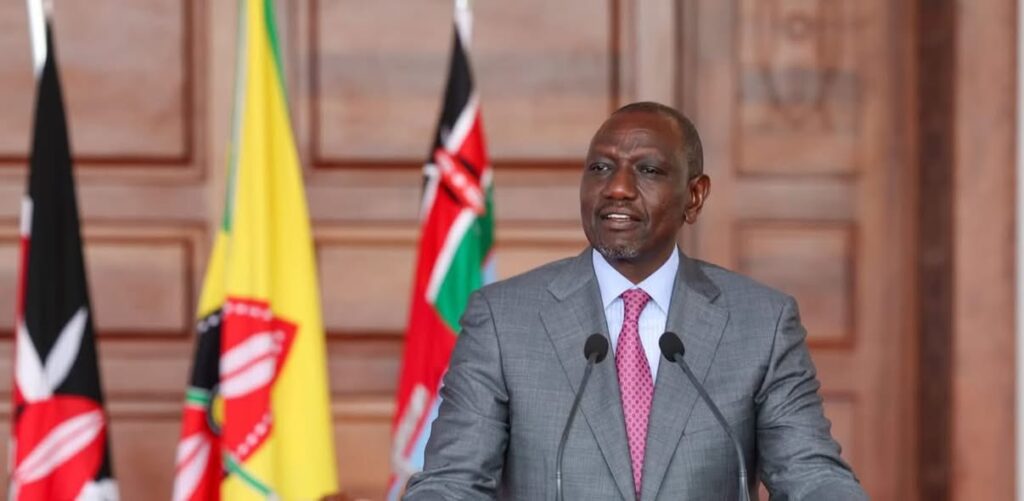
The warning came as anxiety spread among foreign traders, particularly Burundians. On September 7, large numbers of Burundian nationals sought assistance and travel documentation at the Burundi Embassy in Nairobi amid fears over the implementation of President William Samoei Ruto’s directive. Kenya subsequently announced a temporary registration and regularization window for undocumented East African nationals and said it had “zero tolerance” for harassment, intimidation or xenophobia.
In a statement dated September 7, 2026, issued in Arusha, Tanzania, East Africa Law Society said it had taken “serious concern” over the directive and its implementation. The regional lawyers’ body said measures affecting economic activity can have consequences not only for businesses but also for livelihoods, personal security, dignity and confidence in East Africa’s regional integration project.
At the same time, EALS recognised Kenya’s sovereign authority to regulate economic activity within its territory. Kenya is entitled to enforce its immigration, licensing, tax and labour laws, protect local traders and act against people who violate domestic law.
The legal society’s concern is therefore not whether Kenya can enforce its laws, but how those laws are enforced.
EALS said foreign nationals with the required documentation remain entitled to live and work in Kenya and welcomed subsequent clarification from Kenyan authorities that enforcement would take account of Kenya’s obligations under the EAC framework. It urged the government to ensure that this position is reflected consistently in practice.
Nationality cannot replace evidence of illegality
EALS argues that a person accused of violating Kenyan law should be dealt with according to the applicable law and the circumstances of the individual case.
Nationality, it says, should not in itself be treated as evidence of illegality.
That principle is particularly important because Kenya’s obligations extend beyond domestic legislation. Under Articles 6, 7 and 8 of the EAC Treaty, Partner States are committed to good governance, the rule of law, social justice and the recognition and protection of human and peoples’ rights, while also undertaking to honour their Treaty obligations and avoid measures that could undermine the Community’s objectives.
Article 76 establishes the EAC Common Market and provides for the free movement of labour, goods, services and capital, as well as the right of establishment. Article 104 provides for cooperation among Partner States concerning the free movement of persons, labour and services and the rights of establishment and residence.
The Common Market Protocol adds further protections. Article 3 establishes non-discrimination against nationals of other Partner States on grounds of nationality. Article 7 provides for free movement of citizens and non-discrimination based on nationality, while Article 10 addresses the free movement of workers.
Most significantly for the current dispute, Article 13 guarantees the right of establishment, including the right of a national of one Partner State to pursue legitimate economic activities as a self-employed person and to establish and manage an economic undertaking in another Partner State.
But those rights are not unlimited. EALS stresses that EAC citizens remain subject to the laws of the country where they live or conduct business. Kenya can regulate immigration, taxation, licensing, labour standards and economic activity.
Where someone lacks a required licence or permit, violates immigration conditions, evades lawful taxation or otherwise breaches Kenyan law, authorities can take action. The legal requirement must be clear, the alleged violation established and the prescribed legal process followed.
Kenya’s Constitution adds another layer
EALS also points to Kenya’s constitutional framework.
Article 2(5) and (6) recognises general rules of international law and treaties ratified by Kenya as part of Kenyan law. Article 10 binds state organs and public officers to principles including the rule of law, human dignity, equality, human rights and non-discrimination.
Article 27 guarantees equality and equal protection and benefit of the law and prohibits discrimination. Articles 28 and 29 protect human dignity and security of the person, while Article 39 protects freedom of movement.
Under Article 47, administrative action must be lawful, reasonable and procedurally fair, while Article 48 guarantees access to justice.
EALS says these provisions do not prevent Kenya from enforcing its laws against foreign nationals. They require, however, that officials remain within powers granted by law, follow proper procedures and respect the rights of people affected by enforcement.
Where restrictions affect businesses, livelihoods or residence, the legal requirements should be clear and accessible. Serious decisions should have a proper legal basis, appropriate notice and reasons where required, with meaningful access to legal advice and avenues of review.
If Kenya wants to reserve particular economic activities for its citizens, EALS says the legal basis must be clear. Any change to existing legislation should go through the appropriate legislative process, rather than administrative action beyond existing authority.
A regional test
The controversy is now bigger than Kenya’s domestic economic policy.
Kenya is a major hub for the movement of people, goods, services and investment across East Africa. EALS warns that how citizens of Burundi, Tanzania, Uganda, Rwanda, South Sudan, the Democratic Republic of Congo and other EAC countries are treated in Kenya could influence confidence in the Common Market — and eventually how Kenyan citizens are treated elsewhere.
The organisation says reports of Burundians seeking consular and travel documentation should be taken seriously. If citizens of an EAC Partner State become so uncertain about their position that they consider leaving a country, EALS argues, that becomes a regional concern.
Kenya’s government has sought to reassure foreign nationals that the crackdown is focused on compliance with immigration and business requirements rather than nationality. Reuters reported that the government’s temporary regularisation initiative was specifically intended to bring undocumented East African nationals into the legal framework while preventing harassment and xenophobia.
EALS also rejects retaliatory action by other EAC governments, warning that a dispute in one Partner State should not trigger reciprocal restrictions against ordinary citizens.
EALS calls for regional action
EALS is calling on Kenya to ensure that no Burundian or other EAC citizen faces harassment, detention, dispossession, removal or other adverse treatment solely because of nationality and without a lawful basis.
It wants Kenya to publish the legal basis, scope and procedures governing enforcement against foreign small-scale traders and hawkers, and insists that enforcement be individual, fair and proportionate, with safeguards including notice, reasons for decisions, legal assistance and access to judicial or administrative review.
The organisation has also called on the EAC Summit Chairperson and Secretary-General to engage Kenya and affected Partner States, and urged the East African Legislative Assembly (EALA) to examine the implications for the Common Market.
EALS further called on the Law Society of Kenya, Burundi Bar Association and other regional bar associations to document credible cases of unlawful or discriminatory treatment and facilitate access to national courts and, where warranted, the East African Court of Justice.
It has offered its good offices to facilitate dialogue among governments, EAC institutions, bar associations and other stakeholders.
For EALS, the issue ultimately comes down to a distinction: Kenya has the right to enforce its laws, but nationality cannot replace an assessment of individual conduct.
“The strength of regional integration is tested most clearly when legitimate national interests and regional commitments come into tension,” EALS said.
This, the organisation argues, is one such moment — and the credibility of East Africa’s Common Market may depend on how it is resolved.
Source: East Africa Law Society statement, Arusha, September 7, 2026. East Africa Law Society