Apart from the unusual overflow of Lake Tanganyika which has been noticed since 2021, it has been five years since the Rusizi River overflowed. Today, the inhabitants of Gatumba in the northwest of Burundi finds themselves in the floods caused by the Rusizi River, apart from those who live in the localities bordering Lake Tanganyika which also has enormously overflowed. The government has already announced to delocalize the population of Gatumba. However, declared a flood zone with promises that have not yet been honored to date to avoid victims and damage, the children are suffering a lot in these days. The inhabitants of Gatumba are reclaiming the construction of the dikes as affirmed by Anicet Nibaruta, at the time president of the national platform for risk prevention and disaster management who declared that a sum of 150,000 dollars was available and that UNDP had already selected a company that was going to build the dikes.
On a bus traveling from Bujumbura to Gatumba, comments about the flooding of Lake Tanganyika arouse from everywhere seeing how the beaches have been invaded by the waters of the Lake Tanganyika. Approaching the Rusizi River, a parent who was forced to find shelter for his children in Carama revealed how he used stones, sand and cement to protect his house but in vain. “Gatumba is no longer an appropriate place for children. Even if there are those who have said that they will not accept being relocated, I find that it is not easy for a child to grow up in the water but maybe an adult can. I regret the amount of money used to try to protect my house for fear of being invaded by the waters of the Rusizi River. It cost me a lot. If I had known, I should have built another house elsewhere in Gatumba.”
The bus started driving through water floating as a “four-wheeled boat” for the road cannot been seen. “Are we going to continue to the bus stop like this? “, afraid, a passenger who did not know what the current situation is in Gatumba asks. ” But no! Some two to three kilometers from here, there is where the road is not yet in the water,” a young lady resident of Gatumba replies. “But, for example, I’ll take a boat to get home,” she continues.
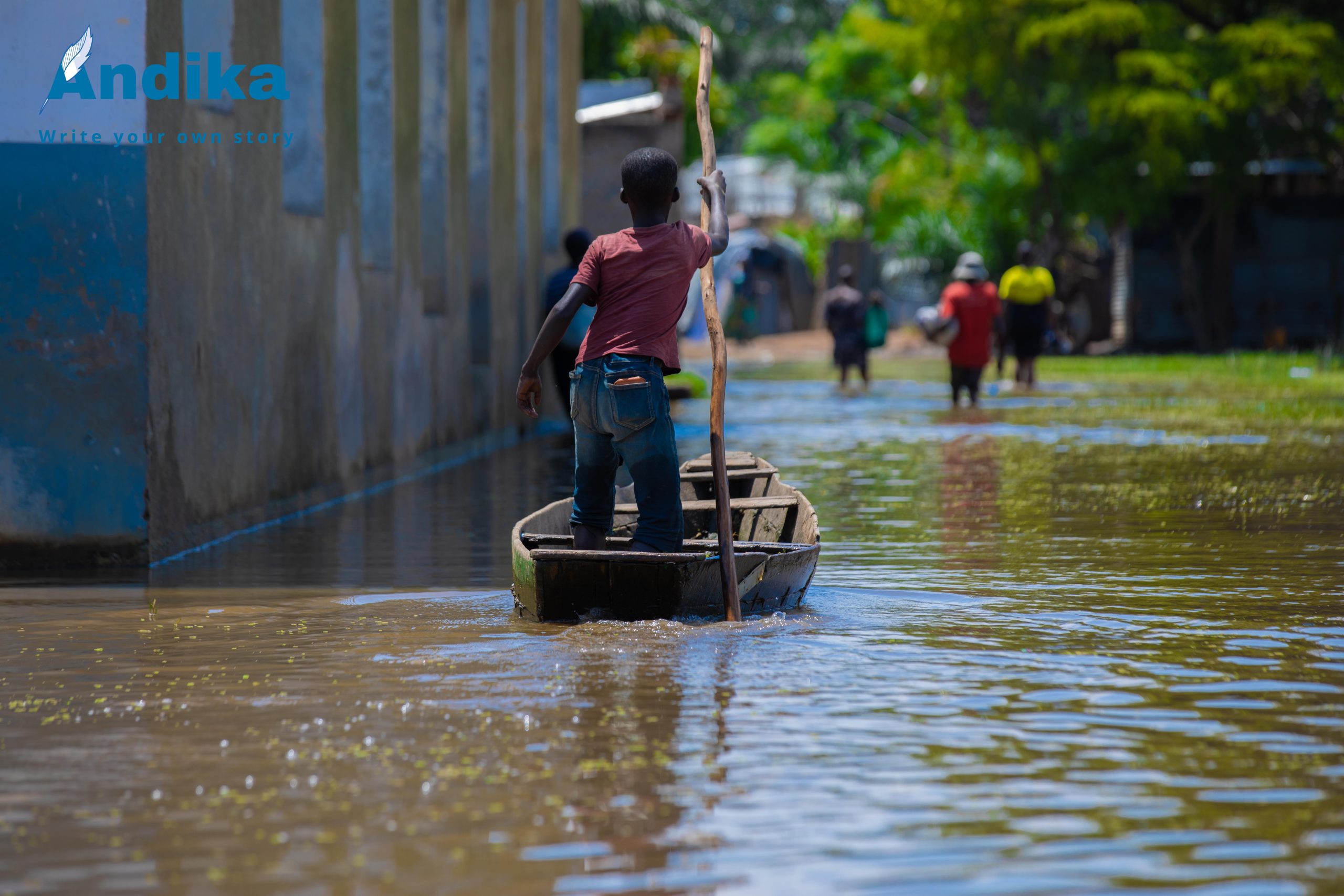
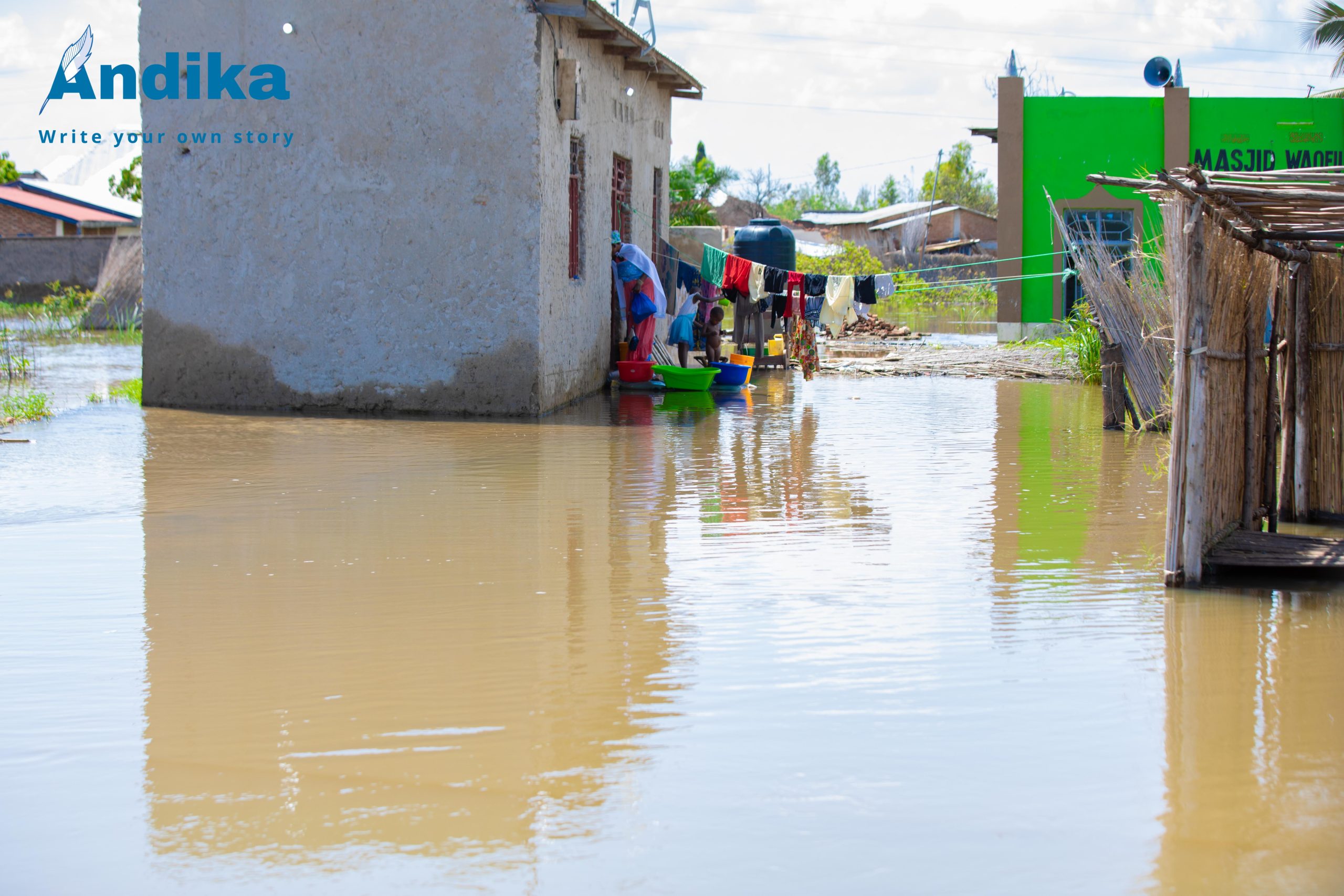
On both sides, churches, schools, houses, …are in the water which flows like the Rusizi River. Children in the large pool of disastrous water of Gatumba are trying to swim or row their small pirogues to reach their hovels slumbering in the water. No food, no toilets. No shops, no small markets on the road as it used to be in sunny season. Now everything is in the water. Gatumba is drowned. Children are deprived of schools. There is disarray, despair reigns.
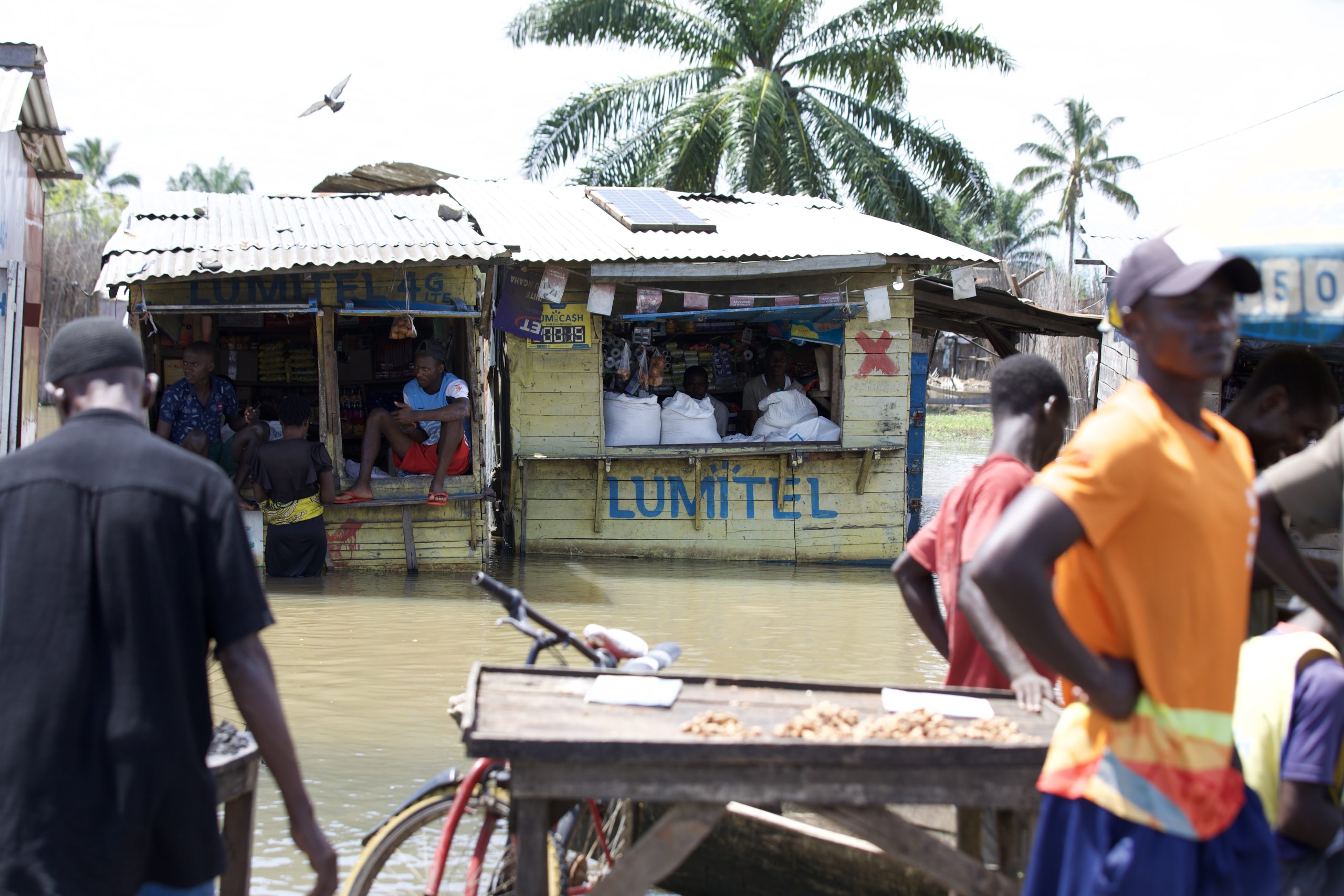
Bony and hopeless faces glare at everyone strange to them passing by or getting off a bus. A camera, journalists? They want to be interviewed so that they can get humanitarian aids. Women and children are walking through water from knee or abdomen level to arrive at the house soaked in yellowish water. “Everything is in this flowing water. Our feet are eaten away by diseases due to the unsanitary nature of this water. My children no longer go to school because everything is in the water. They bathe in this dirty water and spend their time fishing for small fish. We are in trouble. May charitable organizations and people come to our aid,” shouts a lady resident of Gatumba under her small kiosk selling tomatoes on a wooden table placed in knee-level water.
“We don’t have anywhere to rest. Some have tried to make beds higher than the water level. We sleep in these flooded houses with the fear that one day we will wake up being in Lake Tanganyika,” exclaims a man who transports people using the boat. “Yesterday, crocodiles were circling in this water. They risk to eat three people but others rescues them”, he adds.
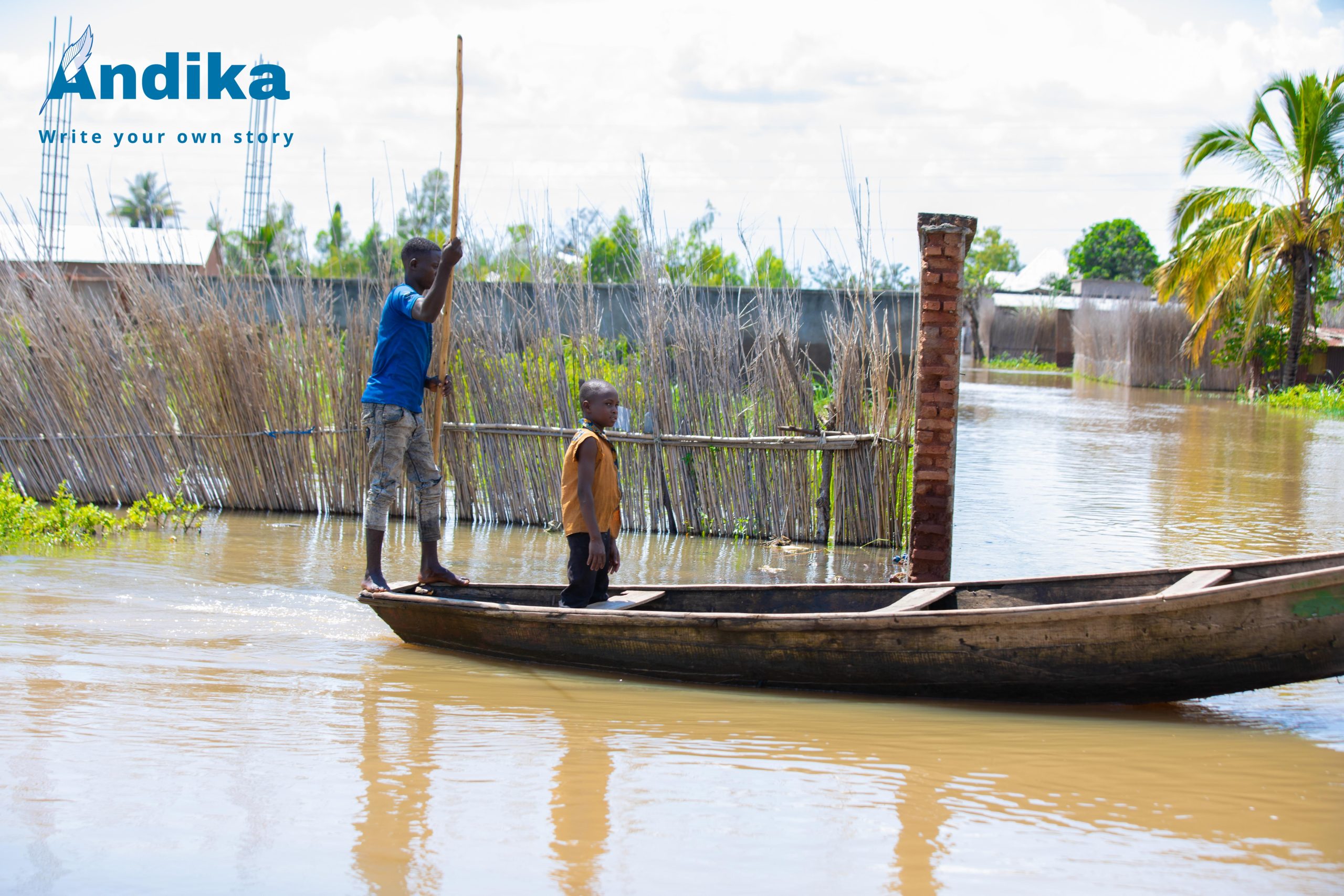
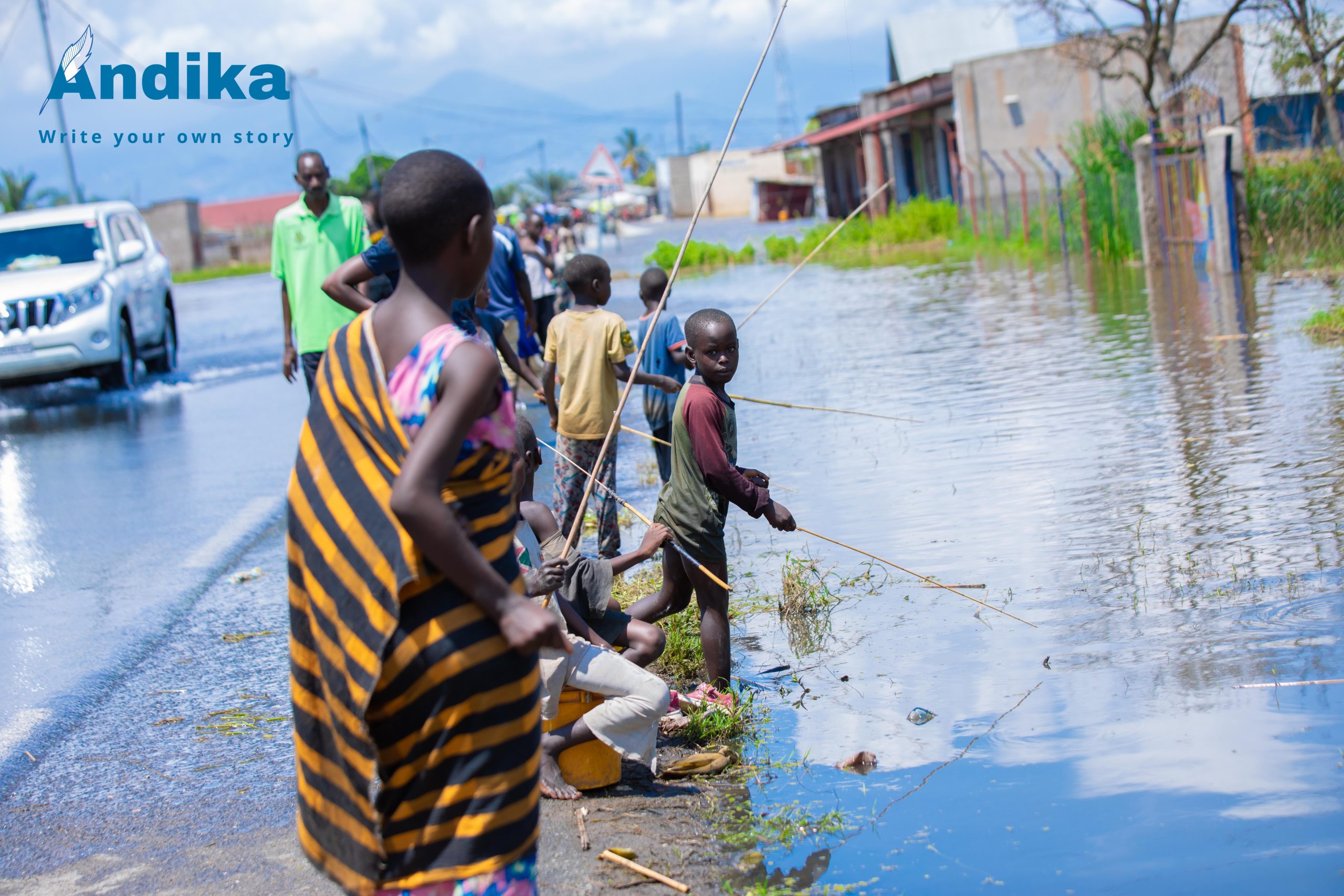
Children have nothing to do. Deprived of school and unable to stay in their flooded houses, they prefer to go with their fathers in canoes, helping them transport people or fishing with hooks to have something to eat or for sale. “Today I caught some little fish, we are going to eat, me and my brothers with the paw. Mom went to town to sell the few peanuts she had bought,” reveals little Josué, fishing along the road.
If nothing is done as soon as possible, if humanitarian organizations do not come to the aid of the population of Gatumba who are drowning in the water, thousands of children will continue suffering enormously and the repercussions on their future could be severe as well as they’re not able to continue schooling.