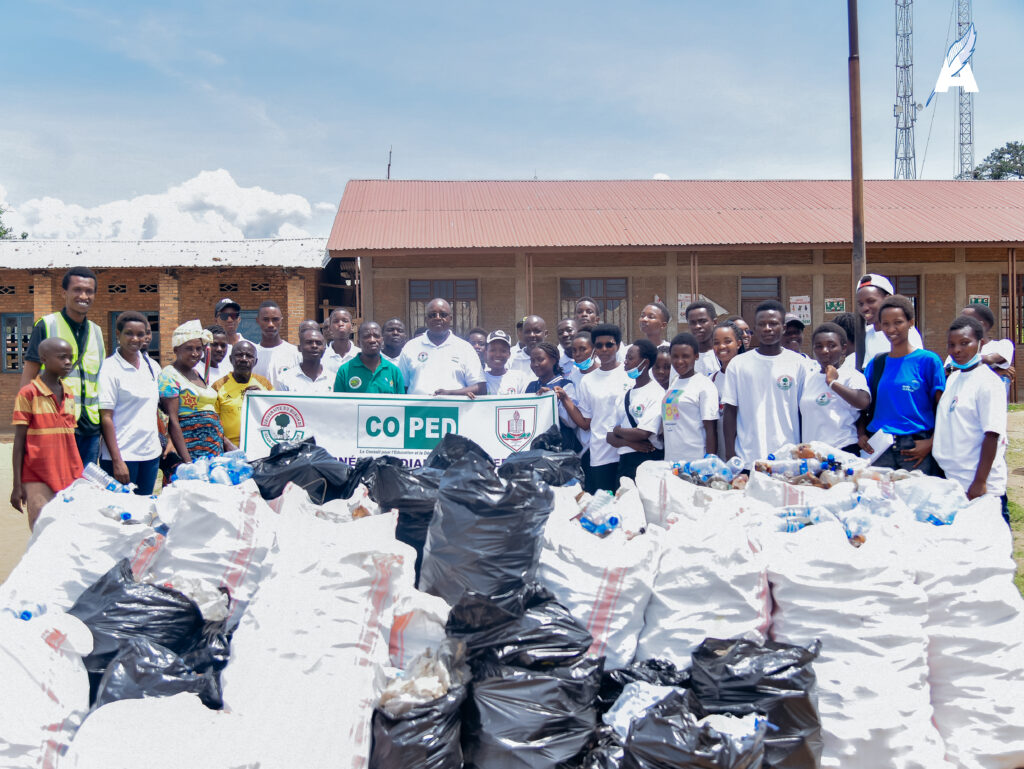
Marking the World Earth Day, the Environment Club of the University of Burundi, in collaboration with COPED and several partners, organized a public awareness campaign, on Saturday 25, 2026 in Gatumba, focused on the sustainable management of plastic waste through the circular economy.
The initiative brought together key stakeholders, including Paix LVIA, the Ministry of Environment, Agriculture and Livestock, and Kinju Company, with the shared objective of promoting responsible plastic waste management practices among local communities.
The day began with a large-scale plastic waste collection exercise across the streets of Gatumba. Equipped with cleaning tools and collection bags, participants—comprising members of partner organizations and local volunteers—actively contributed to improving environmental cleanliness. This hands-on activity highlighted the vital role of community engagement in combating pollution.
Following the clean-up, the awareness campaign continued with a theatrical performance by the TUBiYAGE group. Through engaging and educational scenes, the actors illustrated the harmful effects of poorly managed plastic waste on human health, the environment, and aquatic ecosystems. The performance emphasized a clear message: improper disposal and burning of plastics have serious consequences, while recycling offers a sustainable alternative.
To reinforce the key messages, an interactive session was held where participants answered questions related to waste management. Those who responded correctly received various prizes, including fabric wraps, rakes, soap, and umbrellas.
The event concluded with remarks from local authorities and representatives of partner organizations. The Gatumba zone chief, Ambroise Ndikumana, commended the organizers for their efforts and urged residents to apply the knowledge gained, particularly in maintaining clean streets and protecting Lake Tanganyika from plastic pollution.
Thierry Nizigiyimana, President of the University of Burundi’s Environment Club, expressed appreciation to all contributors, noting that the campaign was the result of strong collaboration.
Sylvestre Mugabarabona, Coordinator of the ECOCIRC project at COPED, thanked local authorities for their support and underscored the benefits of the circular economy, not only for environmental protection but also for improving livelihoods.
Representing Kinju Company, Alex Harley Vyizigiro stressed that sustainable waste management is a shared responsibility. He warned against the dangers of dumping or burning plastics, which contribute to soil, water, and air pollution.
Solange Niyonyishu, representing the administrator of Ntahangwa Commune, encouraged residents to adopt better waste disposal practices, particularly by avoiding the dumping of plastics in drainage systems and Lake Tanganyika. She also called for increased access to waste management materials, such as garbage bags.
Félix Nibizi, representing the Director of Sanitation at MINEAGRIE, highlighted ongoing government efforts to improve waste management. He noted that Bujumbura already has around 120 large waste collection bags and encouraged households to use at least two separate bags for plastic and non-plastic waste to facilitate sorting.
Finally, Don Samuel Ndikumana, a lecturer and researcher at the University of Burundi, emphasized the economic potential of plastic recycling. He explained that plastic waste can be transformed into useful items such as pens, tables, and chairs, thereby generating income while protecting the environment.
Through this campaign, organizers not only raised awareness among Gatumba residents but also demonstrated that responsible plastic waste management is a practical solution for improving sanitation and preserving natural resources. The initiative stands as a model that could be replicated in other parts of the country.