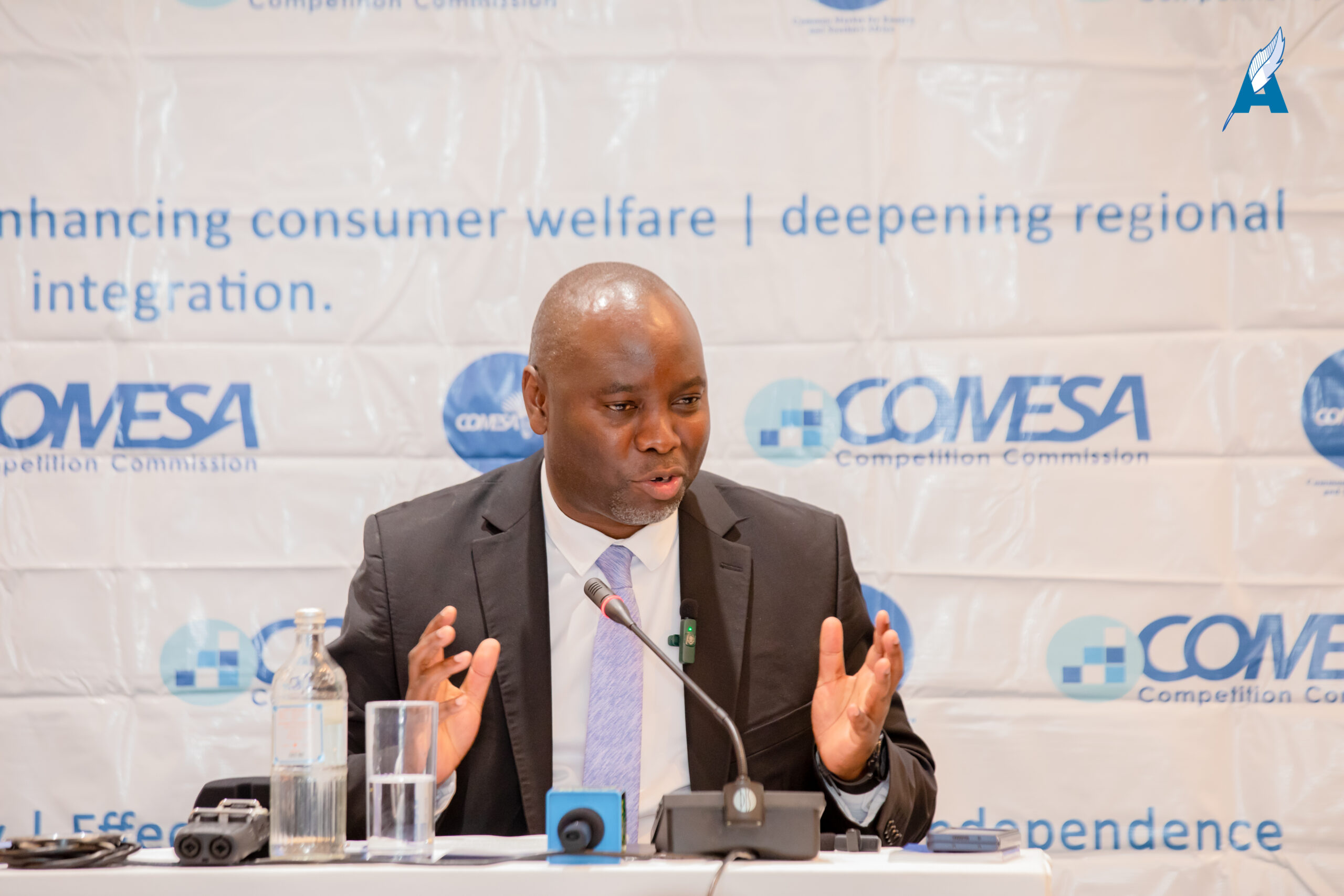
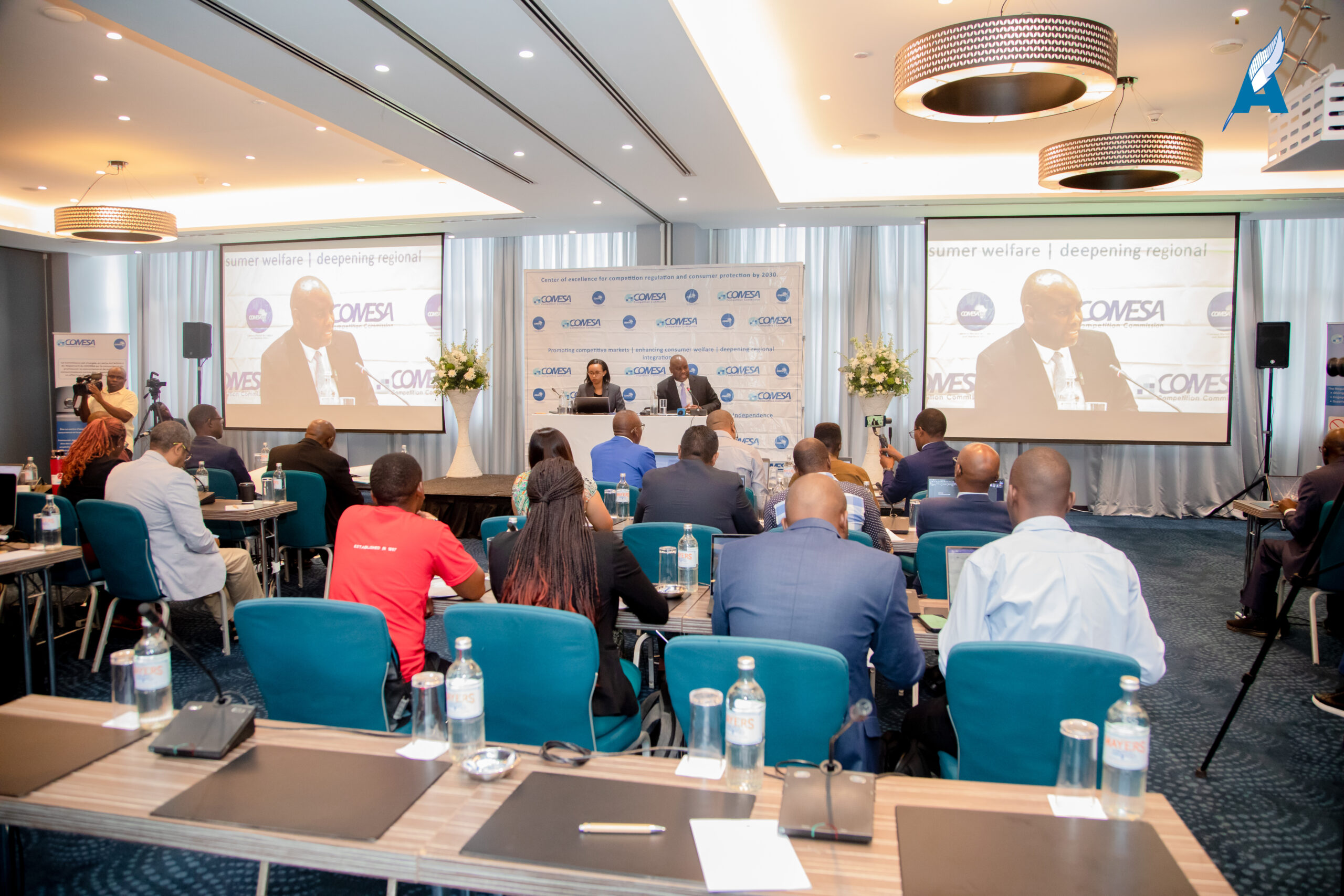
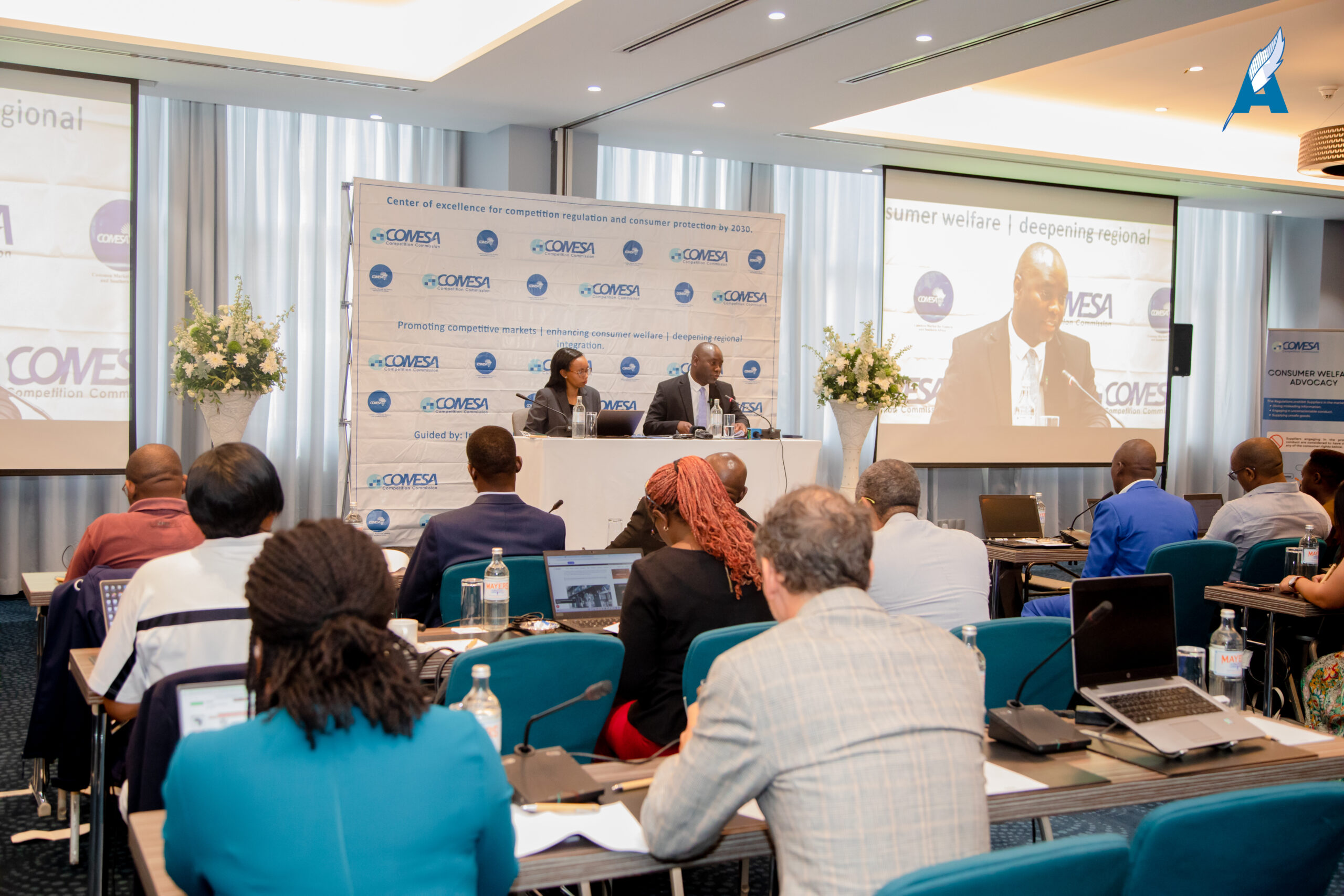
The COMESA Competition Commission (CCC) has intensified its enforcement drive across Africa, unveiling a series of major penalties, consumer safety alerts, and policy reforms during its third regional press conference held in Nairobi, Kenya, on October 10, 2025. The regional regulator announced sweeping actions against airlines, manufacturers, and global corporations, alongside the launch of the first comprehensive review of its competition laws since 2004.
According to the Commission’s Chief Executive Officer, Dr. Willard Mwemba, the CCC “has handled over four hundred and eighty mergers and acquisitions, over fifty restrictive business practices, and over sixty consumer protection cases,” marking 13 years of regulatory oversight across its 21 Member States. “Each one,” he said, “is a testament to our commitment to a fair and competitive regional market and protecting the consumers in the Common Market.”
Airlines Under Fire: Fines, Refunds, and New Passenger Rules
Aviation was the top focus of this year’s enforcement actions, with Kenya Airways, Ethiopian Airlines, and Zambia Airways facing investigations for misconduct. Based on a regional consumer survey of 141 respondents covering 350 complaints, the CCC found that 31.7% of passengers reported flight delays, followed by rescheduled flights and damaged baggage. Alarmingly, 71.6% of passengers said they received no compensation
The Commission fined Zambia Airways 2% of its annual turnover after finding it had refused assistance to passengers delayed by more than six hours, calling it “unconscionable conduct under the COMESA Competition Regulations.” Kenya Airways was also accused of “unconscionable behaviour” for offering non-cash, non-redeemable travel vouchers instead of refunds after long delays. Meanwhile, Ethiopian Airlines was found guilty of “discriminatory and unconscionable conduct” after applying inconsistent baggage compensation terms across different routes — stricter for U.S. and Canadian passengers, but vague for African travellers.
To standardize air passenger rights, the CCC is introducing a regional compensation framework requiring airlines to pay USD 250 for short-haul, USD 400 for mid-haul, and USD 600 for long-haul flights delayed over three hours. “These actions send a clear message that airlines must respect consumer rights,” Dr. Mwemba said. “Passengers deserve fairness, transparency, and accountability.”
The CCC also issued multiple consumer safety alerts during the year. In August 2025, over 5,000 Ford vehicles — including Ranger, Everest, EcoSport, and Puma models — were recalled due to safety defects. Earlier, the Commission had warned consumers about faulty Takata airbags linked to 22 global deaths and issued a recall for Heartland Foods cereals in Malawi, Zambia, and Eswatini after discovering inaccurate sugar labels. It also directed Trade Kings Group and Unilever South Africa to correct “obscure and misleading” product labels by 2026.
Corporate Penalties and Legal Reforms: From Heineken to Canal+
The CCC’s enforcement record in 2025 included several landmark cases reshaping the regional business landscape. The Commission conditionally approved Groupe Canal+ SA’s acquisition of MultiChoice Group Limited, citing risks of dominance in the pay-TV market. “The merger could significantly reduce competition in the wholesale and retail supply of pay TV services,” the Commission warned, but approved the deal on condition that both firms commit to fair competition practices
Other companies faced direct penalties for failing to comply with merger timelines. Robert Bosch GmbH and Johnson Controls International (JCI) were fined USD 1 and USD 8,067.06 respectively for late merger filings, while BRED Banque Populaire paid USD 28,050 for breaching Article 24(1) of the COMESA Competition Regulations during its acquisition of Société Générale Madagascar.
In the beverage sector, Heineken Holding N.V. paid USD 900,000 to settle allegations of anti-competitive distribution practices across Burundi, DRC, and Ethiopia, while Diageo Plc paid USD 750,000 and agreed to terminate restrictive contracts in Eswatini and Zambia. The Commission said both companies had “implemented all undertakings under the agreement,” marking the successful completion of long-standing investigations.
A major regional sports media dispute also came to a close when the Confederation Africaine de Football (CAF) and beIN Media Group reached a settlement with the Commission, paying a combined USD 600,000. The agreement requires CAF to “adopt transparent, competitive processes for awarding media rights and limit exclusivity periods to four years.”
Dr. Mwemba said the CCC’s enforcement actions have “opened the broadcasting and beverage markets to greater participation, restored competition, and delivered better outcomes for consumers.”
Legal reform formed another core announcement in Nairobi. The CCC revealed the first major amendment to the COMESA Competition Regulations since 2004, introducing a new law to be known as the COMESA Competition and Consumer Protection Regulations
Policy Analyst and CCC’s Chief Economist Isaac Tausha said the update “catches up with new developments and trends, especially digital markets,” and “recognises consumer rights and environmental sustainability.” The reforms will introduce a suspensory merger regime — requiring approval before implementation — and provisions against dark patterns, harmful digital content, and false environmental claims.
Strengthening Partnerships and Empowering Journalists
The CCC also emphasized its growing network of partnerships across and beyond Africa. Over the past year, it signed three new Memoranda of Understanding (MOUs) with Mauritius, Tunisia, and Uganda, bringing the total to 19 Member States. It also formalized partnerships with Nigeria’s Federal Competition and Consumer Protection Commission (FCCPC), the Caribbean Community (CARICOM), and the World Intellectual Property Organization (WIPO). Discussions are ongoing with the East African Community Competition Authority (EACCA) to harmonize cross-border merger rules and reduce compliance burdens for regional businesses.
Beyond regulatory work, the CCC continues to promote media engagement and transparency through its George Lipimile Award of Excellence, an annual writing competition that honors journalists who report on competition and consumer issues. According to Steven Kamukama, CCC’s Director of Consumer Welfare and Advocacy, “The Commission recognizes the role that the media plays in complementing its advocacy work, considering that they are the major source of key information to the public.”
In 2025, 10 journalists from six countries submitted more than 50 entries, addressing issues from digital market fairness to excessive pricing by dominant firms. The best entries won USD 1,500 and USD 1,000 prizes. Kamukama urged journalists to “undertake thorough investigation and analysis of the topics to generate quality articles that would attract readers’ attention and contain reasoned analysis.”
Looking ahead, the Commission plans to focus on digital consumer protection, unveiling a Model Consumer Protection Law and an online curriculum with seven modules on e-commerce, labeling, and dispute resolution. “We envision a marketplace where businesses compete fairly, innovation thrives, and consumers, whether flying, shopping, or banking, are protected from exploitation, Dr. Mwemba concluded
With over USD 2.25 million in settlements, 5,000 vehicles recalled, and 21 Member States harmonizing their consumer laws, the COMESA Competition Commission has solidified its position as a leading force for market fairness in Africa. By confronting corporate misconduct, tightening airline accountability, and empowering journalists and consumers alike, the CCC is setting a new standard for competition and consumer protection across the continent.