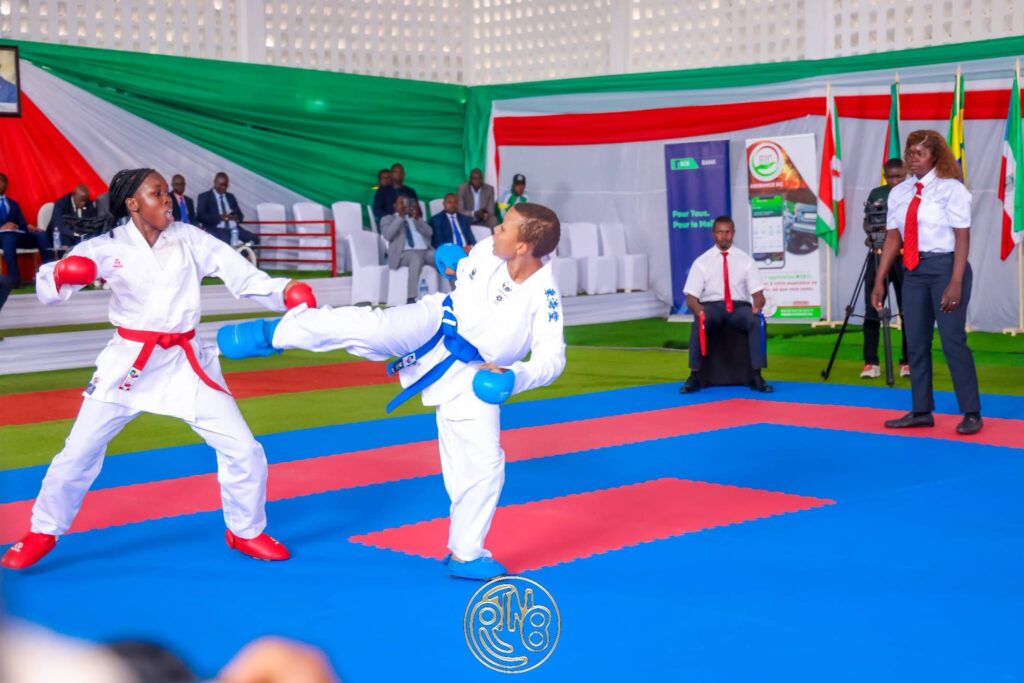
Cameroon topped the medal standings at the 16th Central African Karate Championships, which concluded on Sunday, July 12, 2026, in Bujumbura after bringing together athletes from six Central African countries.
Cameroon finished first with 37 medals—28 gold, seven silver and two bronze. The Democratic Republic of Congo placed second, while host nation Burundi finished third with 49 medals, including seven gold, 34 silver and eight bronze. Gabon ranked fourth, followed by Equatorial Guinea in fifth and Chad in sixth.
The two-day tournament, held from July 11 to 12, opened with a strong performance by the host nation, as Burundian athletes claimed seven gold medals on the opening day of competition.
The championships were officially opened by Burundi’s Minister of Youth, Sports and Culture and President of the National Olympic Committee, Lydia Sekera, who welcomed participating delegations and thanked the African karate community for selecting Burundi to host the regional event. She also called on partners and African and international karate bodies to increase support for the Burundi Karate Federation through the construction of training facilities, coach development and the promotion of karate in schools.
Bechir Cherif, Vice President of the World Karate Federation, praised what he described as Burundi’s progress in developing the sport and commended the organization of the championships. He encouraged athletes to continue preparing for future continental competitions and the World Karate Championships.
Sylvain Nzikoruriho, president of the Burundi Karate Federation, said the tournament provided an opportunity to identify emerging talent, strengthen cooperation among Central African countries and promote karate across the region.
Nzikoruriho said nine countries had initially been expected to compete, but only six ultimately participated after São Tomé and Príncipe, the Central African Republic and the Republic of the Congo (Congo-Brazzaville) withdrew.
Nzikoruriho said the competition helped Burundi’s team identify areas for improvement before the upcoming African Karate Championships in Algeria and the World Karate Championships in Poland.
Burundi national team coach Gilbert Havugimpundu said the results reflected significant progress, noting that the team had never before returned from an international competition with as many medals. He also highlighted the increased participation of female athletes, describing it as an encouraging sign for the future development of karate in Burundi.
Nzikoruriho also thanked organizations that supported the event, including the French and Japanese embassies in Burundi and the National Olympic Committee.