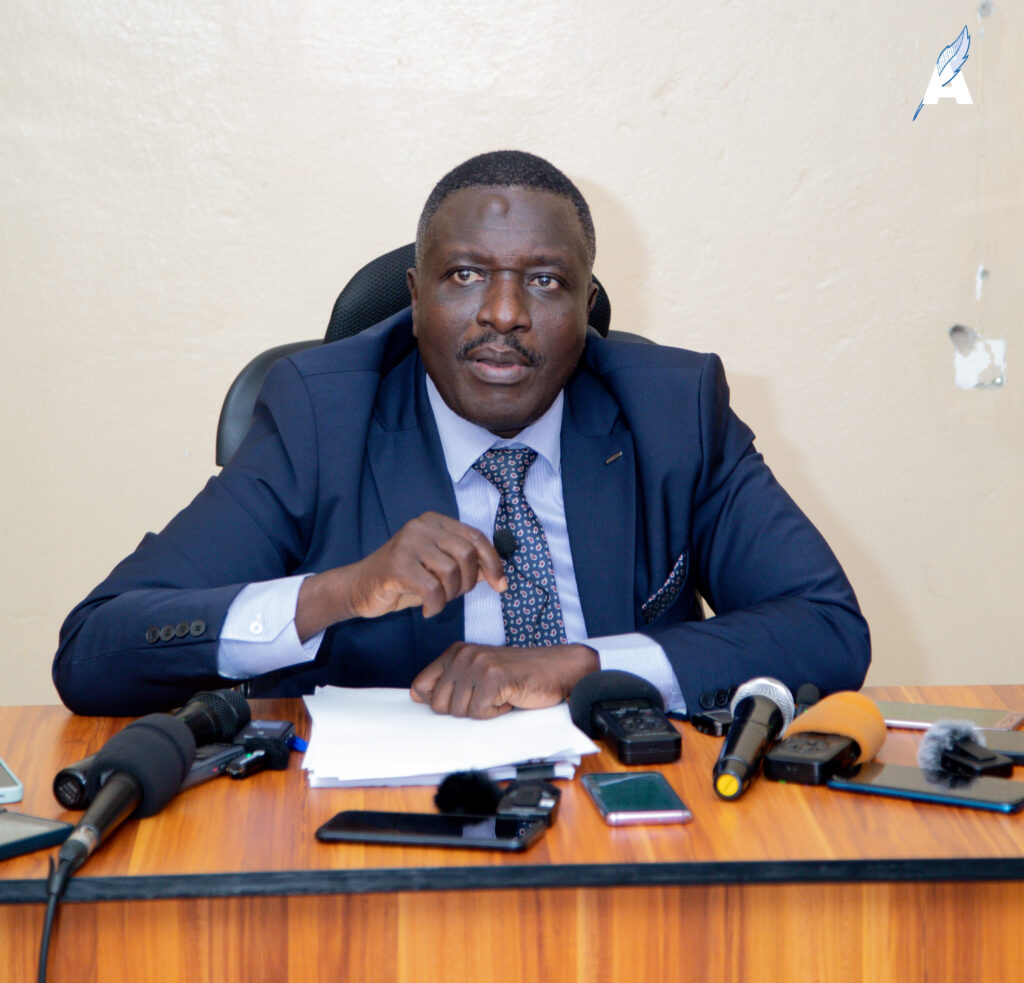
Responding to comments made by several government ministers during a recent conference broadcast by Burundi’s public broadcaster in Gitega, PARCEM Executive Director Faustin Ndikumana has called for a deeper assessment of the country’s fuel crisis, arguing that its economic and social consequences are far more severe than current official narratives suggest.
While some officials at the conference attributed rising fuel prices largely to the actions of operators in the petroleum sector, Ndikumana said the discussion should begin with a comprehensive evaluation of how prolonged fuel shortages are affecting Burundi’s economy and public services.
According to the civil society leader, the fuel crisis has disrupted nearly every sector of national life, from healthcare and education to transportation and business operations.
“The consequences are enormous,” he said. “We are witnessing significant delays and even disruptions in hospitals, schools, public institutions, and private businesses due to fuel shortages.”
He noted that the crisis has severely affected the mobility of citizens, pushing transportation costs to unprecedented levels. Hospitals, for example, are increasingly forced to rely on expensive taxi services, with some trips costing between 5,000 and 10,000 Burundian francs.
Beyond transportation, Ndikumana warned that fuel shortages are fueling food inflation, reducing productivity, and disrupting workplace organization. He also highlighted the growth of informal fuel markets and speculative practices that, he argues, are being driven by unequal access to fuel supplies.
“The fuel crisis has become a convenient explanation for delays in many sectors,” he said. “At the same time, fraudulent practices and informal fuel sales continue to expand, creating opportunities for speculation and injustice.”
Ndikumana acknowledged that fuel prices in Burundi must reflect market realities, particularly given the country’s landlocked geography. However, he stressed that the priority should be ensuring sufficient and reliable supply.
“Nothing justifies expecting fuel prices in Burundi to be lower than those in neighboring Tanzania,” he said. “What matters is guaranteeing availability and quality, because access to fuel directly supports economic activity, growth, and household incomes.”
He argued that while higher market prices may be unavoidable, the economic cost of chronic shortages is far greater. Businesses and consumers, he noted, are already paying significantly more through informal channels than they would under a stable and transparent supply system.
The PARCEM leader also pointed to Burundi’s foreign currency shortages as a major factor behind the crisis. Despite exports of minerals and other resources, he said, the country has struggled to build adequate foreign exchange reserves needed to finance strategic imports such as fuel.
To address the problem, Ndikumana proposed that the government seek emergency financing from international partners to establish a strategic fuel reserve while working to strengthen the country’s trade balance over the longer term.
He further called for a review of the country’s fuel importation system, arguing that only operators with sufficient logistical capacity should be entrusted with supplying the market.
According to Ndikumana, Burundi should consider authorizing two to four qualified private companies capable of ensuring a stable supply of fuel nationwide. He also questioned whether the state-owned fuel company, SOPEBU, currently possesses the logistical resources required to effectively manage imports on its own.
Looking ahead, he urged the government to invest in fuel storage infrastructure capable of maintaining reserves for six months to one year, similar to systems previously used in the country.
Finally, Ndikumana emphasized the need for stronger coordination among key institutions, including the Ministries of Finance and Energy, the Bank of the Republic of Burundi (BRB), SOPEBU, and the Presidency.
“Burundi needs a coherent short-, medium-, and long-term strategy to guarantee its energy security,” he said. “Institutional coordination is essential if the country is to ensure a reliable supply of this strategic product.”
As fuel shortages continue to affect daily life and economic activity across Burundi, the debate is increasingly shifting from who is responsible for the crisis to how the country can build a more resilient and sustainable energy supply system for the future.