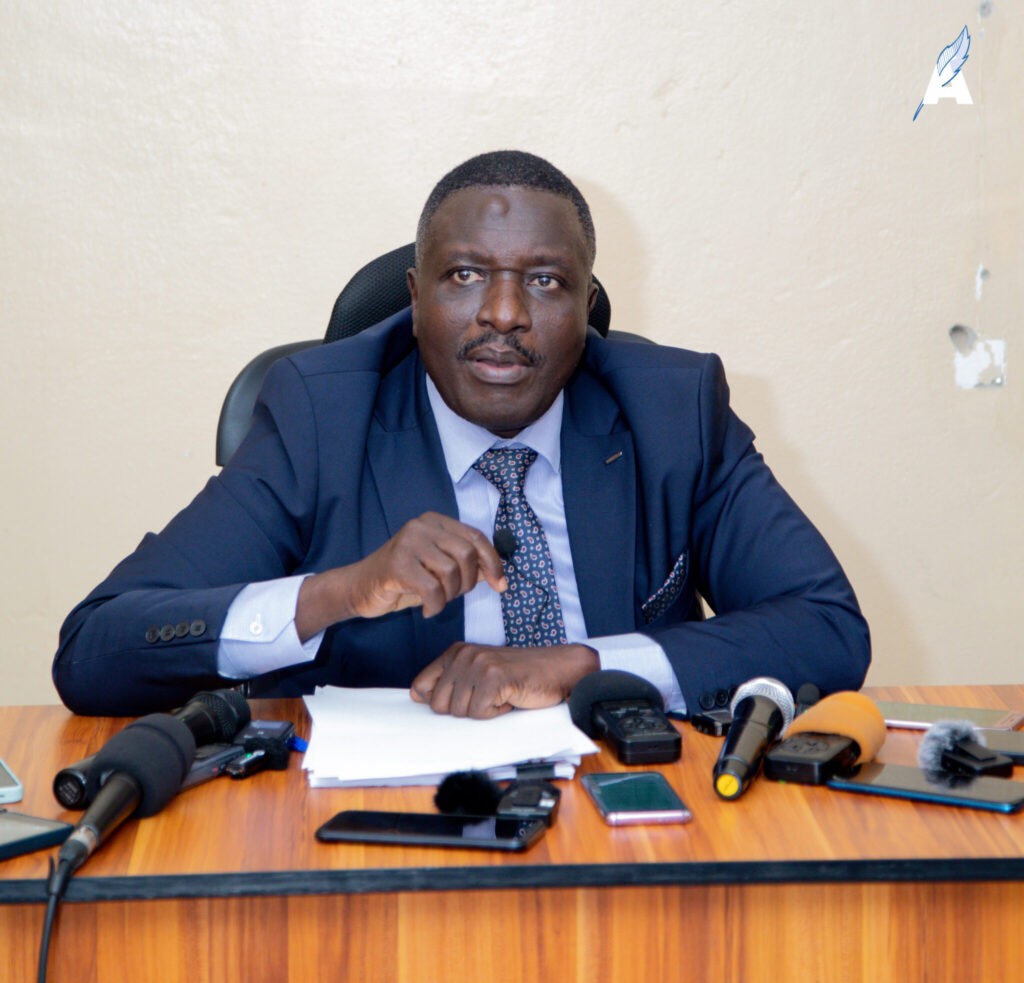
Burundian civil society organization PARCEM used the International Day of Democracy to call for stronger democratic governance, free and transparent elections, greater accountability and better protection of citizens’ rights.
Faustin Ndikumana, PARCEM’s leader, said democracy should translate into tangible improvements in citizens’ well-being, respect for human rights and economic development.
“Democracy is a fundamental principle for ensuring citizens’ well-being, economic development and respect for human rights. Normally, it should create added value in a country,” Ndikumana said.
He identified free and transparent elections as one of the defining features of a genuine democracy, saying elections should provide the legitimate foundation for political power.
“The characteristic elements of a true democracy are free and transparent elections, because elections constitute the true source of power,” he said.
Ndikumana warned that manipulated elections could have consequences extending beyond politics, including weakening merit and competence within public institutions.
“When a country has a system of rigged elections, it means there is a tendency to promote a culture of mediocrity in the administration,” he said.
He said political competition should instead create an environment in which competence is rewarded and the strongest candidates can emerge.
“Democracy and elections are a competition; it is about creating a culture where the best candidate wins,” Ndikumana said.
Accountability and separation of powers
Ndikumana also stressed the importance of accountability, saying public officials must be answerable for how they exercise their responsibilities.
“In a democratic country, a leader must feel accountable for their responsibilities and answer questions related to the management of society,” he said.
He warned against the concentration of political power in the hands of a small group, saying it can create conditions for abuses of power.
“In a democracy, power should not be monopolized by a handful of people. That creates the conditions for abuses,” Ndikumana said.
PARCEM also called for a stronger separation of powers and an independent judiciary capable of protecting citizens from abuses by government authorities.
Ndikumana alleged that Burundi’s judiciary has been excessively instrumentalized and argued that Parliament has at times been too weak to effectively challenge actions by the executive.
“There must be a separation of powers and, in a state governed by the rule of law, an independent judiciary that protects citizens against abuses of executive power,” he said.
“What is happening in Burundi is that the judiciary is excessively instrumentalized, while Parliament is quite weak when faced with certain actions by the executive.”
Equal opportunity and freedom of expression
PARCEM also linked democracy to economic opportunity, arguing that citizens should have a fair chance to develop their skills and contribute to the country’s economy.
Ndikumana criticized what he described as a system in which economic opportunities can be concentrated among politically connected individuals.
“There must be equal opportunities, an end to the culture of mediocrity and freedom of enterprise so that citizens’ talents and potential can be unleashed in the service of development,” he said.
Freedom of expression and opinion was another key concern raised by PARCEM.
“There must be freedom of expression and opinion,” Ndikumana said.
He argued that citizens should be able to criticize government policies and report alleged abuses without being treated as enemies of the state.
“When people speak out about fundamental national issues or denounce certain abuses, they are considered enemies of the country,” he said.
Ndikumana also defended citizens’ right to raise complaints and demand accountability from public authorities.
“The right to complain is a fundamental right, but when people make complaints, they are prosecuted and considered enemies,” he said.
For PARCEM, Ndikumana said, democracy should extend beyond the act of voting. It should be reflected in the strength and independence of public institutions, accountability among leaders, equal economic opportunities, protection of fundamental rights and the ability of citizens to freely participate in public life.