Burundi and the United States have begun formal oversight of a $156 million, five-year health cooperation agreement, with officials meeting in Bujumbura to review implementation, define priorities and strengthen coordination between the two countries.
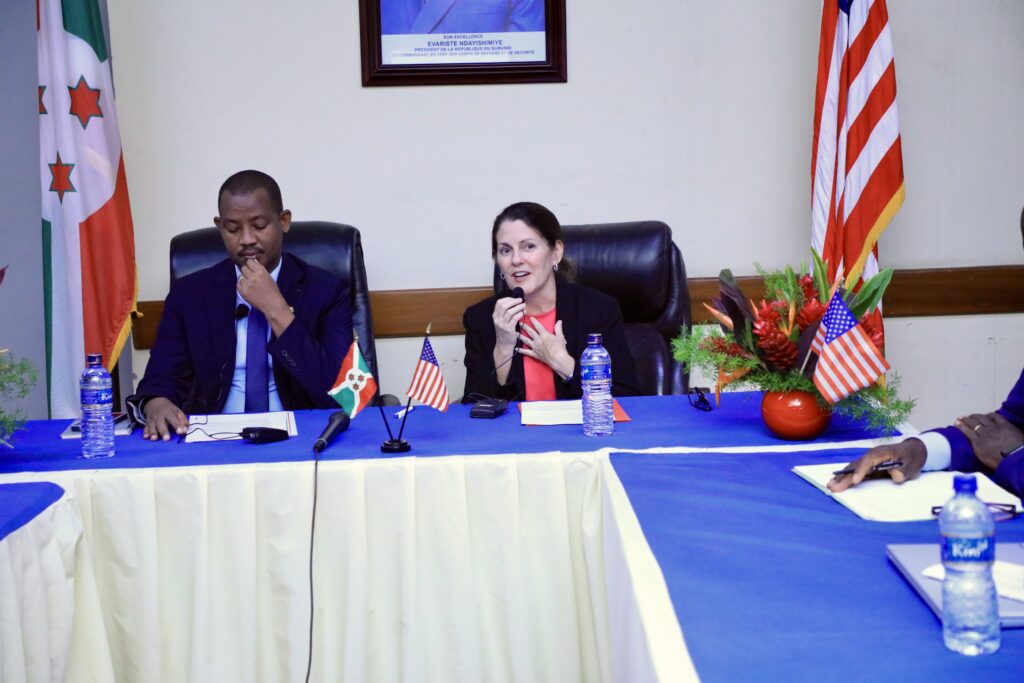
On September 18, 2026, Burundi’s Minister of Public Health, Dr. Fidèle Nkezabahizi, and U.S. Chargée d’Affaires a.i. Bridget Premont chaired the first meeting of the Steering Committee responsible for monitoring implementation of the memorandum of understanding between Burundi’s Ministry of Public Health and the United States.
The meeting brought together members of the Steering Committee and Technical Committee responsible for supporting implementation of the agreement.
According to Burundi’s Ministry of Public Health, Nkezabahizi welcomed the quality of health cooperation between Burundi and the United States and praised Washington’s continued engagement in the country’s health sector.
The minister said the implementation of the memorandum comes at a time when Burundi is working to strengthen its national health system, with particular emphasis on efficiency, the quality of interventions, integration of health programs and the sustainability of progress already achieved.
“Today’s meeting should allow us to move from a logic of intention to a logic of results, with clearly defined priorities, identified responsibilities, a realistic timeline and a regular monitoring mechanism,” Nkezabahizi said, according to the ministry.
The U.S. Embassy in Burundi said the first Steering Committee meeting is intended to strengthen a shared understanding of the roles and responsibilities of the different structures involved, review progress in implementing the agreement, and identify priorities and next steps for continued cooperation.
The agreement, signed in February 2026 under the U.S. America First Global Health Strategy, provides a framework for cooperation in several areas of public health.
According to the U.S. Embassy, the partnership is supporting Burundi’s efforts to combat HIV/AIDS and malaria, strengthen disease surveillance and improve the country’s ability to respond more rapidly to emerging health threats.
The cooperation comes as Burundi seeks to reinforce its health system and improve the delivery and sustainability of health interventions across the country.
The Steering Committee is expected to meet quarterly during the first year of implementation before moving to twice-yearly meetings thereafter. The structure is intended to provide continued oversight and regular assessment of progress under the partnership.
For Burundi, the meeting represents an effort to translate the commitments contained in the memorandum into concrete priorities, responsibilities and measurable results. For the United States, it provides a framework for continued coordination with Burundi on health-system strengthening and disease prevention.
Both sides have emphasized the importance of sustained cooperation as the agreement moves from its initial commitments toward implementation and measurable outcomes.