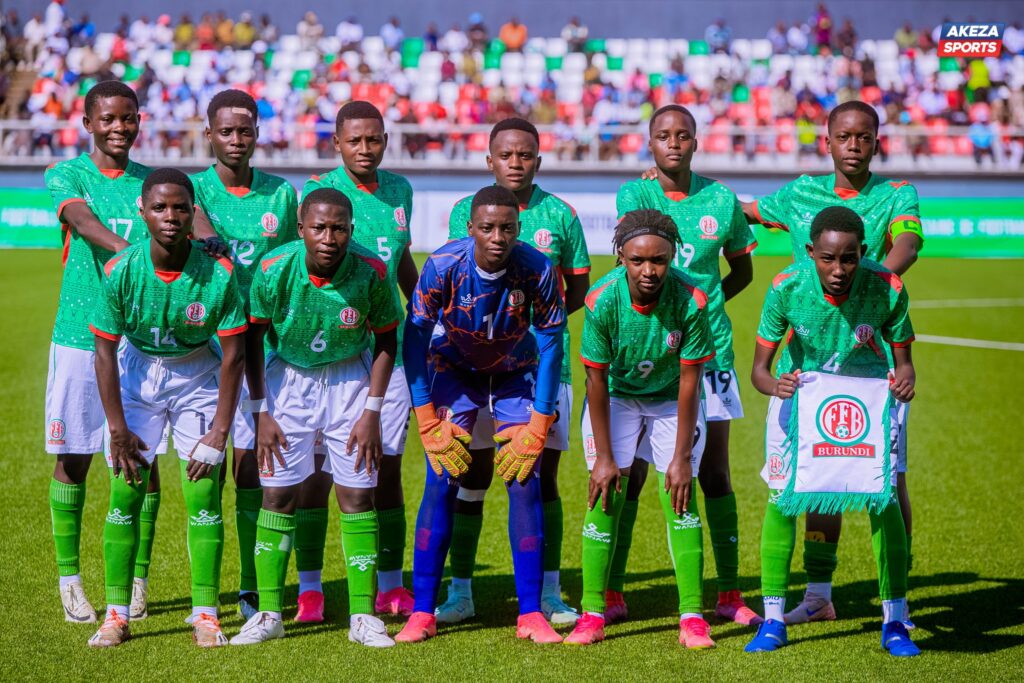
Burundi’s U-17 women’s national team has been eliminated from the FIFA U-17 Women’s World Cup qualifiers after a 4–2 aggregate defeat to Ethiopia, following a spirited but inconsistent two-legged encounter.
Ahead of the decisive return leg at Stade Intwari on May 30, 2026, head coach Amars Niyongabo had expressed confidence that his players were ready to respond after losing the first leg 2–1 in Addis Ababa. Speaking to the press on May 29, he noted that the defeat in Ethiopia was influenced by several factors, including difficult playing conditions and early-match nerves among his young squad.
Coach Niyongabo emphasized that his players had learned from their mistakes and arrived physically and mentally prepared for the return fixture. He assured supporters that Burundi had the ability to correct errors made in the first leg and deliver a strong performance at home. The federation also opened the stadium for free entry, encouraging fans to support the young “Intamba mu Rugamba” during this crucial fixture.
On the pitch, Burundi began brightly and responded to their coach’s confidence early in the match. IRANZI Dancille scored in the 5th minute, giving the home side a dream start and briefly leveling the tie on aggregate. The goal energized both the players and the home crowd, who believed a comeback was possible.
However, as the match progressed, Ethiopia gradually regained control. The visitors equalized in the 52nd minute, taking advantage of defensive gaps and shifting the momentum of the tie. Burundi, despite pushing forward, began to struggle with consistency and intensity in the second half.
The decisive blow came in the 75th minute when Ethiopia scored again, making it 2–1 on the day. This goal extended their aggregate lead to 4–2 (Ethiopia 4–2 Burundi), effectively ending Burundi’s hopes of qualification.
Despite the result, Burundi showed moments of promise throughout both legs of the tie. The team displayed technical ability, attacking intent, and individual talent, particularly in the early stages of matches. However, recurring challenges such as second-half fatigue, defensive concentration, and physical intensity proved costly against a more consistent Ethiopian side.
Coach Niyongabo’s pre-match optimism reflected the belief within the camp that progress was possible, and the early goal seemed to validate that confidence. Yet over two legs, Ethiopia’s greater efficiency and composure in key moments made the difference.
Following the elimination, attention now turns to development. Analysts and technical staff have highlighted that while the squad possesses strong potential, continued investment in physical conditioning, match experience, and tactical discipline will be essential for future success.
Burundi’s U-17 girls exit the competition with lessons learned, but also with clear signs of promise for the future of women’s football in the country.
______________
© Photo: Akeza Sports