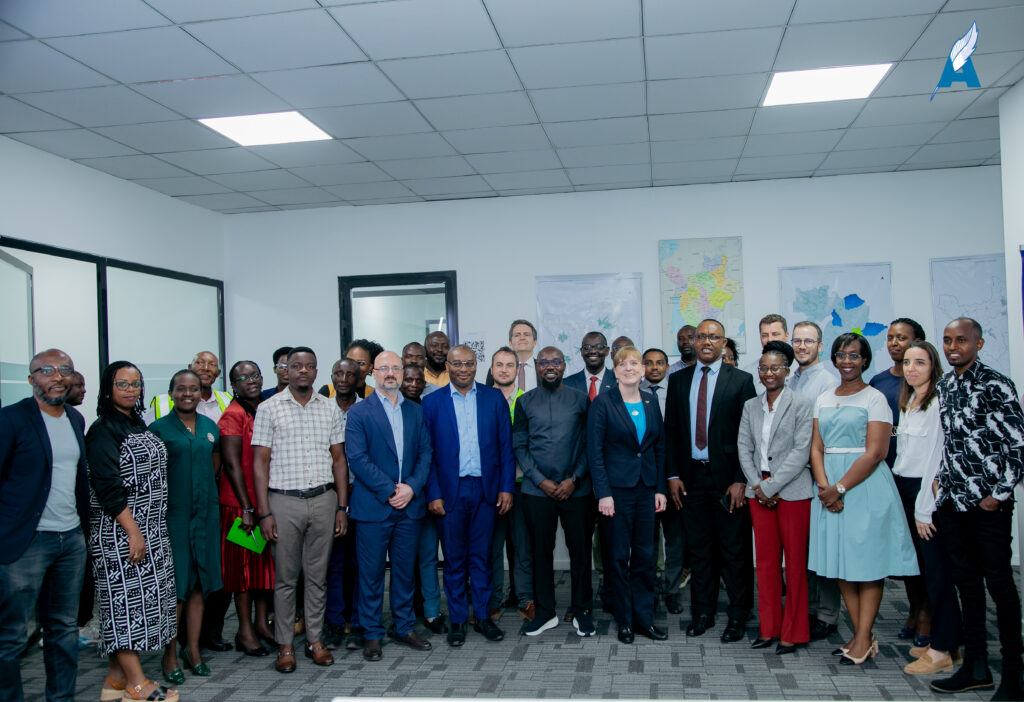
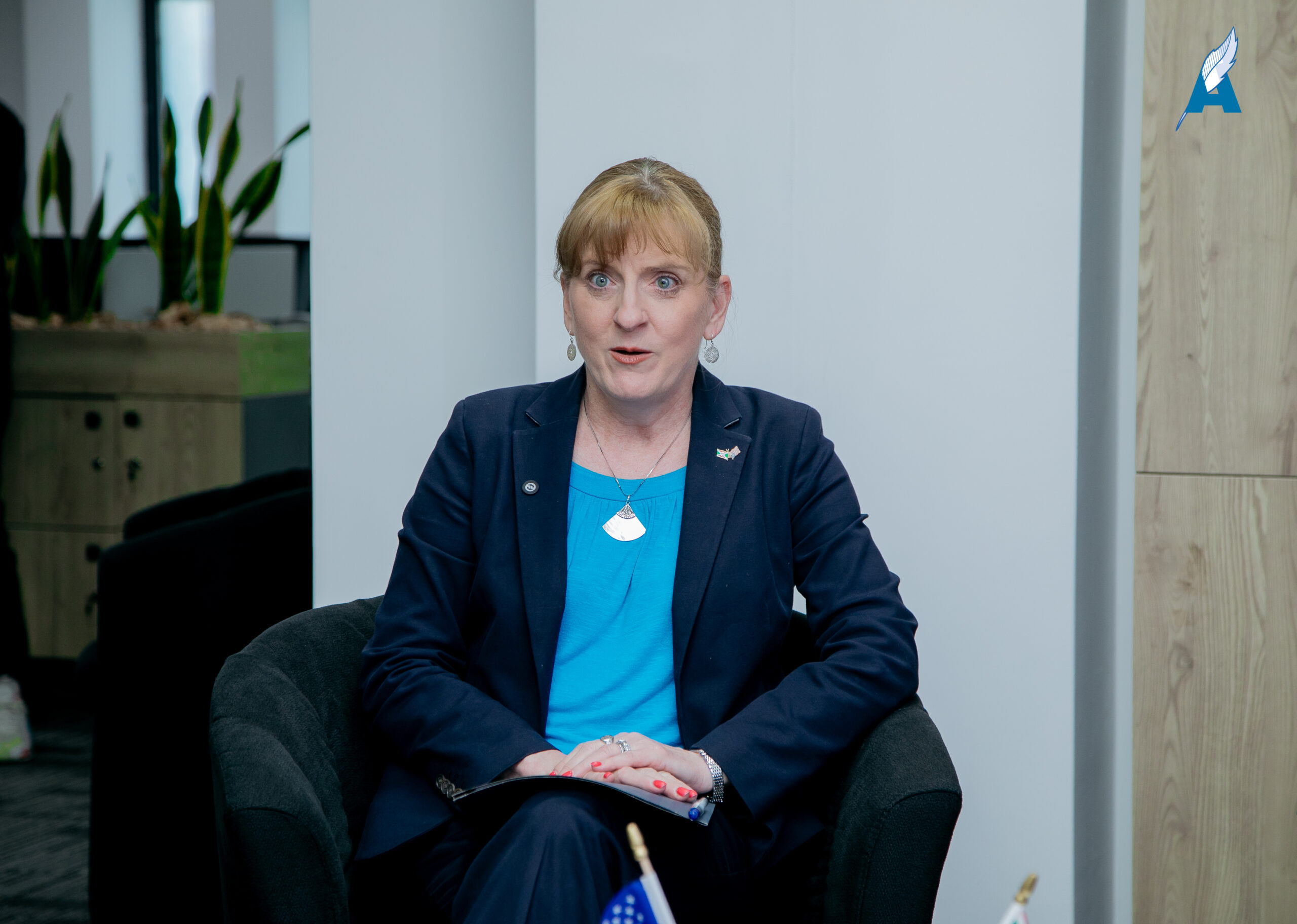
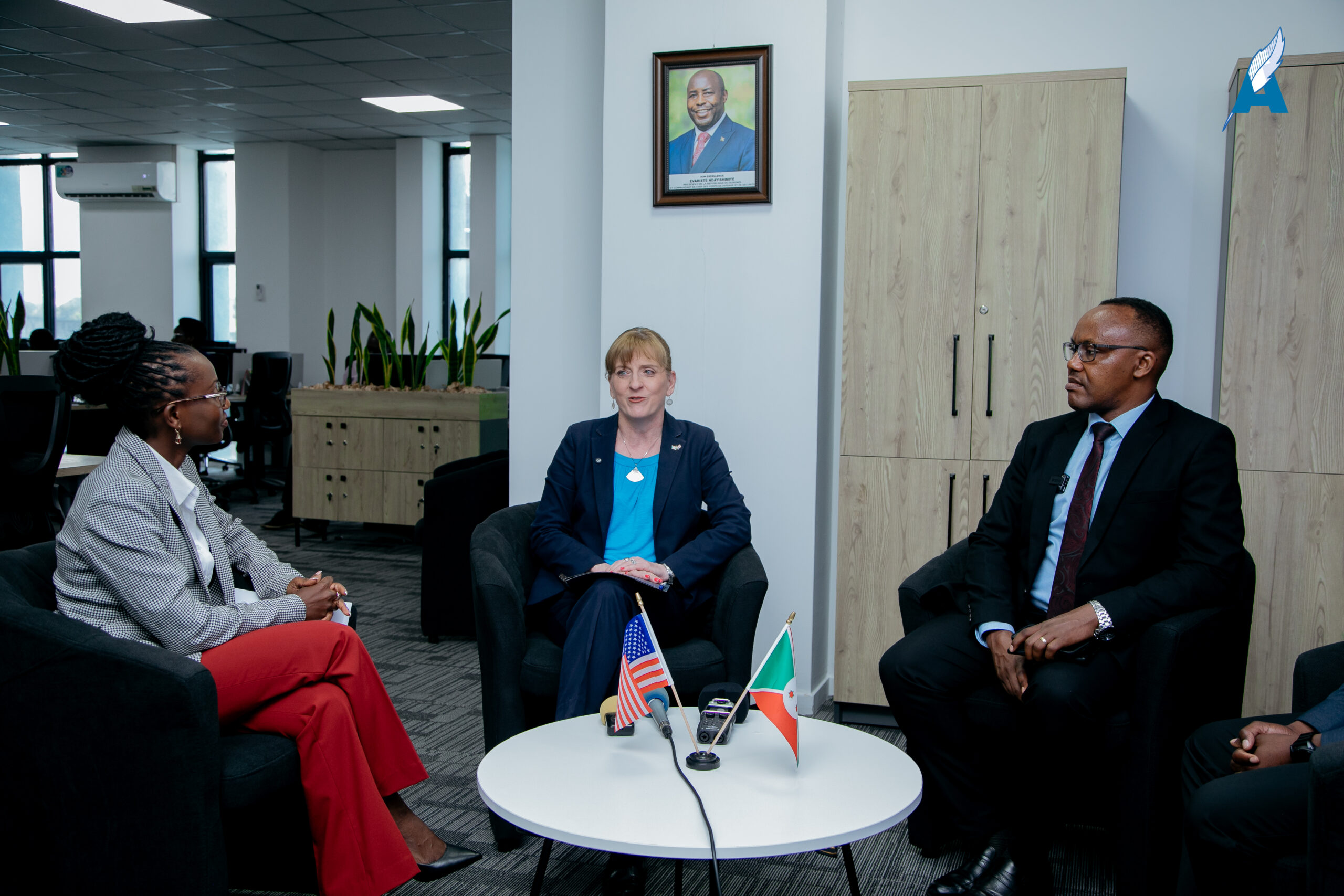
Burundi’s ambition to expand electricity access from about 17% today to nearly 70% by 2030 took center stage on this Tuesday, February 10, 2026, during a visit by Ambassador Melanie Higgins, Chargé d’Affaires at the U.S. Embassy Bujumbura, Burundi to Weza Power, a privately operated electricity distribution company working in partnership with the Burundian government.
Speaking during an extended interview at Weza Power Headquarters, Ambassador Higgins described the project as a potential “sea change” for Burundi’s economy, citing its scale, financing structure, and focus on rural electrification as key drivers of inclusive growth.
Weza Power is the first new private-sector electricity distribution company operating at a national level in sub-Saharan Africa in more than ten years. Established by Anzana Electric Group, a developer and investor in African renewable energy, Weza Power is dedicated to rehabilitating and expanding Burundi’s low- and medium-voltage electricity grid under a Public-Private Partnership (PPP) model.
The company aims to eventually connect up to 9 million people, with a strong focus on peri-urban and rural areas—regions historically left behind in grid expansion. While Anzana Electric focuses on renewable generation, including hydropower through subsidiaries such as Songa Energy, Weza Power’s mandate is firmly downstream: distribution and last-mile connections.
Ambassador Higgins, Chargé d’Affaires, who served as U.S. Ambassador to Burundi from early 2021 to mid-2023, said she was struck by how the project had evolved from vision to execution.
“What I’m seeing now is not just a concept, but a detailed, mapped-out plan,” she said. “Electrification is the basis of economic growth. Without it, mining, small businesses, job creation—all of that is constrained.”
She stressed that Weza’s approach goes beyond urban centers such as Bujumbura, Gitega, or Ngozi. “This is about rural Burundi—lighting homes, schools, hospitals, and small businesses, and enabling communities to create economic activity where none was possible before,” she noted.
Financing affordability: $1.4 billion project, blended finance
One of the most pressing concerns raised by journalists during the interview was affordability, particularly for low-income rural households. In response, Ambassador Higgins pointed to Weza Power’s blended finance model, designed to keep tariffs accessible.
The overall project is estimated at approximately USD 1.4 billion, with around USD 100 million already mobilized through partnerships with institutions such as the World Bank, the African Development Bank (AfDB), and the U.S. Development Finance Corporation (DFC).
“These are institutions that care deeply about affordability,” Higgins said. “Their involvement helps ensure that electricity reaches end users at prices they can afford, while still making business sense.”
Weza Power’s Executive Director, Donat Niyonzima, added that the project relies on a mix of equity, concessional loans, grants, and viability gap funding, all structured to lower costs for consumers. “This is capital for people to grow,” he said, describing electricity access as an investment in livelihoods rather than a luxury.

Beyond infrastructure, Weza Power is positioning itself as a major employer. The company currently has about 50 staff, but Higgings estimates it will need up to 2,000 employees to roll out nationwide electrification.
A key pillar of this strategy is the soon-to-be-launched ETS Kamenge Training Center, which will offer three-month technical training programs for young Burundians. Trainees will learn skills ranging from line installation and maintenance to customer service for businesses, schools, and health facilities.
“This training center is the heart of the project,” Higgins said. “It directly tackles youth unemployment by creating real, technical jobs linked to national development.”
Governance, timelines, and accountability
Large infrastructure projects in Burundi have historically raised concerns about delays, transparency, and accountability. Addressing these issues, both Ambassador Higgins and Weza Power management acknowledged the project’s complexity but emphasized reforms underway.
The distribution project is anchored in Burundi’s Energy Compact and aligned with Vision 2040–2060, which outlines long-term national development goals. According to Niyonzima, Weza Power has already completed extensive technical, environmental, and social studies across the country.
The rollout will occur in phases. During the pilot phase, Weza Power aims to connect more than 85,000 customers, before scaling up under the full PPP framework to reach over 1.5 million customers. Construction, environmental assessments, and engineering studies will run in parallel, in coordination with government authorities.

“People want to see electricity on the ground, and we understand that,” Niyonzima said. “But to ensure sustainability and affordability, the groundwork has to be done properly.”
Responding to a question about U.S. interests in what is described as a commercial deal, Ambassador Higgins emphasized that Burundi’s success and U.S. engagement are intertwined.
“When Burundi grows—when young people have jobs, when businesses thrive—that benefits regional stability and creates opportunities for U.S. companies as well,” she said. “This is a real economic partnership.”
She also highlighted the role of the Burundian diaspora, noting that professionals returning from abroad bring skills, capital, and networks that accelerate development. “The strongest partnerships are people-to-people,” she added.
Higgins said deeper U.S. involvement in Burundi’s energy sector would depend on continued improvements in the business climate, including low corruption, clear rules, and predictable taxation.
“These are the foundations that allow both Burundian entrepreneurs and international investors to succeed,” she said, adding that reforms in these areas would likely attract more projects similar to Weza Power.