A new step in economic cooperation between Burundi and the United States was marked with the signing of agreements between American mining companies Lifezone Metals and KoBold Metals and the Government of Burundi aimed at developing the country’s nickel resources.
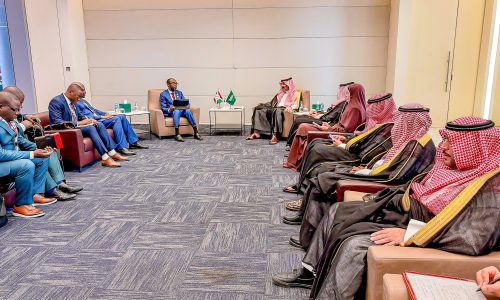
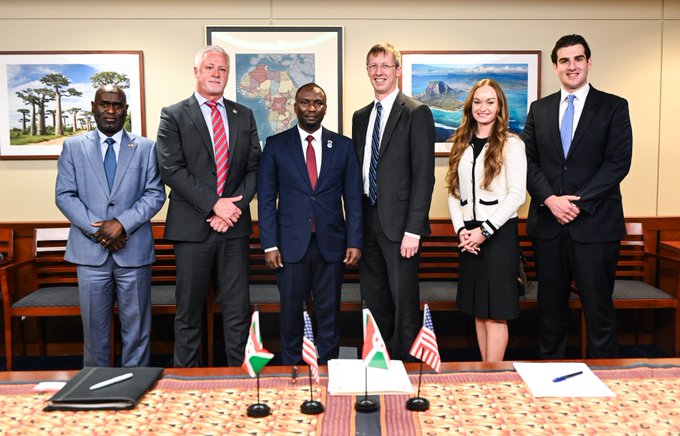
The signing ceremony took place on Tuesday, March 10, 2026, at the United States Department of State in Washington, D.C., bringing together government officials and private-sector representatives from both countries.
The agreements were signed by Burundi’s Minister of Mineral Resources, Energy, Industry, Trade and Tourism, Hassan Kibeya, and representatives of the two U.S. companies. Chris Showalter, Chief Executive Officer of Lifezone Metals, signed on behalf of the companies, accompanied by their legal director.
The ceremony was presided over by Sarah Troutman, Deputy Assistant Secretary of State for African Affairs, who together with bureau leadership welcomed executives from Lifezone Metals and KoBold Metals as well as the Burundian delegation led by Minister Kibeya. She was accompanied by Special Advisor Christopher Kulukundis and Brenda Soya from the Bureau of African Affairs.
The Burundian delegation also included Festus Bimenyimana, Head of Strategic Studies, and Jean Bosco Barege, Burundi’s Ambassador to the United States.
According to officials, the agreements are expected to foster mutually beneficial partnerships focused on the development of critical mineral supply chains, while strengthening commercial ties between the two countries. They also highlighted Burundi’s commitment to developing its mineral sector and welcomed the engagement of the private sector in creating sustainable investment opportunities that could contribute to economic growth and regional prosperity.
The agreement follows the Burundian government’s 2022 decision to suspend mining contracts with BMM International and East African Region Project Group, which had previously been involved in plans to exploit the country’s nickel deposits.
Burundi’s largest known nickel reserve is located at Musongati, estimated at about 180 million tons, representing roughly 6 percent of global nickel reserves. The project is expected to operate for around 25 years once extraction begins.
Other areas where nickel exploration studies have been conducted include Nyabikere, Waga, and Mukanda.
As of March 11, 2026, the international market price of nickel stood at approximately $17,413 per ton, underscoring the strategic value of the mineral for Burundi’s economic development.
As Burundi prepares to unlock one of its most valuable natural resources, a key question remains: how will the exploitation of nickel translate into tangible benefits for the country’s overall development and for the communities living near the mining sites?