Burundi’s President Evariste Ndayishimiye has called on officials overseeing the country’s mining, energy, industry, trade and tourism sectors to significantly increase their contribution to state revenues, saying institutions at the heart of economic development must do more to finance the country’s ambitions.
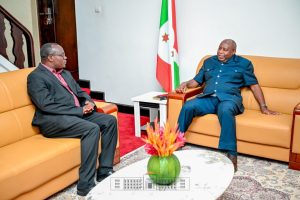
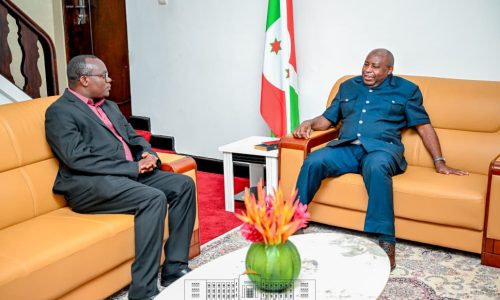
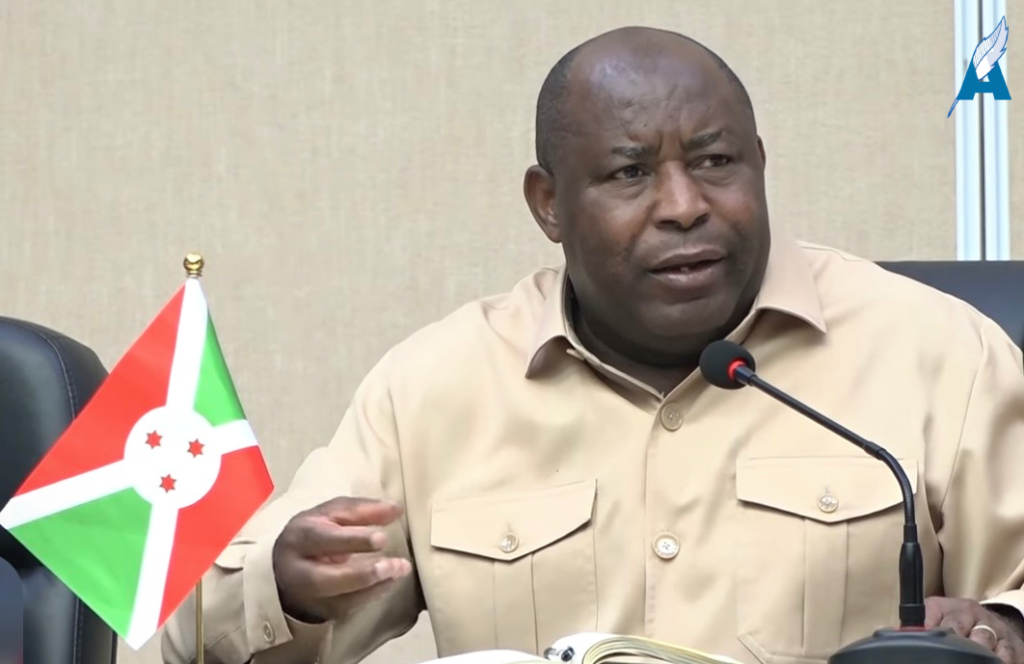
Ndayishimiye made the remarks on August 14, 2026, during a working session at the Ntare Rushatsi Palace with senior officials from the Ministry of Mineral Resources, Energy, Industry, Trade and Tourism. The meeting focused on assessing the ministry’s performance, identifying shortcomings and improving the way its sectors contribute to the economy and public services.
The president set an ambitious target, saying the sectors under the ministry should ultimately contribute 50% of the national budget.
“I must see 50% of the money planned to be spent coming from this ministry,” Ndayishimiye said, urging officials to move beyond managing public expenditure and focus more sharply on generating resources for the state.
He said his assessment had identified spending plans but not enough concrete initiatives capable of generating revenue. The president urged officials to take greater responsibility for demonstrating measurable economic returns from the sectors under their supervision.
Ndayishimiye also called on ministry officials to strengthen their knowledge of the laws, regulations and codes governing their respective sectors.
He said a better understanding of the legal framework would help officials make sound decisions, improve institutional organization and deliver stronger results.
To address persistent challenges, he directed each sector within the ministry to organize a retreat bringing together relevant stakeholders. The meetings are expected to examine obstacles affecting performance and agree on practical measures to improve results.
The president also raised concerns over the management of revenues generated from electricity and water services provided by REGIDESO, Burundi’s public utility.
He said revenues collected from consumers should be reinvested in expanding infrastructure, developing new electricity facilities and extending water and power services to communities that remain underserved.
“That money is meant to help reach others who have not yet been served. It is not money to be consumed,” he said.
Ndayishimiye also criticized the accessibility and quality of public utility services, arguing that citizens who have already paid for services should not have to repeatedly seek out the utility provider.
“REGIDESO should be the one looking for people, not people looking for REGIDESO,” he said.
The president’s message comes as Burundi pursues its long-term development vision of becoming an emerging economy by 2040 and a developed country by 2060.
For Ndayishimiye, achieving those goals will require government institutions to become more efficient, accountable and economically productive.
The August 14 meeting therefore placed revenue generation, institutional performance and service delivery at the center of the government’s expectations for sectors considered critical to Burundi’s economic transformation.