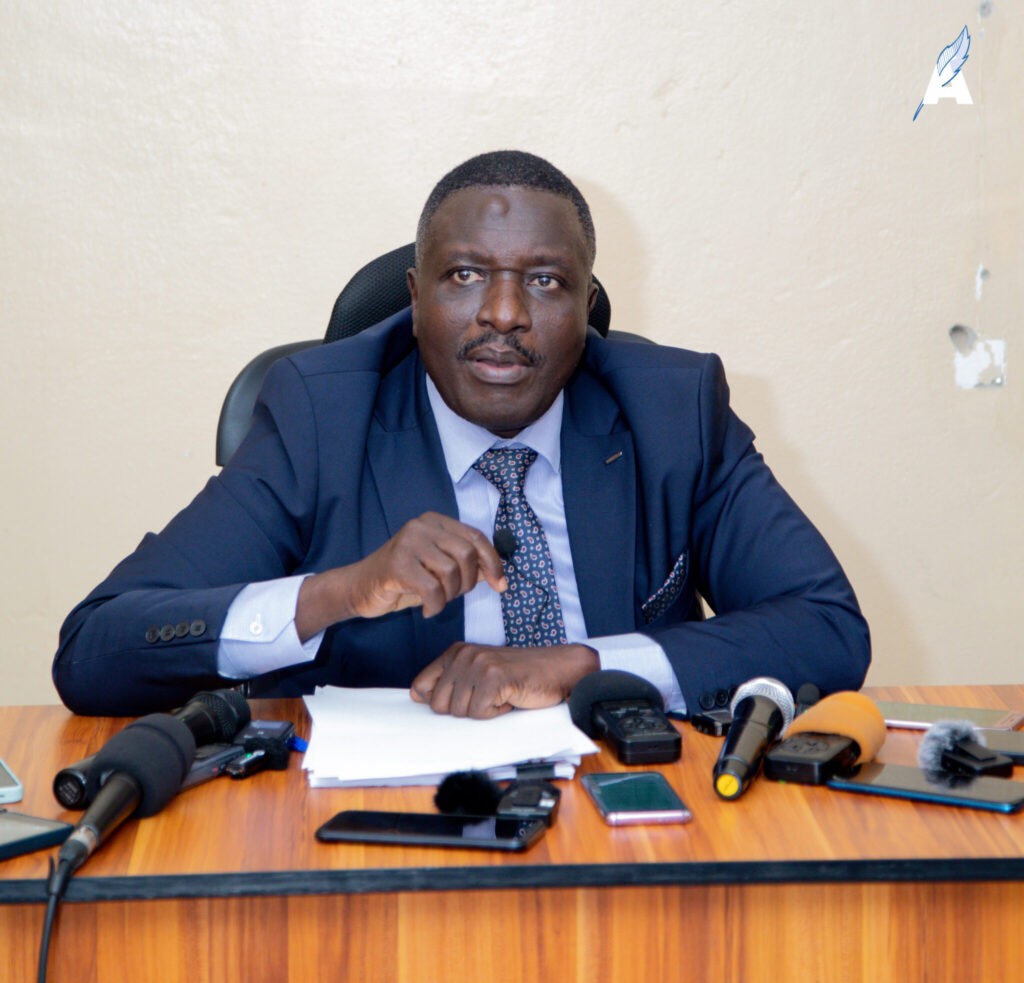
Burundi’s Parliament has the constitutional authority to question government officials and demand explanations over their actions, according to Faustin Ndikumana, head of civil society organization PARCEM.
Ndikumana says the separation of powers between state institutions is essential to democracy, good governance and government accountability.
“No authority should tell parliamentarians that they do not have the right to summon a minister and question them,” Ndikumana said, arguing that Burundi’s Constitution clearly provides for such powers.
He referred to Articles 207, 208 and 209 of the Constitution, which outline Parliament’s role in overseeing government activities and holding ministers accountable for the institutions they lead.
According to Ndikumana, ministers should be able to appear before lawmakers to explain government actions, decisions and policies, as well as their potential impact on the country.
But parliamentary oversight, he said, does not stop at questioning.
Lawmakers can also initiate a motion of no confidence against a minister if they believe the official is no longer capable of effectively carrying out their responsibilities.
“They can say that this minister is no longer capable of fulfilling the responsibilities entrusted to them,” Ndikumana explained. If the motion receives the support required under the law, it can lead to consequences for the minister concerned.
Ndikumana also pointed to Parliament’s power to establish commissions of inquiry to investigate government actions or issues that require further clarification.
He emphasized that when a minister appears before Parliament, the official is answering to representatives of the Burundian people. Parliamentary questioning, he said, should therefore be viewed as a normal component of democratic governance rather than a conflict between institutions.
Ndikumana also highlighted the role of both the National Assembly and the Senate in overseeing state institutions and exercising the powers assigned to them by the Constitution.
“Parliament is extremely important in the life of the country and in strengthening good governance and democracy,” he said.
The PARCEM leader warned that when oversight mechanisms fail to function effectively, serious mistakes or abuses within government institutions may go without adequate scrutiny or accountability.
He called for thorough investigations whenever serious misconduct, abuse of authority or other actions requiring public explanations occur.
For PARCEM, parliamentary oversight is not about creating conflict between institutions. Instead, Ndikumana said, it is a constitutional mechanism designed to uphold the rule of law, promote transparency and strengthen democratic governance in Burundi.