Burundian civil society organization PARCEM has called on the government to strengthen transparency, accountability and independent oversight in the implementation of its newly launched national anti-corruption strategy, warning that the initiative risks falling short if those responsible for implementing it also evaluate their own performance.
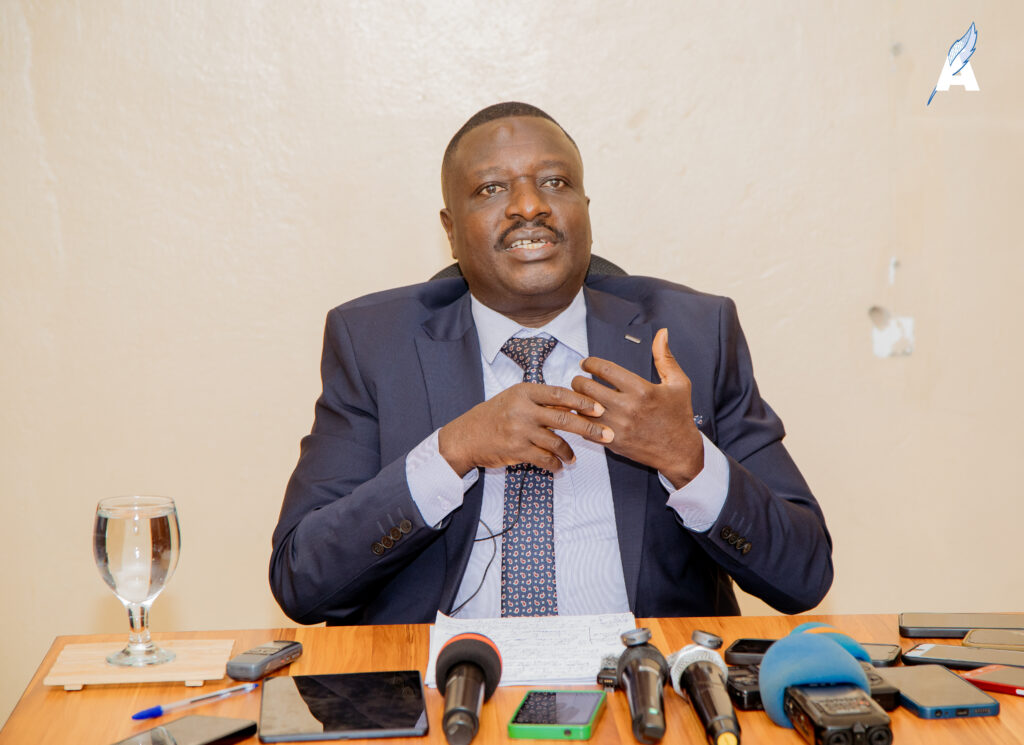
Speaking at a press conference at PARCEM’s headquarters in Bujumbura on Wednesday, the organization’s president, Faustin Ndikumana, questioned the composition of the committee established to oversee the anti-corruption initiative, which is led by President Évariste Ndayishimiye and includes senior government officials.
“The president of the republic cannot lead a committee responsible for fighting corruption if the same committee is expected to evaluate the actions of the government. You cannot implement a policy and then assess yourself,” Ndikumana said.
He argued that the monitoring body should operate independently and include representatives from civil society, research institutions, universities, religious organizations, the private sector and the media.
Ndikumana also called for the involvement of relevant oversight and judicial institutions, including the Supreme Court, the Ombudsman and bodies responsible for public financial accountability.
Strategy must be public and enforceable
PARCEM said the government should publish the full anti-corruption strategy and widely distribute it to citizens, journalists and public institutions to support public awareness and encourage changes in behavior.
Ndikumana stressed that the initiative must be accompanied by clear implementation measures, regular evaluations and enforcement of existing laws.
He urged the government to review Burundi’s legal framework for fighting corruption and organize public discussions on possible reforms, emphasizing that sanctions must be based on the law rather than arbitrary or politically motivated decisions.
“We already have an anti-corruption law and a Penal Code that provide for sanctions against corruption. The legal framework must be respected, and where necessary, reviewed to make it more effective,” he said.
PARCEM also called for stronger protection for whistleblowers and renewed support for investigative journalism, arguing that journalists and individuals who expose financial misconduct play a crucial role in bringing corruption allegations to public attention.
Ndikumana further advocated for specialized investigative capacity to handle complex financial crimes, warning that some cases involving alleged misuse of public funds are reported but do not appear to lead to meaningful judicial action.
Concerns over public spending and procurement
The organization highlighted several areas requiring closer scrutiny, including public procurement, mining contracts, fertilizer subsidies, the construction of administrative offices in local zones and the management of state-owned enterprises.
Ndikumana questioned the transparency of public contracts and called for investigations into allegations of financial irregularities involving public projects and institutions.
He also raised concerns about the government’s fertilizer subsidy budget, saying the allocation had increased from 300 billion Burundian francs in the previous year to 500 billion francs in the current budget, while farmers continued to face shortages of chemical fertilizers.
He called for greater transparency in the management of foreign currency, public resources and state-owned companies, stressing that allegations of wrongdoing should be investigated and handled through the appropriate legal channels.
According to PARCEM, corruption can undermine fair competition, discourage foreign investment, increase transaction costs and weaken public confidence in state institutions.
The organization also called for stronger prevention measures, including compliance with asset-declaration requirements, the enforcement of rules on conflicts of interest and incompatibility in public office, and greater accountability among senior officials.
Questions over political commitment
Ndikumana questioned whether Burundi’s repeated anti-corruption commitments had translated into sustained action.
He recalled previous initiatives, including the establishment of anti-corruption institutions in 2008, the government’s declaration of a zero-tolerance policy in 2010 and an earlier national anti-corruption strategy covering the 2011–2015 period.
He argued that previous reform proposals and policy commitments had not consistently produced the results expected, and called for the government to demonstrate stronger political will through concrete action.
PARCEM urged the authorities to ensure that the new strategy does not remain a formal declaration but becomes an effective framework for preventing corruption, investigating alleged financial crimes and holding those responsible accountable.
The organization said independent monitoring, public access to information, protection for those who report wrongdoing and consistent enforcement of the law would be essential to achieving meaningful progress in Burundi’s fight against corruption.