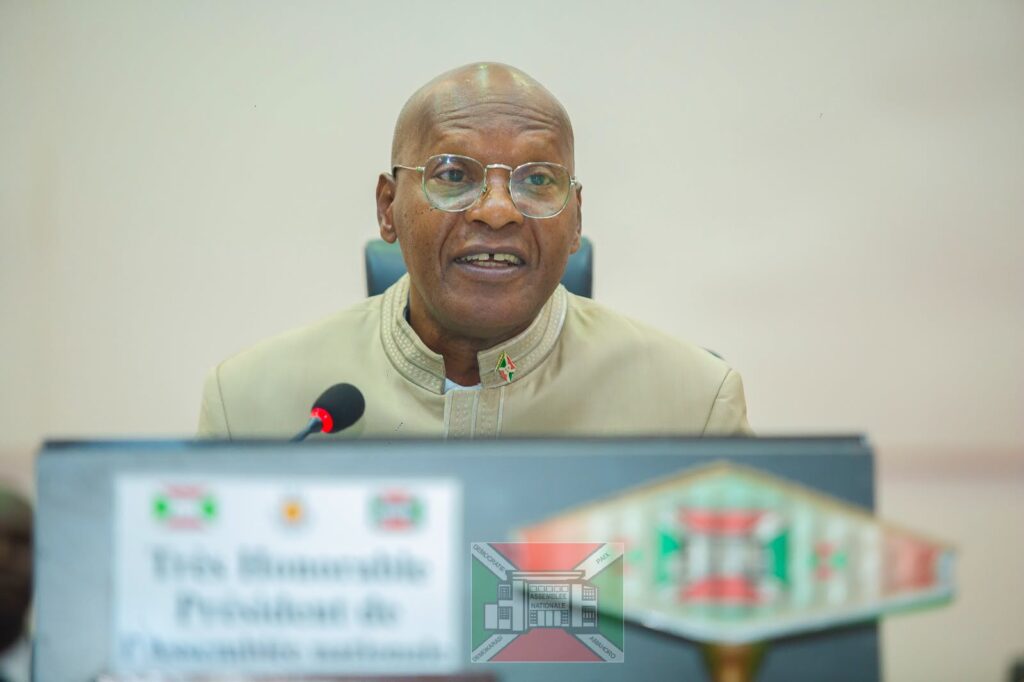
Burundi’s National Assembly President Daniel Gélase Ndabirabe has questioned why companies in which the government holds shares continue to make losses instead of generating profits for the country.
Ndabirabe raised the concerns as Health Minister Dr. Fidèle Nkezabahizi appeared before Parliament to explain the operations of CAMEBU, a state-owned company responsible for supplying medicines to public and private health facilities.
“It is not understandable how companies in which the state owns all the capital continue to make losses instead of making profits,” Ndabirabe said.
The National Assembly president questioned the continued financial difficulties facing state-owned enterprises, despite government investment and their strategic importance to the country.
He also raised concerns over a long-running dispute between CAMEBU and the “Mutuelle de la Fonction Publique”, saying efforts by lawmakers and institutions responsible for overseeing state assets had so far failed to resolve the situation.
Ndabirabe said parliamentarians had taken up the issue, with support from the institution responsible for protecting state assets, in an effort to address what he described as the disorder surrounding the relationship between CAMEBU and the “Mutuelle de la Fonction Publique”.
He called on the health minister to explain how recommendations made by Parliament and its standing committee had been implemented.
Ndabirabe warned that measures could be taken if the directives had not been properly implemented.
He also questioned the effectiveness of internal control mechanisms within state-owned companies. He said reports from internal control processes are often not acknowledged or acted upon by the companies concerned.
The concerns point to broader questions over the governance, financial management and accountability of state-owned enterprises in Burundi.
Ndabirabe ultimately asked when companies in which the government has invested capital would begin producing tangible returns for the country.
The parliamentary debate comes amid continued scrutiny of public enterprises and their contribution to Burundi’s economy, particularly companies operating in essential sectors such as healthcare.