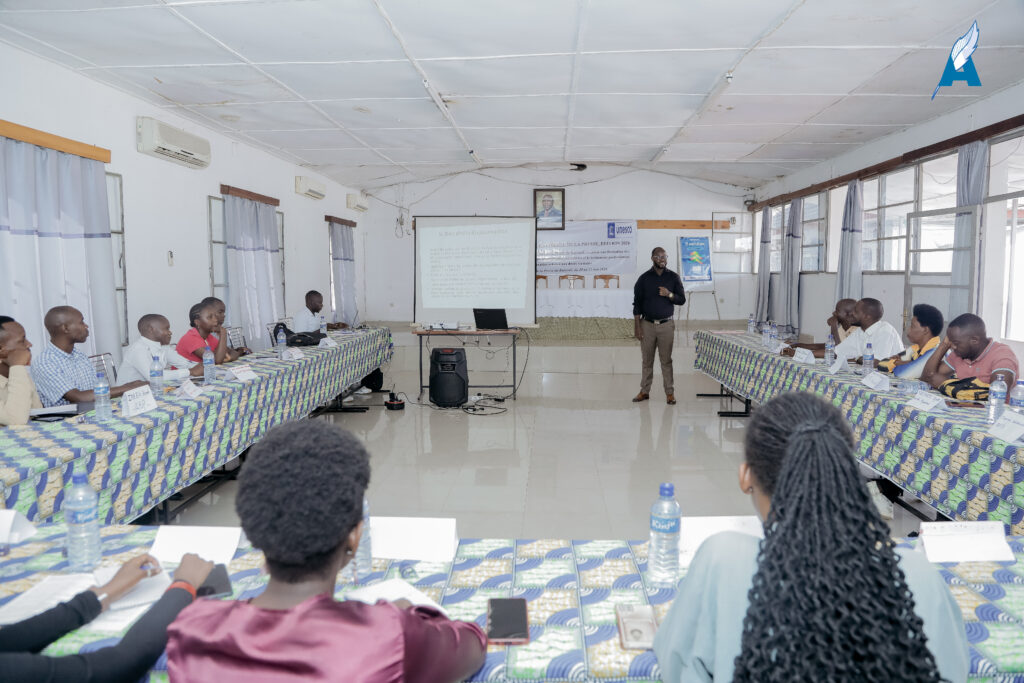
On May 21, journalists in Burundi attended the second day of a professional training workshop focused on human rights, journalists’ rights, and the ethical and professional coverage of human rights issues. The training was organized by the Burundi Press House with the support of UNESCO.
The session was led by Alain Désiré Bukeyeneza, Editor-in-Chief of Radio Isanganiro, who delivered an in-depth presentation on journalists’ rights and professional responsibilities under Burundi’s media law.
Bukeyeneza highlighted Articles 7 to 15 of the law governing the press in Burundi, with particular emphasis on Article 7, which defines the professional status of a journalist. According to the law, a professional journalist is required to hold at least a bachelor’s-level diploma issued by a recognized school or institution, combined with professional training or internship experience.
He stressed that journalists, like all citizens, are entitled to fundamental rights guaranteed by the Constitution, in addition to specific protections provided under the country’s press legislation.
Among the key rights discussed during the training were the right to employment contracts, the freedom to practice journalism independently, unrestricted access to sources of information, and the right to personal and equipment security. Journalists also have the right to invoke conscience clauses, join trade unions or professional associations, benefit from state-supported facilities, and protect confidential sources.
However, Bukeyeneza reminded participants that these freedoms come with professional obligations. Journalists are required to respect the law, resist any pressure that could compromise the accuracy of information, publish balanced and impartial reports, and respect the religious, political, and philosophical beliefs of the public, even when they do not personally share them. Respect for individuals’ privacy was also emphasized as a core ethical principle.
During the session, Bukeyeneza revisited Burundi’s press law, noting that it guarantees both rights and advantages for media organizations while also outlining their responsibilities. He described the media as both an educator and a counter-power institution in preventing human rights violations and promoting respect for human rights.
He further explained that media organizations enjoy freedom of expression and have the right to organize themselves in professional synergies within the framework of the law. The State, he said, also provides support to media institutions through customs and value-added tax exemptions, as well as through a national Media Support Fund designed to promote the development of the sector.
In his concluding remarks, Bukeyeneza underscored the importance of protecting journalists’ sources and ensuring reporters’ safety, describing both as fundamental pillars of press freedom. He also reminded media organizations of their legal responsibilities, including accountability for potential violations and the obligation to refrain from broadcasting or publishing content that undermines public morality or public order.