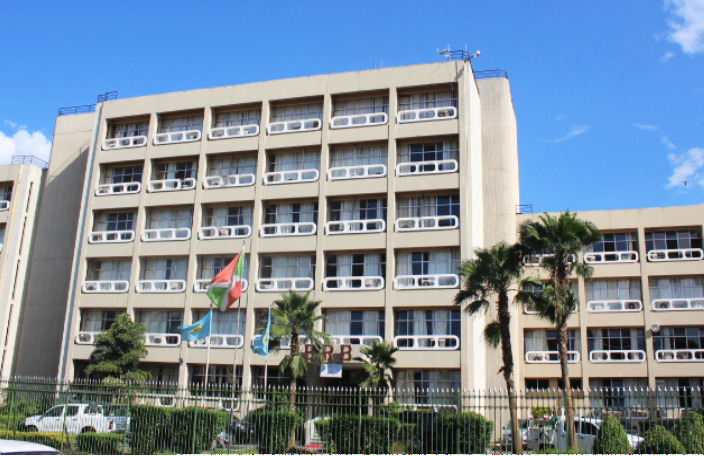
The Burundi Central Bank (Banque de la République du Burundi, BRB) has reaffirmed its commitment to macroeconomic reforms and financial stability following the release of conclusions from the International Monetary Fund’s latest Article IV consultation mission, positioning the country’s recent economic performance as evidence that stabilization efforts are beginning to yield measurable results.
In a public communiqué issued after the IMF mission concluded its consultations with Burundian authorities, the central bank welcomed what it described as the Fund’s recognition of the government’s efforts to preserve macroeconomic stability despite mounting regional and global economic pressures.
The IMF mission, whose findings were published on May 18, 2026, assessed Burundi’s economic outlook, fiscal trajectory, monetary policy framework, and structural reforms under the Article IV consultation process — a routine review conducted among IMF member states to evaluate economic health and policy direction.
According to the BRB, reforms undertaken under Burundi’s 2025–2027 macroeconomic stabilization strategy have already produced “positive effects” across several sectors of the economy.
Among the indicators highlighted by the central bank is a reported GDP growth rate of 4.2 percent in 2025, a figure authorities say demonstrates the resilience of Burundi’s economy at a time when many developing nations continue to grapple with inflationary shocks, supply chain disruptions, and geopolitical uncertainty.
The BRB also pointed to a significant slowdown in inflation, noting that price pressures are gradually moving toward the government’s annual target of 8 percent. Inflation control has emerged as one of the country’s central economic priorities after years of currency pressures and rising import costs weighed heavily on households and businesses.
Another area emphasized in the communiqué is the improvement in Burundi’s terms of trade, which the central bank attributes to increased mining production and tighter management of mineral and precious metal exports. Burundi has increasingly sought to position its mining sector as a strategic source of foreign exchange earnings amid persistent shortages of hard currency.
On the fiscal front, the BRB said the IMF acknowledged improved budgetary performance, including efforts to contain the fiscal deficit, projected at 3.4 percent of GDP during the 2025/2026 fiscal year. Public debt, meanwhile, is estimated at 42 percent of GDP by the end of 2025, a level the central bank described as manageable within the broader stabilization framework.
The communiqué also underscored the government’s commitment to strengthening economic resilience while pursuing what it called “strong, sustainable, and inclusive growth.”
Still, the IMF mission raised several recommendations aimed at consolidating Burundi’s fragile recovery. According to the BRB, the Fund encouraged authorities to continue efforts to contain inflation, strengthen the financial sector, and reinforce foreign exchange reserves.
Particular attention was placed on reforming Burundi’s foreign exchange market. The IMF reportedly recommended a carefully sequenced approach that balances macroeconomic stability, market conditions, and the protection of vulnerable households — a reflection of longstanding concerns over foreign currency shortages and exchange rate distortions in the country.
In response, the BRB reaffirmed its intention to maintain a “prudent and coherent” monetary policy designed to preserve price stability while supporting economic activity.
The central bank further reiterated its determination to continue implementing reforms outlined in the macroeconomic stabilization document adopted by national authorities in September 2025. Those reforms include modernization of monetary and exchange rate policy frameworks, strengthening financial sector development and stability, and improving economic governance.
The BRB said it would continue working closely with the Ministry of Finance, Budget and Digital Economy, as well as international technical and financial partners, to ensure the success of the reform agenda.
The communiqué also acknowledged the IMF’s continued technical support to Burundi, particularly in areas such as domestic revenue mobilization, fiscal consolidation, modernization of monetary policy instruments, financial sector reforms, and broader economic resilience.
The IMF’s assessment comes at a critical moment for Burundi’s economy, as authorities seek to balance stabilization efforts with social and development needs in one of East Africa’s most financially constrained economies. While government officials portray recent indicators as signs of gradual recovery, economists say the sustainability of the gains will depend heavily on continued reforms, investor confidence, export performance, and the country’s ability to ease pressures in the foreign exchange market.
For now, the BRB appears intent on projecting confidence — both to domestic stakeholders and international partners — that Burundi’s economic reform trajectory remains on course.