Burundi’s Council of Ministers has approved a series of measures aimed at expanding access to electricity, attracting private investment, strengthening public infrastructure and responding to a recent wave of fires affecting public facilities and markets.
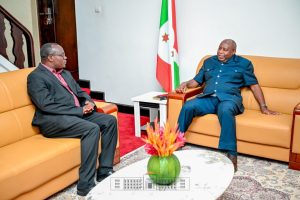
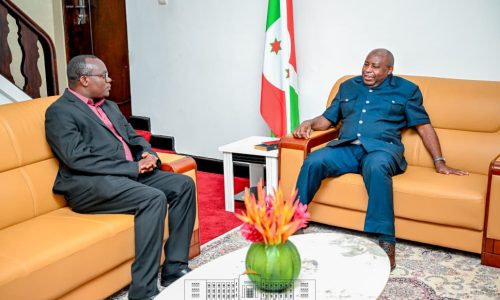
The decisions were taken during a Cabinet meeting held Wednesday, August 26, in Gitega, the country’s political capital, under the chairmanship of President Evariste Ndayishimiye. The meeting followed a preparatory session held August 24 to review the items on the agenda.
Among the most significant decisions was the approval, subject to substantive and technical corrections, of amendments to the legal framework governing the Burundian Rural Electrification Agency (ABER).
The government said the reforms are intended to bring ABER into line with Burundi’s 2024 law reorganizing the electricity sector, particularly provisions concerning off-grid electrification. The agency is expected to facilitate electrification initiatives in rural areas that are not connected to the national electricity grid, with the broader objective of achieving universal access to affordable energy by 2030.
The reforms would also replace boards of directors in state structures that do not generate revenue with management committees, in accordance with the country’s new legal framework for personalized public administrations. Cabinet further called for effective decentralization of ABER’s administrative structures at provincial and communal levels.
Regulator to expand role to petroleum products
The Cabinet also approved amendments to the statutes of the Authority for Regulation of Water and Energy Sectors (AREEN).
The changes follow Burundi’s gradual liberalization and restructuring of the public water and electricity sectors, including legislation adopted in 2000 and subsequently amended in 2015 and 2024.
AREEN, created in 2011 as a regulator for the electricity sector before becoming the regulator for water and energy in 2018, would see its mandate expanded to include petroleum and petroleum products.
The government also plans to replace AREEN’s board of directors with a management committee in accordance with the new legal framework. The proposal was approved after debate, with corrections to be incorporated before its finalization.
Burundi advances 100MW solar power project
A major public-private partnership involving the BAJE INVESTMENT GROUP (BIG) was also approved for the development of a photovoltaic power plant in Ruyigi Commune, Buhumuza Province.
The proposed Bweru solar power plant will have an installed capacity of 100 MWc, supported by a 20MW backup system.
Under the proposed arrangement, BAJE INVESTMENT GROUP will design, finance, construct, own, operate and maintain the facility for 25 years, after which ownership of the plant will be transferred to the Government of Burundi.
The government said the project is intended to improve the reliability and affordability of electricity while helping meet growing national demand and strengthening the competitiveness of the economy.
REGIDESO has indicated that it is prepared to purchase the electricity generated by the plant under an electricity purchase agreement and a connection agreement.
However, Cabinet recommended that the final investment cost and actual duration of the project be determined after the plant becomes operational.
Cabinet tightens control over 2026/27 spending
The ministers also approved payment ceilings for the first quarter of Burundi’s 2026/2027 financial year.
The ceilings are based on the national budget law for 2026/2027 and the annual work and budget plans of ministries and institutions.
The government stressed that spending managers must remain within their authorized appropriations, while the Finance Ministry is empowered to take measures to prevent budget overruns.
Ministries were instructed to align spending projections with available revenue, prepare realistic monthly disbursement plans and prioritize essential activities. Where possible, activities could be postponed to later quarters.
Rukinga military camp declared a strategic public-interest site
The Cabinet approved a draft decree declaring the site occupied by the Rukinga military camp, in Rumonge Commune, Burunga Province, to be of public utility.
The government said the measure is designed to strengthen control over strategic land occupied by military infrastructure and prevent irregular occupation of the site.
The camp is described in the communiqué as an important installation for national defense and maintaining public security in southern Burundi. The proposal was approved with minor technical corrections.
11.2 hectares allocated for SGR railway project
Another public-interest declaration concerns 11 hectares and 20 ares at Rongero Hill, designated for the main construction base of Phase II of Burundi’s standard-gauge railway project.
The government described the electrified Malagarazi-Musongati standard-gauge railway as a strategic component of Burundi’s regional integration and economic development.
Because the land is privately owned, authorities said it must be acquired through a regular process involving prior compensation and release of the required land before it can be permanently secured for the project.
The proposal was approved with some formal corrections.
Government approves accelerated exploitation of Gakara-Gahuni forest
One of the most consequential environmental and economic decisions concerns the government-owned Gakara-Gahuni forest, covering approximately 1,950 hectares.
According to the technical note presented to Cabinet, the forest has an estimated value of 127,979,063,169 Burundian francs.
The initial proposal called for clear-cutting the entire 1,950-hectare area, beginning with 500 hectares over five years, equivalent to 100 hectares annually. The proposed overall exploitation period had been estimated at between 10 and 15 years, accompanied by systematic replanting for trees unable to regenerate naturally.
Cabinet, however, considered the proposed 10-to-15-year period too long for old forests requiring rapid economic valorization.
It therefore reduced the exploitation period to five years, with a target of approximately 400 hectares per year.
The government also decided that several operators should be allowed to participate through separate contracts to avoid delays and prevent market monopolies. It further proposed exploring contracts with carpenters interested in exploiting the forest, including determining the percentage of the resource that could be allocated to them.
The communiqué says exploitation permits must take into account soil conservation, natural regeneration and ecosystem protection.
New multifunctional transport hub planned at Rubirizi
Cabinet also approved a public-private partnership between the Government of Burundi and Groupement Unique Construction-MATHU for the development of a multifunctional bus station at Rubirizi, near Bujumbura, Lake Tanganyika and major road corridors.
The proposed facility is intended to become a logistics, commercial, industrial and services hub serving Burundi and the wider sub-region.
The project is expected to include a dry port with truck parking, a bus station, a commercial center, social housing, an agro-industrial park, a toll road, and a petroleum storage depot.
The partnership would run for 34 years, including four years of construction and 30 years of commercial operation. A project company will be established under Burundi’s public-private partnership legislation.
As with the solar project, Cabinet recommended that the final investment cost and actual project duration be determined after the facility becomes operational.
Military hospital and construction agency statutes updated
Two additional decrees concerning the Kamenge Military Hospital and the Military Construction Agency were approved with formal corrections.
The reforms are part of the government’s effort to bring existing public institutions into compliance with the law on the organic framework of public establishments, promulgated on June 7, 2024.
That law requires existing public establishments to bring their governing texts into conformity within one year of its promulgation.
Government responds to wave of fires
The Cabinet devoted a major section of its meeting to the growing number of fires affecting public infrastructure and markets.
The government expressed “deep concern” over the fires, saying they have caused significant material losses and disrupted the economic activities of many families. It extended its solidarity and compassion to victims and those affected.
Cabinet also condemned what it described as cynical and insensitive behavior by people who mock victims or make light of the disasters.
Authorities identified irregular and disorderly occupation of spaces in some markets, as well as the presence of flammable materials and other objects capable of accelerating the spread of fire, as important vulnerability factors.
The government called for the immediate strengthening of prevention, inspection and security measures at strategic infrastructure.
For future construction, the Cabinet recommended that stronger fire-prevention and safety standards be incorporated from the design stage.
It also called for mechanisms that would enable authorities to intervene rapidly when fires are detected and limit their spread.
For people affected by fires, the government said a coordinated and compassionate response is necessary. It encouraged consideration of insurance mechanisms, temporary credit-support measures and, where possible, contributions to help victims rebuild destroyed or damaged infrastructure and resume their economic activities.
Authorities were also instructed to continue technical and administrative investigations into individual fires to establish their causes and determine possible responsibility on a case-by-case basis. The government said mechanisms, including possible rewards for whistleblowers who report suspected perpetrators, could be established within the law.
The government reaffirmed its commitment to protecting lives, citizens’ property and strategic infrastructure, while urging the population to remain vigilant and united in disaster-prevention efforts. It also encouraged economic actors to continue operating, saying the business environment remains conducive in Burundi.
Government pushes for cleaner cities and more public paving
During the “miscellaneous” section of the meeting, ministers discussed implementation of regulations on hygiene and sanitation.
The government said some state services have fallen behind in paving spaces near major roads because of insufficient budget allocations.
Governors were instructed to identify areas requiring paving in their provinces and submit the needs to the relevant authorities so that appropriate funding can be allocated.
The government said the use of these allocations would subsequently be evaluated to ensure that funds were used for the identified sites and according to previously established plans.
Authorities also called for better development and maintenance of public spaces and suggested that vacant plots or properties occupied by dilapidated houses could be made available to private investors interested in real-estate development.
The Infrastructure Ministry was asked to prepare a study on the image of a city “fit for emergence,” with the government arguing that urban sanitation must go hand in hand with construction.
The administration was also instructed to sensitize the public about hygiene, emphasizing that cleanliness is not only an adult responsibility and that children should also wear clean clothes.
Government targets “zero child poorly seated in class”
Cabinet also reviewed the shortage of school desks and chairs and the strategy for increasing their production.
According to the communiqué, the desk-manufacturing program is already well advanced and is not facing major challenges.
All communes are participating in the effort, with the government setting an objective of making “Zero child poorly seated in class” a reality within the coming months.
The government also discussed challenges encountered in some communes and received proposals aimed at addressing them.
National exam pass mark set at 37%
The Council of Ministers also approved the results-related framework for the 2026 national examination and the orientation of students into post-basic education.
The minimum passing score for the 2026 national examination has been set at 74 out of 200, or 37%.
However, students seeking admission to public boarding post-basic schools and public post-basic schools in Bujumbura City must obtain at least 106 out of 200, equivalent to 53%.
The communiqué also states that students from the Batwa community who pass the national examination will automatically have access to these schools.
In a further measure intended to encourage academic excellence, the 15 highest-ranked students nationally will be exempted from tuition and boarding fees during the 2026–2027 school year, provided they enroll in public schools.