Burundi has approved the largest budget in its history, signaling a bold bet on mining revenues and domestic resource mobilization as the government seeks to accelerate economic growth, expand public investment, and navigate persistent economic challenges.
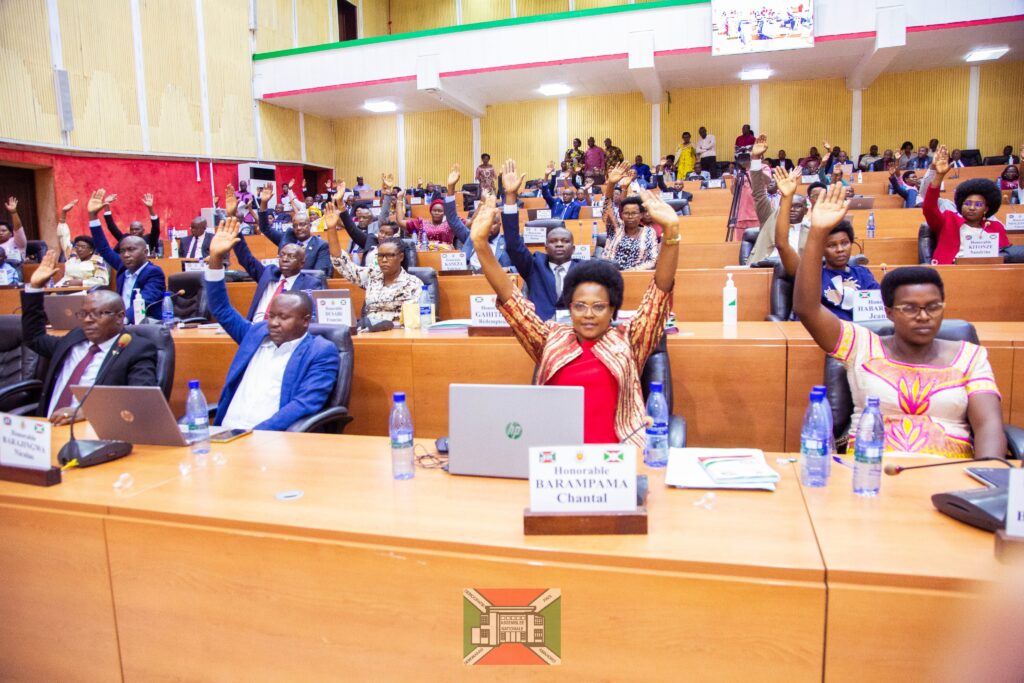
The National Assembly unanimously adopted the 2026–2027 national budget on June 13, approving government spending of 7.02 trillion Burundi francs (approximately $2.4 billion with the rate of $1=BIF 2,994.06). The budget, which now awaits Senate approval, marks a nearly 30 percent increase from the current fiscal year and underscores the government’s confidence in stronger revenues from mineral exports and other key sectors of the economy.
For a country that continues to grapple with fuel shortages, foreign currency constraints, and development financing needs, the record budget represents both an ambitious vision and a significant test.
Presenting the budget before lawmakers, Finance, Budget and Digital Economy Minister Dr Alain Ndikumana said the spending plan is designed to support sectoral policies capable of generating sustained economic growth while consolidating reforms introduced through Burundi’s programme-based budgeting system, which has been gradually implemented since the 2023–2024 fiscal year.
The minister noted that the budget also reflects Burundi’s recent administrative reorganization, which redefined provinces, communes, zones and hills, requiring adjustments in planning and resource allocation across government institutions.
At 7,020,612,152,951 Burundian Francs, the approved budget is roughly 1.62 trillion Burundian Francs higher than the current year’s budget of about 5.4 trillion Burundian Francs.
The increase continues a pattern of rapid expansion in government spending. Burundi’s budget stood at approximately 4.4 trillion Burundian Francs in 2024–2025 before rising to more than 5.2 trillion Burundian Francs in 2025–2026. The latest increase means public spending has grown by nearly 60 percent in two years, reflecting the government’s determination to scale up investment and development programmes.
Officials expect the state to mobilize approximately 6.3 trillion Burundian Francs in revenues and resources during the fiscal year. In addition, development grants are projected to reach 1.77 trillion Burundian Francs, supporting 29 development projects, while loans worth more than 65 billion Burundian Francs are expected to finance six additional projects.
Government authorities say these resources will be directed toward infrastructure, agriculture, education, healthcare, energy, and other strategic sectors identified as critical to Burundi’s long-term development.
A central pillar of the government’s optimism is the mining sector.
Burundi has increasingly promoted the export of gold, tin, tantalum and tungsten as a source of foreign exchange and public revenue. Authorities believe the sector can help finance development priorities at a time when access to external financing remains constrained.
According to the Finance Ministry, economic growth is expected to reach 5.5 percent during the 2026–2027 fiscal year, supported by exports of minerals as well as traditional cash crops such as coffee and tea, alongside emerging export products including avocados and patchouli.
The government’s projections come amid growing efforts to diversify Burundi’s export base and strengthen domestic revenue collection.
The budget also introduces several fiscal reforms aimed at improving public finances. Amendments to multiple provisions of the finance law seek to broaden the tax base, strengthen revenue collection, combat tax fraud and improve expenditure oversight.
Officials argue that these measures are necessary to ensure that increased spending is matched by stronger financial discipline and more efficient use of public resources.
Yet despite the optimism surrounding the budget, significant challenges remain.
Burundi continues to face recurring fuel shortages that have disrupted transportation, business operations and daily life in many parts of the country. Foreign currency shortages have also complicated imports, while inflationary pressures continue to affect household purchasing power.
Economic analysts note that while increased spending can stimulate growth and support development projects, the success of the budget will depend on whether projected revenues materialize and whether reforms improve the efficiency of public expenditure.
The government’s growing reliance on mining revenues also carries risks. Commodity prices can fluctuate sharply, exposing public finances to external shocks. Ensuring transparency, accountability and effective management of natural-resource revenues will therefore be critical to sustaining long-term gains.
For many Burundians, however, the debate is less about macroeconomic indicators than about tangible improvements in everyday life.
Will roads improve? Will electricity become more reliable? Will jobs be created? Will fuel shortages ease?
Those questions are likely to shape public perceptions of the country’s largest-ever budget far more than the headline figures themselves.
Given the recurrent fuel shortages that have weighed on Burundi’s economy for years, the success of this record budget may ultimately be measured by its ability to address structural bottlenecks that continue to constrain growth. As the government embarks on its most ambitious spending plan yet, citizens will be watching closely to see whether rising mining revenues and expanded public investment can deliver lasting improvements—or whether longstanding challenges will continue to limit the country’s economic potential.