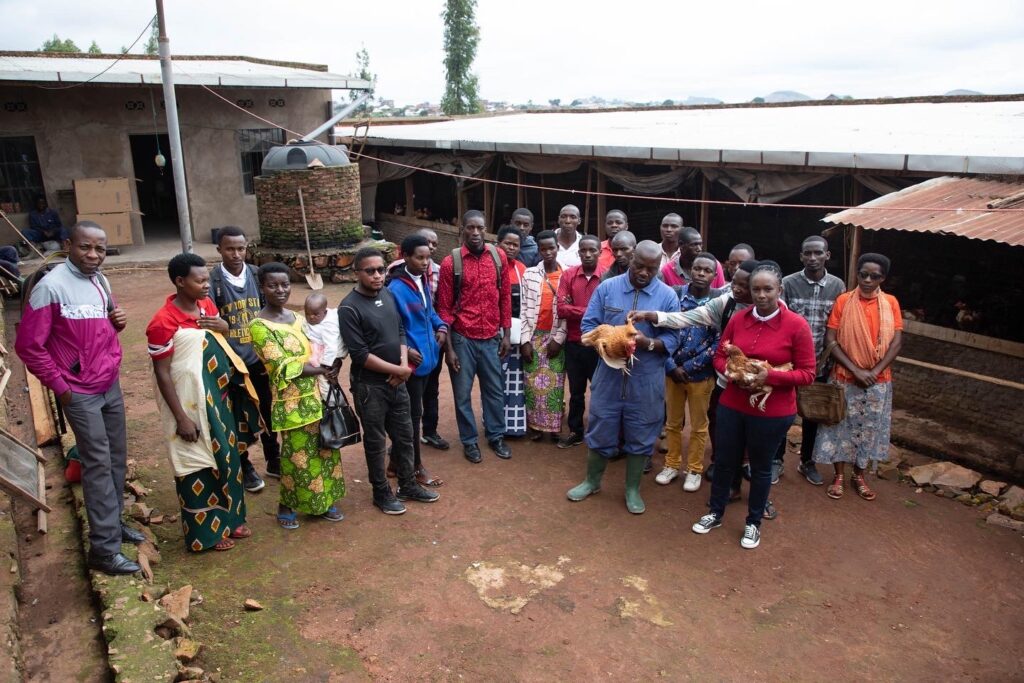
In line with the PADANE project, the BBIN carried out “visit and exchange of experience with budding entrepreneurs” supervised by the BBIN. Ferdinand Niyonkuru native of Bukirasazi in the commune of Gitega, collector of eggs and natural chicken farmer testifies to have benefited a lot from the PADANE project, because, according to him, he did not know that it is possible to raise more than five hundred (500) chickens in one poultry. As for Adam Barema, he worked in the public service and NGOs, but now he is a proud chicken farmer thanks to BBIN.
Raising chickens requires care and skill
According to Adam Barema, owner of the Saint Kevin company, raising chickens cannot be compared to raising other animals because, for the slightest mistake, you lament after three months. “You have to use learned concepts and feed the chickens on time. If you feed them at 2 p.m., it is at this very hour that you will continue to feed them. If the day to vaccinate them is the seventh day of the week, they should always be vaccinated at the end of the week,” he advises.
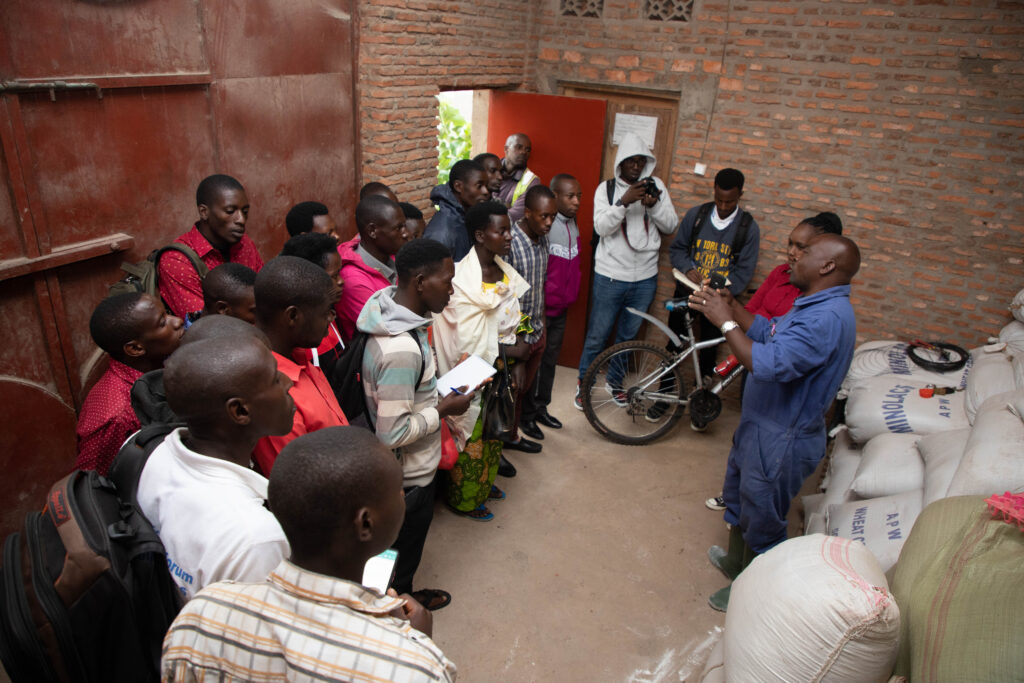
To anyone raising the breed of modern chickens, Adam advises that, in order to do it well, one must first have enough knowledge. “Anyone who raises chickens without a goal will fail,” he says.
Adam explains that the most prolific chickens lay between 320 and 350 eggs per year while the less prolific ones lay between 220 and 250 eggs per year. “There are even those which lay less than that. »
As Adam points out, chickens raised for meat weigh between 3 and 4 kgs. For him, you shouldn’t raise chickens whose breed you don’t know. “To do it well, you have to know the breed of chick you want to raise because if you buy the wrong generation, the harvest will not be good because they even drag on laying eggs; for example, F2 generation chicks, etc. Another thing, you have to have the ability to raise them, how to treat them and you have to know their food well,” he instructs.
At the company Saint Kevin, Adam tells that known that they raise chicks from Belgium. “They come dated a day after the vaccination called “Marek”. They consume Ndagala, wheat bran, soybeans, bones (of any animal) burnt and ground.»
Everything can be learned, everything can be taught!
For Ferdinand Niyonkuru, egg collector and chicken farmer in Bukirasazi, the most important thing in chicken nutrition is knowing how to mix cake for the chickens and that takes five days.
Adam informed that they have just welcomed the young people brought in from BBIN who are coming to learn how to raise the chickens, harvest well and develop themselves.
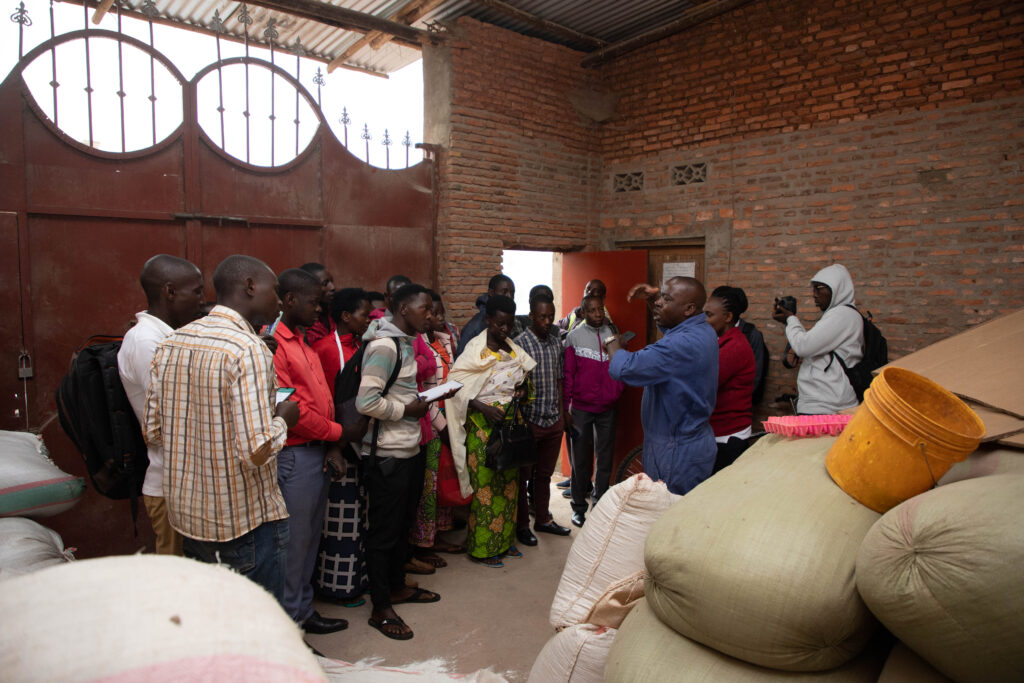
Adam promised to BBIN to supervise these young people who want to start raising chickens. “Those who really have the intention and the courage to do so, will put their money into this project and help us to seek and order these hens where they are, raise them and bring them home in order to profit from them. . It is an activity that is beginning and will continue for the development of this youth. »
Given a glaring lack of work, the poultry farmer Ferdinand advises young people to find what to do to self-develop. “You have to think about getting money without waiting for help from outside. I think the youth will achieve the goal of overcoming unemployment in this light. I very much appreciate the PADANE project and I warmly thank the BBIN which wanted to train young people in order to contribute to the reduction of poverty here in our country, Burundi”