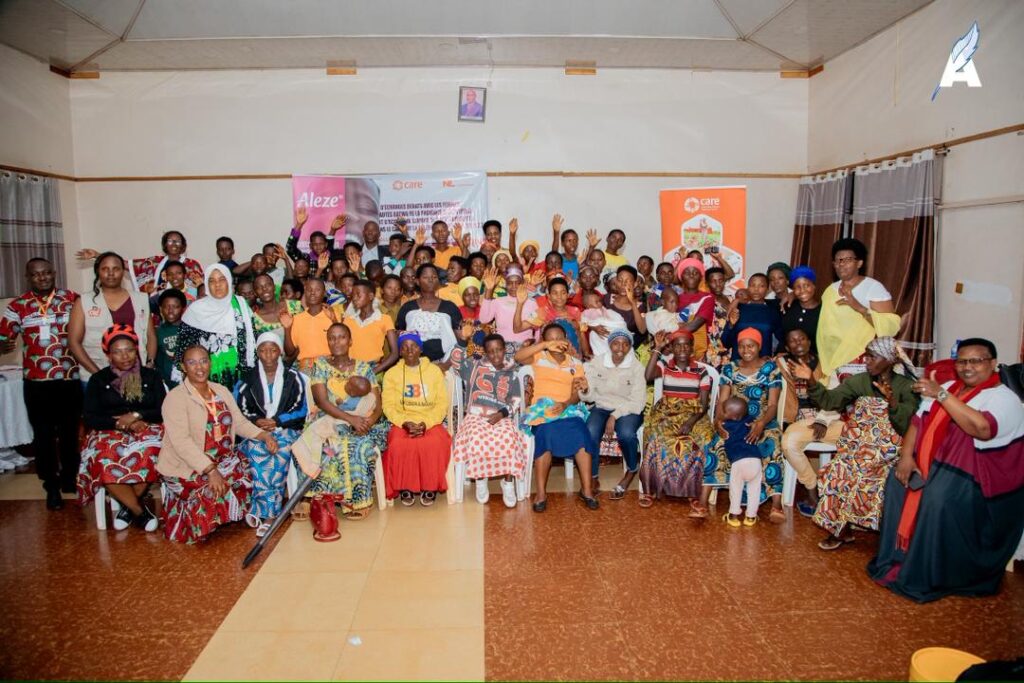
Women from the Batwa community in #Butanyerera province participated in a session on their reproductive health rights, held on Wednesday, March 31, 2026, as part of the International Women’s Rights Day celebrations.
The initiative, led by CARE International Burundi in partnership with DKT Burundi, is part of the “Turikumwe I” project. It aimed to strengthen knowledge and promote women’s rights, particularly for those from marginalized communities, on sexual and reproductive health issues.
At the opening, Cyriaque Nikoyagize, senior advisor to the governor of #Butanyerera on political and legal affairs, praised the initiative as “highly valuable” for empowering participants. He noted that the knowledge gained could improve their living conditions and encouraged them to engage actively in development activities.
Project representative Dr. Félicien Ndimubansi explained that “Turikumwe I” seeks to expand access to reproductive health information in collaboration with the Ministry of Youth. He also announced support for eight youth centers in the province through equipment and training to bolster local development efforts.
Speakers emphasized the importance of social inclusion for Batwa communities. “These trainings provide an opportunity for these communities to become more engaged and better understand their rights,” Ndimubansi said, highlighting the challenges of social isolation.
Bénigne Nkunzimana, president of the Women’s Forum in #Ngozi, reminded participants of the significance of International Women’s Rights Day. She encouraged women to join associations and community groups to build skills and foster socio-economic growth.
The training session, led by Dr. Générose Ndabirinde, covered reproductive health fundamentals, family planning methods, and prevention of sexually transmitted infections. She stressed the right of every individual to access appropriate health services throughout their life.
The event concluded with an evaluation of knowledge gained, followed by the distribution of kits including buckets, traditional cloths, work shoes, soaps, flashlights, and sanitary pads used by women during their menstruation..
Organizers reminded participants that reproductive health concerns everyone, men and women alike, from birth to the end of life.