African leaders are warning of a worsening Ebola outbreak in the Democratic Republic of Congo (DRC) and Uganda, as a major funding shortfall threatens efforts to contain the disease and prevent wider regional spread.
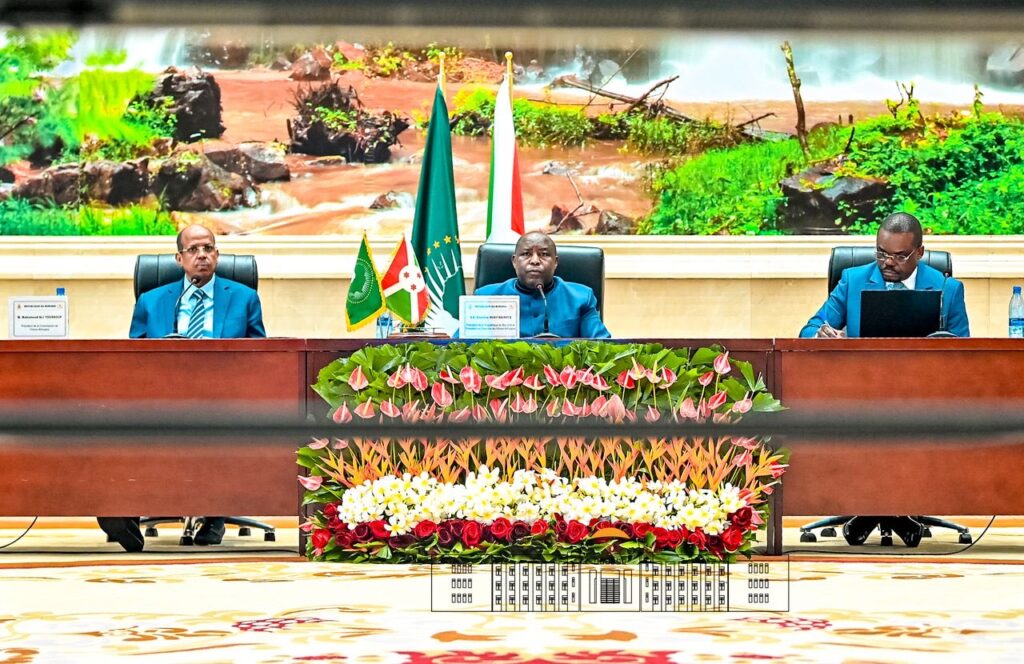
The alert came during a high-level virtual summit convened on June 16 by Burundian President Evariste Ndayishimiye in his capacity as Chairperson of the African Union (AU). The meeting, held at the Ntare Rushatsi Palace in Gitega, brought together African heads of state and government, senior health officials, and international partners to coordinate the continental response to the outbreak linked to the Bundibugyo strain of the Ebola virus.
AU Chair Leads Emergency Response Talks
The summit was chaired by President Ndayishimiye, who called for stronger continental coordination and renewed international support to confront the outbreak.
The meeting was attended by African Union Commission Chairperson Mahamoud Ali Youssouf and Africa Centres for Disease Control and Prevention (Africa CDC) Director-General Dr. Jean Kaseya, alongside other senior officials and development partners.
Leaders reviewed the evolving situation on the ground in the DRC and Uganda, assessed ongoing response operations, and discussed urgent measures to strengthen surveillance, improve cross-border coordination, and protect frontline health workers.
Speaking during the summit, Ndayishimiye reaffirmed the African Union’s solidarity with the affected countries and emphasized that Ebola remains a shared continental threat requiring collective action.
He urged African states and international partners to accelerate political, financial, technical, and logistical support, warning that fragmented responses would undermine containment efforts.
Funding Gap Threatens Response Efforts
Health officials used the summit to raise concerns over a critical funding gap hampering the Ebola response.
According to Africa CDC, only $100 million has been disbursed so far, against an estimated $518 million required to fully support containment operations across affected and at-risk regions.
Although more than $208 million in pledges have been announced, officials say a significant portion has yet to reach frontline response teams.
The funds are needed for case detection, laboratory diagnostics, treatment centers, vaccination campaigns, contact tracing, community engagement, and cross-border monitoring systems.
Dr. Jean Kaseya warned that delays in disbursement could weaken containment efforts and increase the risk of further spread across borders.
Outbreak Concentrated in Eastern DRC
Latest figures from the DRC Ministry of Health indicate that 837 cases have been recorded since the outbreak began, with 196 deaths and 49 recoveries reported.
The eastern province of Ituri remains the epicenter of the outbreak, accounting for around 96 percent of confirmed cases.
Health authorities say continued transmission in the region poses a significant risk of spillover into neighboring countries, including Uganda, despite ongoing containment efforts.
The outbreak is caused by the Bundibugyo strain of Ebola, a rare variant previously detected in parts of East and Central Africa.
Coordinated Continental Response Urged
Participants at the summit stressed that the Ebola outbreak highlights the growing importance of regional coordination in responding to infectious disease threats.
They emphasized that population movement, porous borders, and interconnected trade routes increase the risk of rapid transmission if containment is delayed.
African leaders and health officials agreed that stronger collaboration between governments, Africa CDC, and international partners is essential to reinforce surveillance systems and improve response capacity.
Race Against Time
Health teams in both the DRC and Uganda continue to conduct contact tracing, isolate suspected cases, and strengthen community awareness campaigns aimed at slowing transmission.
However, public health experts warn that the coming weeks will be decisive in determining whether the outbreak is contained or expands further.
As Africa confronts one of its most significant Ebola outbreaks in recent years, officials say the crisis is not only a public health emergency but also a test of political will and global solidarity.
With hundreds of millions of dollars still needed and infections continuing to rise, authorities warn that time is running out to prevent a broader regional health emergency.