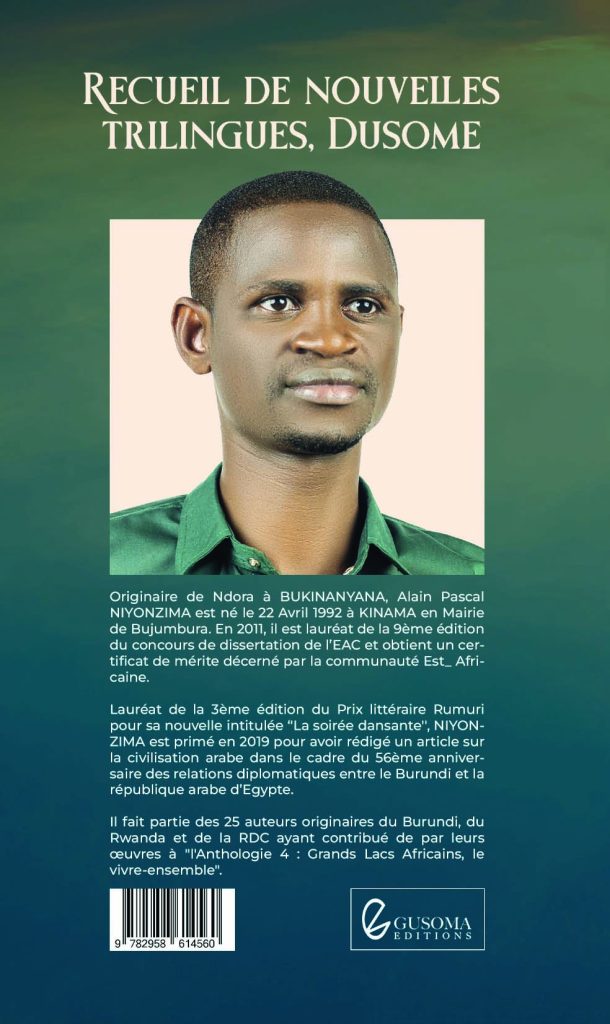
The Burundian literary scene is being enriched by a unique new voice: that of Alain Pascal Niyonzima. In his debut collection, the author demonstrates a fertile imagination, subtly blending fiction and reality to paint a vivid portrait of contemporary Burundian society.
Through his stories, Niyonzima explores deeply human themes inspired by everyday life. In Ingodo ya Shebuja, he delicately addresses the issue of social injustice. The protagonist, a domestic worker named Silveri, silently endures the abuse of his employer. Behind his apparent resilience lies a man with an unsuspected gift, who eventually turns the tables. The author denounces the imbalance of power while celebrating patience as a form of wisdom.
In Umunyembo mu Buyogoma, Niyonzima shifts tone and offers a heartfelt tribute to the natural beauty of Burundi. Through the eyes of Bahati, a young city dweller fascinated by the glow of urban life, he reveals the often-overlooked riches of the country’s interior: lush hills, fertile lands, and the majestic Ruvubu forest. It is a poetic call to rediscover the very essence of Burundian land.
Humanity and the quest for inner peace lie at the heart of Umwere yerera hose. Niyonzima develops a life philosophy centered on ubuntu, the African value that places humanity at the core of communal living. For him, society’s problems stem from a moral imbalance that only kindness can restore.
In Amakuba y’Umubataseri, the author delves into the often invisible everyday lives of small tradespeople. We follow Amilikari, a second-hand phone seller, struggling with economic instability and the challenges of getting by. Through his story, Niyonzima paints a picture of a tough but resilient urban reality.
A common thread runs through the entire work: life as an initiatory journey, filled with trials, choices, and revelations. The author offers a powerful reflection on the consequences of our actions, illustrated by this saying: “The wrong you do stays with you, but the good you do opens your path.”
Accessible, heartfelt, and deeply rooted in Burundian culture, Alain Pascal Niyonzima’s book is an invitation to reflect, to become more aware—and also, to hope.