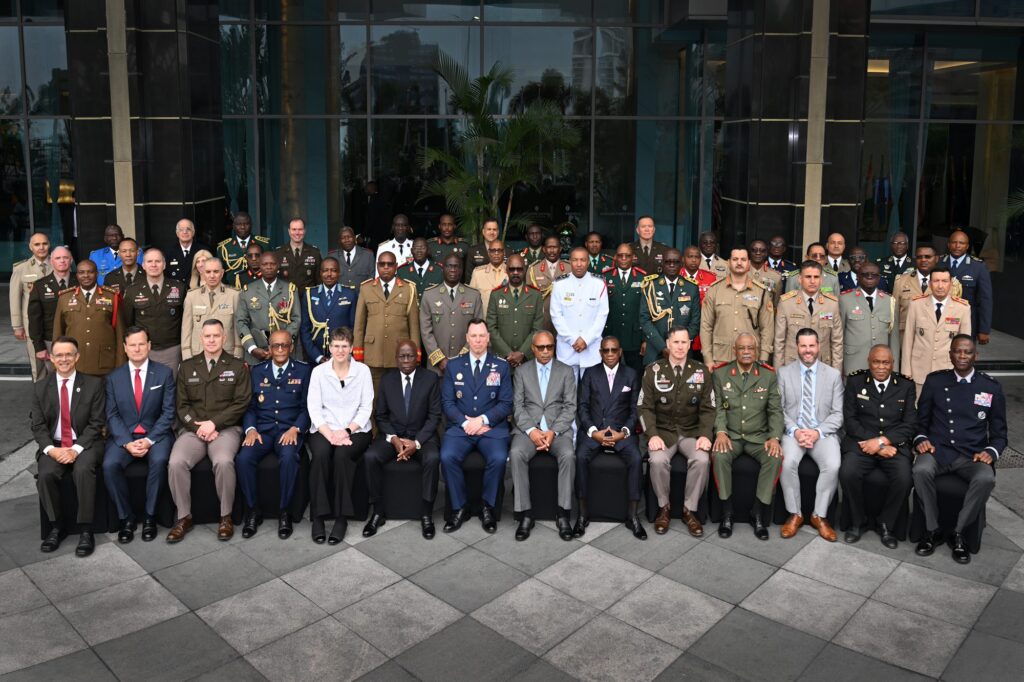
Africa’s growing security challenges can only be solved through stronger regional cooperation, greater intelligence sharing and African-led strategies supported—not directed—by international partners, the Commander of U.S. Africa Command (AFRICOM), General Dagvin R.M. Anderson, said following the conclusion of the 2026 African Chiefs of Defense Conference in Luanda.
Speaking during a digital press briefing hosted by the U.S. Department of State’s Africa Regional Media Hub on this Thursday July 02, 2026, General Anderson described the three-day gathering as one of the most collaborative military engagements on the continent, bringing together defense chiefs from 35 African nations, alongside representatives from the United States, Brazil, government agencies and private industry.
Rather than focusing solely on military operations, this year’s conference expanded discussions to include innovation, economic development, commercial investment and the role of technology in addressing Africa’s evolving security landscape.
“The long-term solution—the long-term path to stability—is going to have to be African-led,” Anderson said. “It’s going to have to be African partners coming together as appropriate to address these issues.”
Building Trust Beyond the Battlefield
For Anderson, one of the conference’s biggest successes was not found in formal presentations or strategic documents, but in face-to-face conversations between African military leaders.
He said trust remains the foundation of any effective security partnership.
“The repeated discussion about the importance of engaging, of talking face-to-face in order to build the trust that’s necessary to address these threats and work together, was probably the most important theme that emerged.”
The conference featured keynote addresses from senior U.S. military leaders, including the Chairman and Vice Chairman of the Joint Chiefs of Staff, while experts from the U.S. Departments of Commerce and State, the U.S. International Development Finance Corporation, and private companies explored how economic opportunity and security reinforce one another.
According to Anderson, sustainable peace depends as much on economic prosperity as military strength.
“Stability creates investment, and investment creates prosperity,” he said. “Those two have to develop together.”
Security Without Borders
Throughout the briefing, Anderson repeatedly stressed that Africa’s most pressing threats—including terrorism, drug trafficking, illegal fishing, organized crime and misinformation—ignore national borders and therefore demand coordinated regional responses.
One example involved what he described as the largest maritime cocaine seizure ever recorded.
Working with partners across the Atlantic, AFRICOM helped coordinate intelligence that ultimately led Spanish authorities to intercept a vessel carrying 31 tons of cocaine traveling along West Africa’s coastline.
The operation, Anderson said, demonstrated the value of information sharing among international partners.
“That communication across the Atlantic and across West Africa showed why established relationships are so important.”
Technology and African Innovation
Unlike previous conferences, organizers invited African technology firms and international defense companies to present practical solutions tailored specifically for African environments.
Among those highlighted was Terra Industries of Nigeria, whose leadership discussed developing drones adapted to Africa’s climate and operational realities.
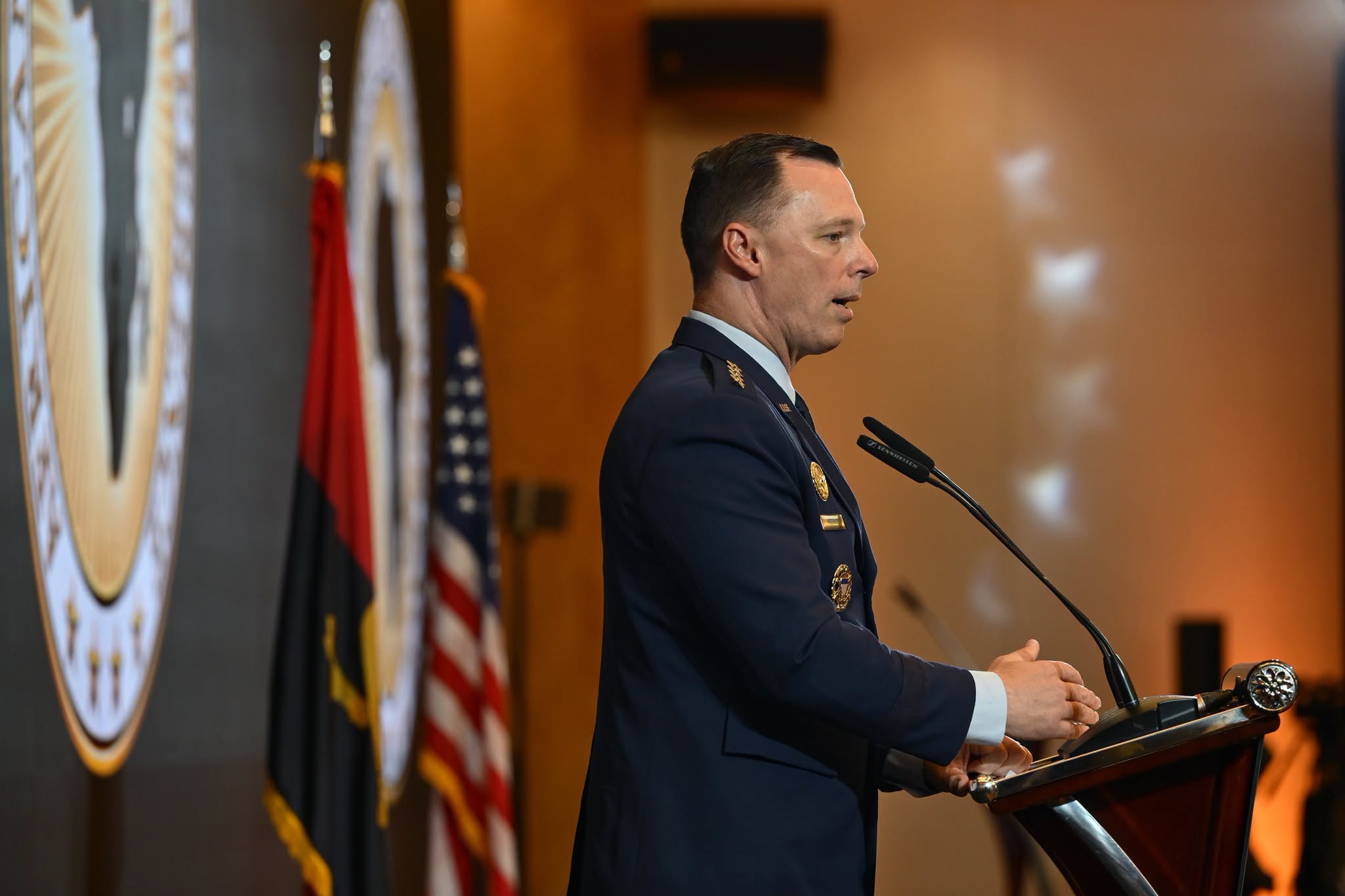
Anderson emphasized that innovation extends far beyond sophisticated equipment.
“Innovation is not just about new technology,” he explained. “It’s also about maximizing what we already have and using commercially available capabilities more effectively.”
He noted that affordable commercial drones, satellite technology, communications systems and software are becoming increasingly accessible, allowing African countries with limited defense budgets to improve surveillance and operational effectiveness.
The Horn of Africa Remains a Strategic Concern
Responding to questions about the Horn of Africa, Anderson described the region as one of the world’s most strategically significant areas due to its economic growth and global trade routes.
He pointed to multiple overlapping crises, including the conflict in Sudan, instability in Somalia and security concerns surrounding the Red Sea.
Sudan, he said, remains one of the world’s worst humanitarian disasters, while Somalia continues to face persistent threats from al-Shabaab and ISIS affiliates.
Although AFRICOM continues providing intelligence, surveillance and logistical support, Anderson stressed that lasting peace must come from regional leadership.
“Ultimately, that has to be a Somali solution and a regional solution.”
Counterterrorism Success in Nigeria
One of the briefing’s strongest examples of international cooperation came from Nigeria.
According to Anderson, intelligence cooperation between Nigerian security forces and the United States recently resulted in the elimination of the second-highest-ranking global ISIS leader, responsible for international operations, recruitment and propaganda.
Rather than portraying the operation as an American success, Anderson described it as evidence of effective partnership.
“We only bring unique U.S. capabilities that allow the partner to be effective,” he said.
He added that after the operation, U.S. forces reduced their presence while continuing intelligence cooperation requested by Nigerian authorities.
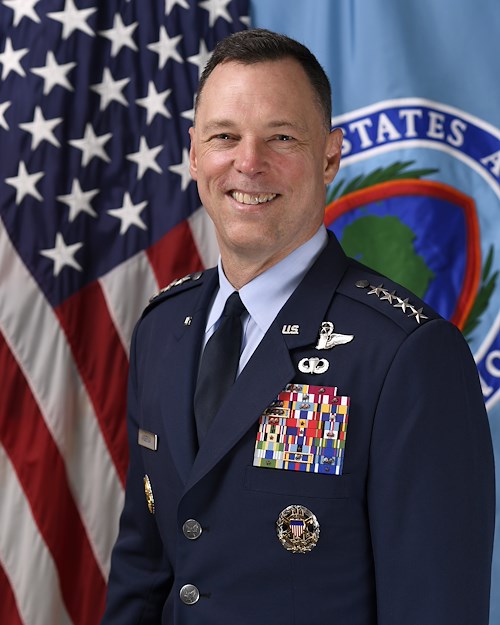
The campaign has since produced another encouraging development.
“Nigeria has been very active since that operation,” Anderson said. “They’ve also seen increased defections and surrenders of ISIS followers.”
Somalia Operations Increase
Addressing reports that AFRICOM conducted significantly more airstrikes in Somalia during 2026 than the previous year, Anderson attributed the increase to improved cooperation with Somali forces rather than a shift in U.S. strategy.
He said partner forces, particularly in Puntland, have maintained sustained pressure on ISIS fighters, forcing them into increasingly isolated positions.
“They’re restricted to living in caves, with limited mobility, logistics and communication,” Anderson explained.
He said the improved operational environment has allowed more targeted strikes against high-value terrorist targets.
African Security and Strategic Autonomy
Several journalists questioned whether growing geopolitical competition among global powers risks undermining African sovereignty.
Anderson rejected the idea that AFRICOM seeks to dictate security priorities.
Instead, he argued that partnerships should focus on mutual interests while respecting national ownership.
“We’re looking at investing where there’s mutual interest, mutual development and mutual security benefits.”
He added that every country naturally pursues its own national interests, but said the United States seeks to contribute expertise in counterterrorism, intelligence, education, innovation and commercial investment that African governments may choose to leverage.
Making More with Limited Resources
Recognizing that many African militaries face financial constraints, Anderson encouraged governments to prioritize intelligence integration, regional cooperation and affordable technologies over expensive defense acquisitions.
He argued that information sharing often delivers greater operational impact than costly hardware.
“It’s not just the drone itself,” he said. “It’s the software, the communications network, the intelligence and the training behind it.”
Anderson reiterated that AFRICOM’s objective is not to replace African leadership but to strengthen it.
He described recent cooperation with Nigeria as evidence that carefully targeted partnerships can produce regional and even global security benefits while allowing African countries to remain in the lead.
“What’s sustainable is enabling our partners to be more effective,” Anderson concluded. “That’s where we see the greatest long-term impact.”