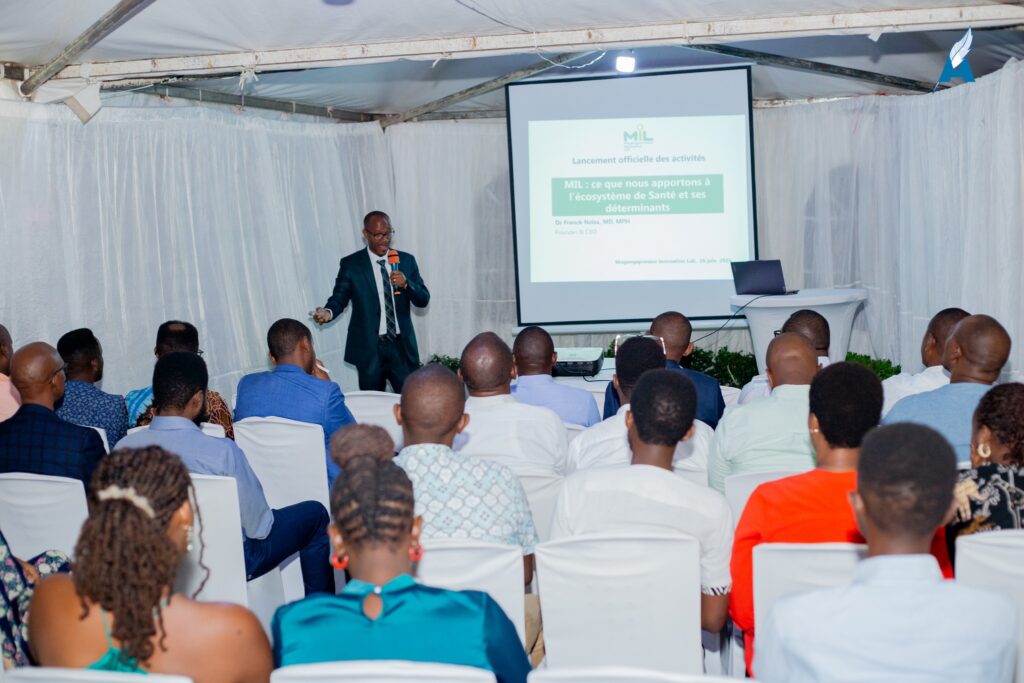
On June 26, 2025, the Mugangapreneur Innovation Lab (MIL) officially launched its activities during a ceremony held at its headquarters in Bujumbura. The event gathered a distinguished audience, including Dr. Franck Nziza, a public health specialist, founder and CEO of MIL, and Dr. Désiré Habonimana, also a public health specialist and lecturer at both the University of Burundi and the University of Oxford. Several guests from academic, medical, and innovation sectors were also in attendance.
In his opening remarks, Dr. Nziza presented the Lab’s strategic vision, emphasizing its interdisciplinary and transdisciplinary approach. MIL, he explained, is designed as a center for research, monitoring and evaluation, social and technological innovation, entrepreneurship, and strategic intelligence in health and its broader determinants. Its primary goal is to become a continental hub of excellence, driving evidence-based solutions and fostering collaboration across sectors.
The Lab aims to create a national and international ecosystem that brings together researchers, innovators, policymakers, and donors. According to Dr. Nziza, MIL serves as a platform where collaboration and alignment of efforts can lead to smarter policy decisions, shared resources, and sustainable development in the health sector. It is a space where local expertise can be strengthened while meeting global standards.
Among the key projects launched under MIL are Ndakira (www.ndakira.net), a digital platform that translates health information into simple, accessible language for the general public, and the Health CPD Center, a continuing professional development center aimed at improving the skills and capacities of health workers in Burundi and beyond.
Dr. Nziza also revealed MIL’s broader ambition to join a global network of innovators in more than 20 countries across five continents. He emphasized the importance of co-creating solutions that respond to the specific needs of communities, while ensuring that the value of local expertise is recognized and maintained.
Dr. Désiré Habonimana, speaking during the event, highlighted the role of innovation and research as foundations for national progress. He stressed that countries without a solid investment in research fall behind in development. Citing international models, he pointed out how some countries support innovation by providing access and resources to researchers, while governments play a regulatory role rather than being obstacles to progress.
The official launch of MIL marks a new chapter for innovation in Burundi, signaling the country’s growing commitment to health advancement, scientific collaboration, and the development of homegrown solutions to global challenges.